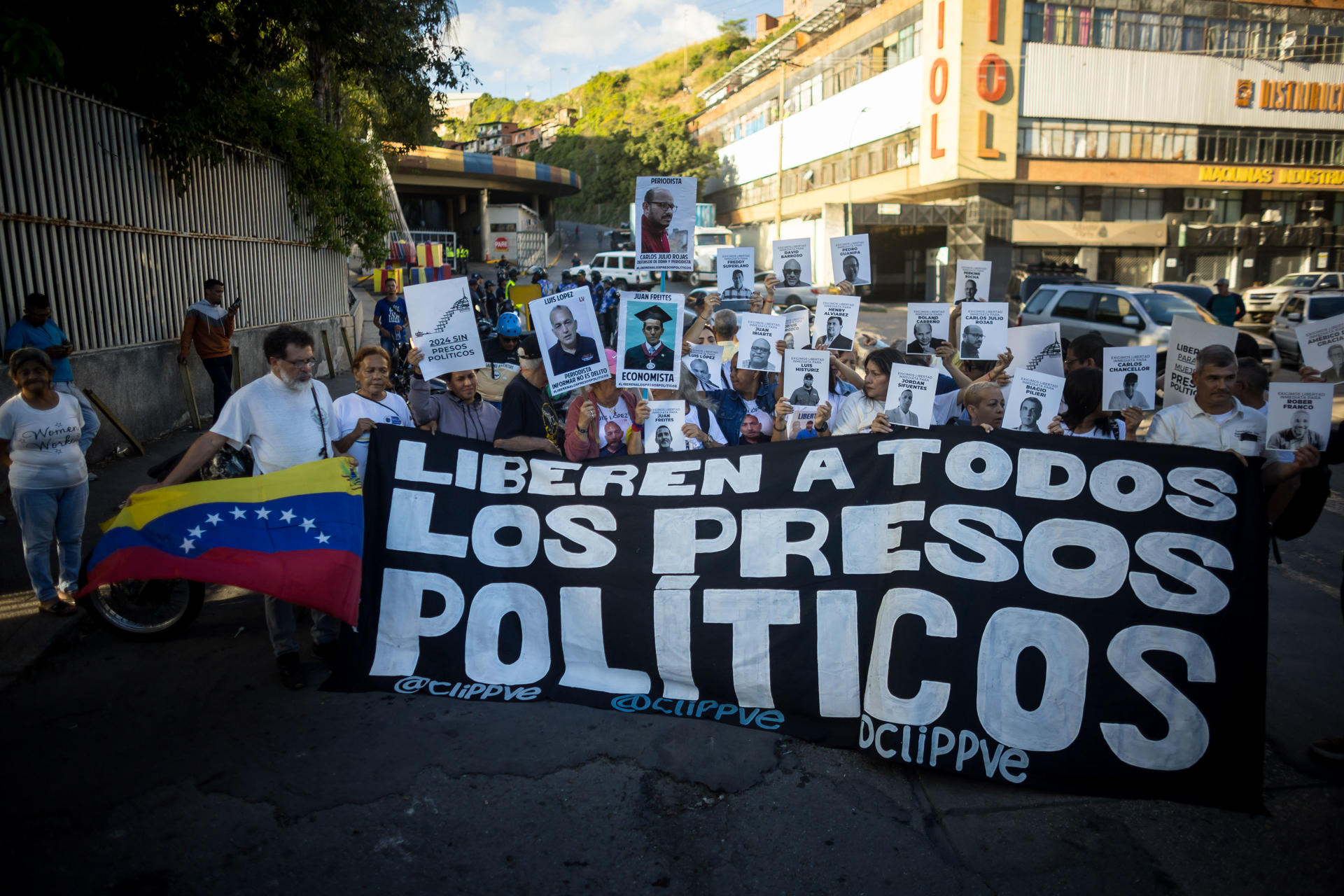
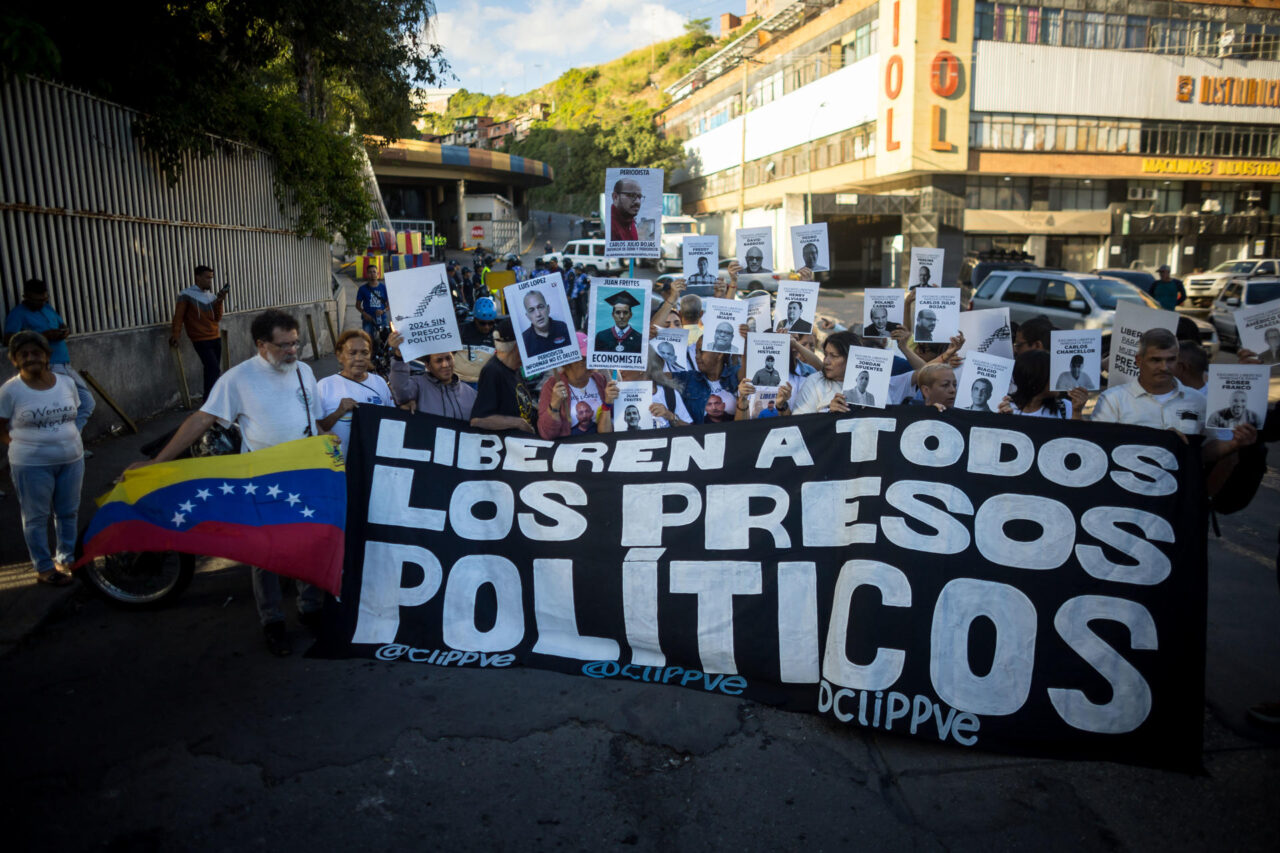
The recent day of releases announced by the government of Nicolás Maduro is once again surrounded by questions, after revealing a marked discrepancy between official figures and data verified by human rights organizations and independent journalists.
A report by journalist Sebastiana Barráez, published in Infobaestates that the real number of people released is lower than that disclosed by the Venezuelan authorities.
According to the Committee for the Freedom of Political Prisoners in Venezuela (Clippve), after joint work with family members, defenders and civil organizations, the release of 63 people was confirmed, while the regime claimed to have released 99 detainees. Subsequently, an analysis of Infobae based on The crossing of lists raised the verified figure to 65still far from the official number.
The group of released prisoners is made up of three teenagers, 21 women and 39 men. None is military. Clippve warns that these figures were obtained “in a context of official opacity, fear and repression, where many families are still afraid to speak or publicly confirm the release of their loved ones,” which makes it difficult to know the real extent of the releases.
The lack of transparency and fear of reprisals maintain uncertainty about the situation of political prisoners in the country, which continues to be one of the main sources of complaints from national and international human rights organizations.
In that sense, the journalist and human rights defender Luis Carlos Diazformer Venezuelan political prisoner, questioned the official narrative during his participation in the program The Lantern of COPE, led by Ruben Corral. Díaz stressed that, despite the announcements of releases that “approximately one hundred”, Venezuela continues to have “more than a thousand political prisoners”, a number that, in his opinion, has not decreased significantly.
“Bitter Joy”
Díaz also highlighted that among those released there is no leader of opposition political parties. He specified that the majority of those released are civilians and that only three of the five detained teenagers were released. Two minors still remain incarceratedone of them sentenced to ten years in prison for being the son of a police official critical of Chavismo.
An analyst consulted by Infobae He warned that the majority of those recently released do not enjoy full freedom and lack direct political ties. These are, he explained, post-election prisoners whose release sends an intimidating message to civil society: Anyone who challenges the State, which he described as omnipotent and repressive, will face consequences. Those released remain under precautionary measures, surveillance and restrictions that limit their daily lives.
The feeling of relief for the liberations coexists with indignation. In a message titled “Liberated: Bitter Christmas Joy”strategy advisor Nelson Mendoza Blanco expressed his mixture of joy and anger at the release from prison of several citizens held in Tocorón, one of the most feared prisons in the country.
It’s 65, not 99
Mendoza recalled that these people should never have been detained. They did not commit electoral crimes or conspire against the Stateas stated in the official speech after the presidential elections of July 28, 2024. Far from being hackers or saboteurs, they were ordinary citizens: polling station members, electoral witnesses and part of the opposition vote defense teams.
“The ‘crime’ was complying with the Constitution and defending the electoral act”denounced Mendoza, who maintains that these arrests sought to punish and warn society: whoever participates as an electoral witness for the opposition will be treated as a terrorist. In his opinion, the releases do not respond to justice or clemency, but to political calculation and propaganda.
“Release does not erase the arbitrariness of the detention or the psychological torture suffered,” he stated. As long as there are political prisoners for exercising constitutional rights, he added, there cannot be talk of free elections or the rule of law in Venezuela.
The analysis of Infobae details that The 65 released prisoners come from different detention centers in the country, including Tocorón, La Planta, La Crisálidapolice commands from several states, the Caraballeda adolescent checkpoint and a Sebin headquarters in Falcón. The nominal list of those released, published by the media, contrasts with the official narrative and reinforces complaints of manipulation of figures by the regime.
For human rights defenders, the episode confirms that in Venezuela information on political prisoners continues to be marked by imposed silence, fear and repression, while the country remains mired in an institutional crisis with no signs of real opening.