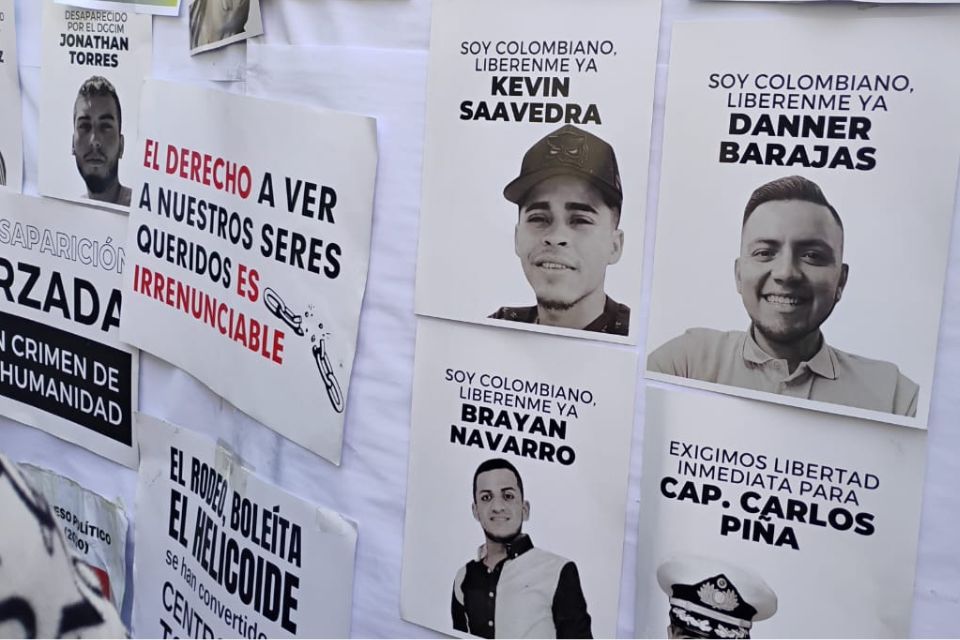
The families of the Colombians detained are directed directly to President Gustavo Petro, who is asked for high level diplomatic management to achieve the release of these political prisoners
Relatives of Colombians detained for political reasons in Venezuela asked President Gustavo Petro to intervene before the administration of Nicolás Maduro to achieve their liberations.
Diana Tique, sister of the humanitarian worker Manuel Tique, said that the Chancellery of Colombia has sent several diplomatic notes requesting information about her brother’s legal situation. However, he has not received any response from the administration of Nicolás Maduro.
“After a year, the response or contact with the Venezuelan government is completely null,” he lamented.
Manuel Tique, who works for the Danish council for refugee, was arrested on September 14, 2024 after crossing the border towards the Apure state. Interior Minister, Diosdado Cabello, pointed out of being a “paramilitary recruiter” and collaborator of mercenary groups. His family has not had contact with him again, except for a brief phone call last May.
Tique’s sister assured that there are at least 38 Colombians detained in conditions similar to those of her brother: without access to defense, constant communication or information. According to the Venezuelan Criminal Forum, until September 29 they registered a total of 838 political prisoners, including 94 foreigners.
*Also read: Criminal Forum Account 838 political prisoners until #29sep: 94 are foreigners
«There are young people, other older, motorcycle taxi, merchants, people who were only passing. All are completely isolated, illegally detained in Venezuela, ”he said.
Given the lack of responses, about twenty families have organized to make seedlings in front of the Foreign Ministry and the Palace of Justice in Bogotá, in order to demand that their cases be visible.
The families of the Colombians detained are directed directly to President Gustavo Petro, who is asked for high level diplomatic management to achieve the release of these political prisoners.
“It is already time for President Gustavo Petro to appear on this situation and make negotiations directly with the president of Venezuela or his government, so that they are free and at home again after a year of isolation,” said Tike.
With information from Infobae
*Journalism in Venezuela is exercised in a hostile environment for the press with dozens of legal instruments arranged for the punishment of the word, especially the laws “against hatred”, “against fascism” and “against blockade.” This content was written taking into consideration the threats and limits that, consequently, have been imposed on the dissemination of information from within the country.
Post views: 539