LIMA, Peru – Authorities from the Ministry of the Interior (MININT) of the Cuban regime offered this Friday on state television a more detailed version of the shooting that occurred on February 25 in Cuban waters, in which border guard forces shot down four occupants of a boat with Florida license plates, and detained six others.
In the official program Reasons for CubaFirst Colonel Ybey Carballo Pérez, Chief of Staff of the Border Guard Troops, described the event as an “infiltration attempt from the United States” and defended the agents’ actions as “rational and defensive.”
The Florida vessel would have been detected at 7:10 am at 3.7 nautical miles within the territorial waters of the Island. “It was a suspicious vessel. Our interceptor boat number 25 was then directed to proceed with its identification,” he explained.
According to his story, during the approach “people were observed in the water, who, upon noticing the presence of the Cuban unit, reembarked and headed west.”
“We were 185 meters away when we were attacked with gunshots. As a result, the commander of the unit, Captain Yosmany Hernández Hernández, was injured, who was hit in the abdomen and forearm and was bleeding profusely,” said Carballo Pérez.
The first colonel described the reaction as “correct, energetic and firm”, in accordance with established protocols.
The official version adds that, after neutralization of the vesselthe injured were evacuated and transferred to hospital centers. The weapons used by the Cuban side would have consisted of three AKM rifles and an RPK light machine gun.
Alleged arsenal seized and criminal proceedings
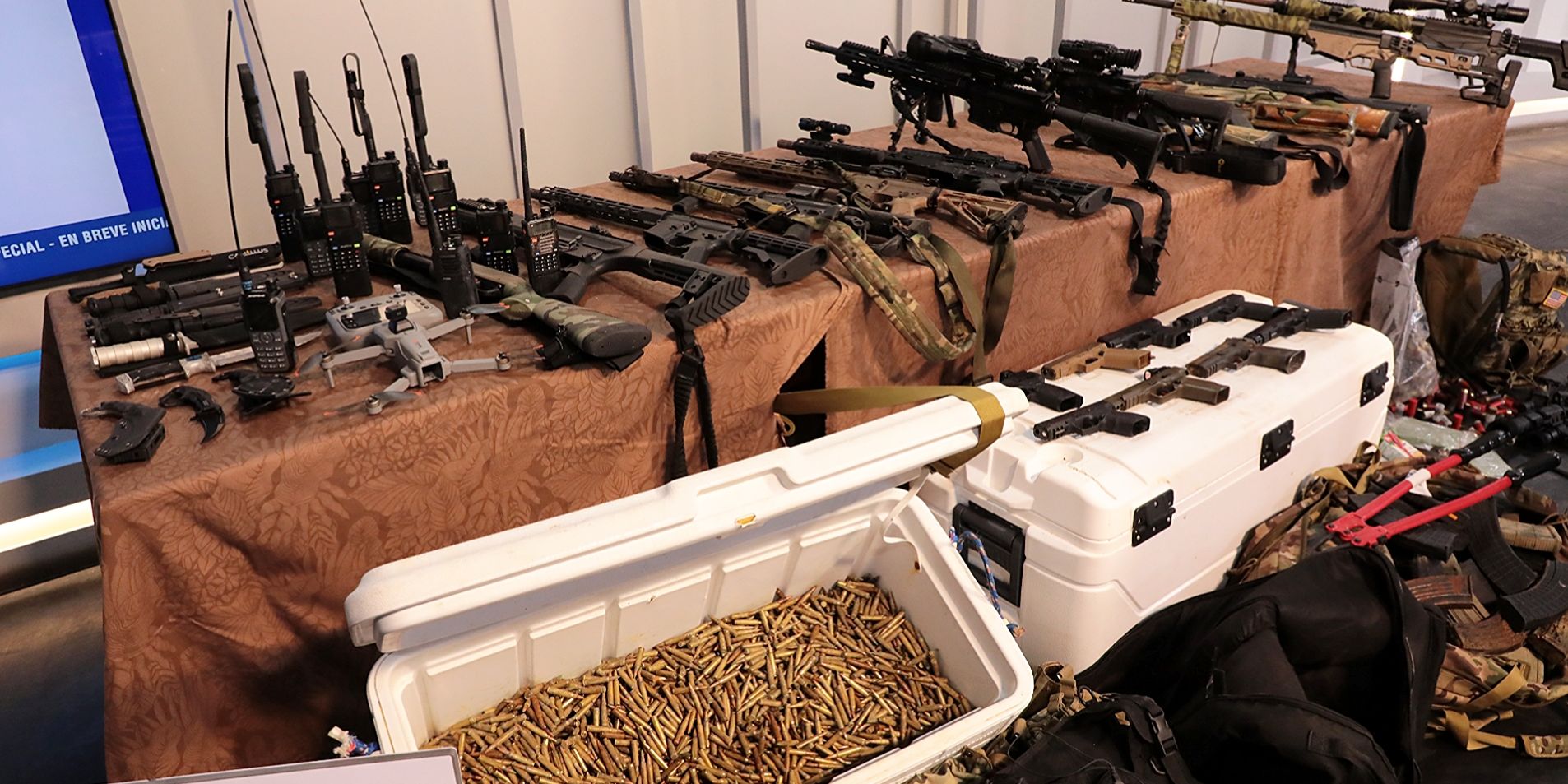
For his part, Colonel Víctor Álvarez Valle, second head of the body specialized in crimes against State Security, assured that the intercepted boat was transporting a large arsenal.
“During the inspection, rifles of different calibers were seized, a Winchester shotgun, DB AR-15 type rifles, a Delta rifle, 11 pistols and an individual module for each of the ten occupants, which included a rifle, pistol, knife, camouflage uniform, medications, balaclava, helmet and other accessories. They also carried means of communication, vision equipment and sterile materials,” he explained.
“134 magazines and a total of 12,846 ammunition of different calibers were recorded, including 5.56×45 mm and 7.62 mm (AKM). One of the occupied guns had the capacity to pierce bulletproof vests. Likewise, a drone with two cameras, ten communication devices, command knives, a portable power plant, a shear to cut padlocks and identifying emblems were seized, including that of the so-called counterrevolutionary movement November 30 and emblems of “self-defense of the people.”
The criminal investigation carried out by the Cuban regime determined that there were not one, but two vessels that left Marathon Cay, in Florida. “One presented technical difficulties on the journey and the occupants moved to the other, which is why they finally arrived in a single boat,” highlighted Álvarez Valle.
The technical report reported 13 gunshot wounds on the boat Cuban, located on starboard, on the hull and on the railings.
“It is a nine-meter-long unit. Only regulatory weapons were used. There were no rocket launchers or other types of weapons as has been speculated,” emphasized the first colonel.
The authorities identified Maritza Lugo Fernández, a resident of the United States and linked to the so-called November 30 movement, as the alleged intellectual author of the excursion to the Island. The detainees, with a proposal for a precautionary measure, face charges of armed assault, illegal entry and crimes associated with terrorism and arms trafficking.
According to Edward Robert Campbell, chief prosecutor of the Attorney General’s Office, “the sanctioning framework for terrorism provides for penalties ranging between 10 and 15 years in the least serious cases, up to 20 years or 30 years of deprivation of liberty or the death penalty in the most severe cases.”
However, some elements of the official story have raised questions, including the capacity of the vessel to transport the volume of weapons described and the rapid neutralization of the group despite its supposed high level of preparation.
Cuban officials affirmed that there was an exchange of information with US authorities after the incident, although they have started their own investigations and have expressed doubts about the version presented by Havana.