According to Reuters, “elements within the Cuban regime” have approached US officials to hold discussions about the future of Venezuela.
MIAMI, United States. – The Cuban Government denied this Monday that it had had conversations with the United States about a possible political scenario in Venezuela without Nicolas Maduroin direct response to press reports who claim that regime figures would have established discreet contacts with Washington.
The official statement comes three days after Reuters reported that, according to two anonymous sources, “elements within the Cuban regime” had approached US officials to hold discussions about “what the world would be like without a Maduro government,” a claim that Havana rejected entirely.
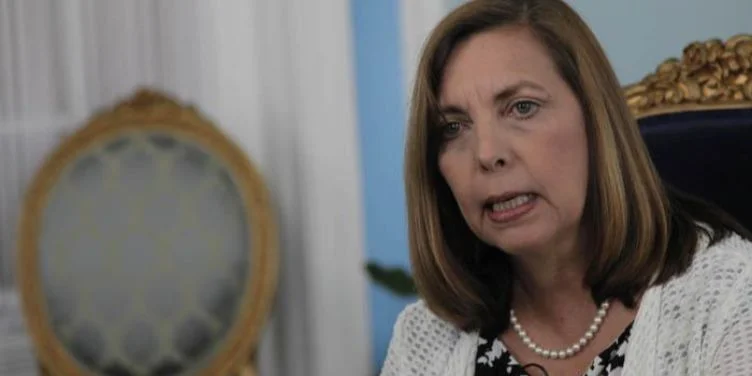
In a written statement delivered to The Associated Press (AP), the Vice Minister of Foreign Affairs, Josefina Vidal, stated that the Government rejected “as absurd and false” the press reports about “alleged contacts between Cuban officials and the Government of the United States to address internal matters that only concern the Government of Venezuela.”
The official added: “Likewise, Cuba rejects attempts to stain its clean record of fighting for peace in Latin America and the Caribbean and against drug trafficking“, and stressed that “specialized US agencies know first-hand the effectiveness of Cuba in combating drug trafficking.”
The Reuters report, published on December 5 and based on two sources on condition of anonymity, indicated that “elements within the Cuban regime reached out to the United States” and that “discussions had occurred between the two about what the world would be like without a Maduro regime.” The sources did not identify the supposed Cuban interlocutors nor offer details about the content of these exchanges.
In recent days, the authorities of the Cuban regime have assumed a tone of frontal rejection of any suggestion of negotiation with Washington regarding the Venezuelan political future. On November 25, Foreign Minister Bruno Rodríguez Parrilla had accused the US Government of promoting a “violent overthrow” in Venezuela and described the US military presence in the region as an “exaggerated and aggressive” threat, while warning that attempting to remove Maduro would be “extremely dangerous and irresponsible”, in addition to violating international law and the Charter of the United Nations.
So far, Washington has deployed the Gerald Ford aircraft carrier, eight warships, a nuclear submarine and F-35 aircraft to the Caribbean, as part of its pressure campaign against the Venezuelan regime. At the same time, the White House has intensified operations against vessels accused of trafficking drugs and has increased the rhetoric against Maduro.
Added to this scenario are recent revelations also cited by Reuters, according to which Maduro had told President Donald Trump, during a telephone conversation, that he would be willing to leave power if he and his family received full legal amnesty, lifting of sanctions and the closing of a case before the International Criminal Court. Trump confirmed that the call existed, but refused to give details: “I don’t want to comment on it, the answer is yes. I wouldn’t say it went well or badly. It was a phone call,” he told reporters.
Vidal, who for years led bilateral negotiations between Cuba and the United States during the 2014 rapprochement, now described the reports about contacts as part of a campaign to erode the relationship between Havana and Caracas. In his statement to AP he pointed out that “American warring sectors resort to crude lies to try to break the unity of the Venezuelan Government and people against external aggression, as well as involve Cuba in the construction of falsehoods and pretexts to justify aggression.”
To date, neither the US Government nor the Cuban regime have presented evidence that conclusively corroborates or refutes the press reports.