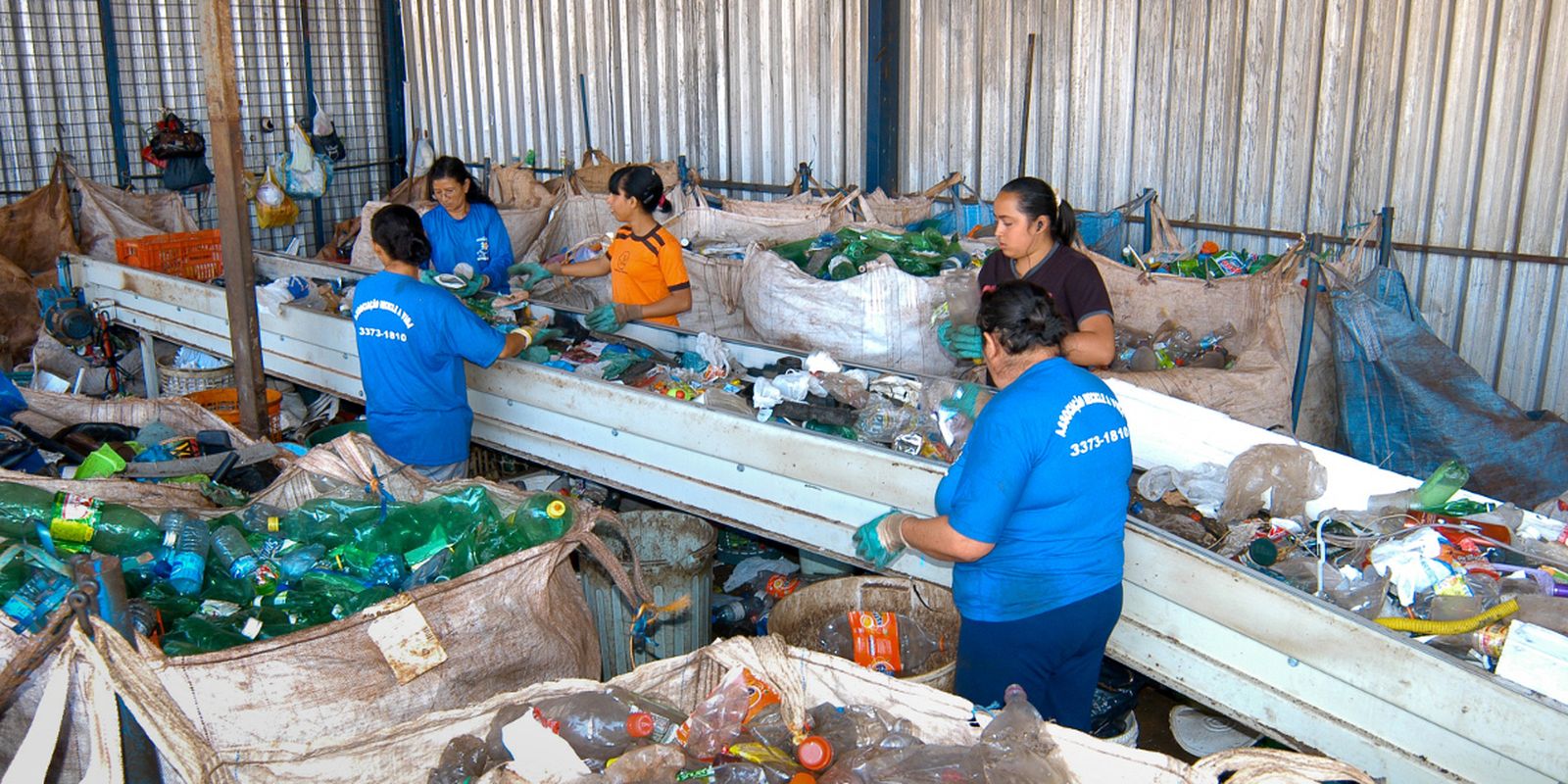
The national production of recycled plastic, technically called post-consumer recycled plastic resin (PCR), reached 1.012 million tons in 2024, resulting 7.8% higher than in 2023. The data are annual study commissioned by the Plastic Movement, Picplast’s initiative, partnership between the Brazilian Plastic Industry Association (Abiplast) and Braskem.
Recycling industry revenues also rose, reaching, by 2024, R $ 4 billion, a nominal increase of 5.8% compared to 2023. The sector also generated more jobs, totaling 20,043 new direct jobs, a growth of 7.7% over the previous year. The installed capacity of recycling industries was also elevated, 1.9%, reaching 2.43 million tons.
According to the survey, the PCR resin produced in 2024 was mainly destined for food and beverage (167 thousand tons) and personal hygiene, cosmetics and household cleaning (132 thousand tons), driven by the demand for packaging with recycled content.
The agro -industry demanded 92,000 tons and showed a growth of over 35% compared to 2023, driven by applications such as cannons, hoses and agrochemical packaging.
“If we compare with 2018, when the study began, we realized a reversal of protagonism: that year, construction was the main destination of recycled resin, while the food and beverages segment had a lower participation. This change reflects regulatory advancement and commitments to major consumer marks with the circular economy and the use of more sustainable materials,” said the director of sustainable chemistry and the recycling of maximquin, Maurício Jaroski.
Regions
The survey also showed a strong concentration of plastic recycling processes in the Southeast and South regions of the country, which lead all stages of the chain, from the generation of waste to the production of post-consumer recycled resin (PCR).
The Southeast region stands out as the largest generator of plastic waste, with 48.1% of the total (2.3 million tons), and also as the main processing hub, accounting for 47% of waste consumption by industry and 55.5% of national PCR production (559 thousand tons).
The southern region appears in sequence, accounting for 26% of waste consumption and 26.2% of PCR production (266 thousand tons). Meanwhile, the Northeast region consolidates itself as the third PCR producing force, with 13.7% of the total (139 thousand tons) and a significant growth of 16.6% compared to 2023.