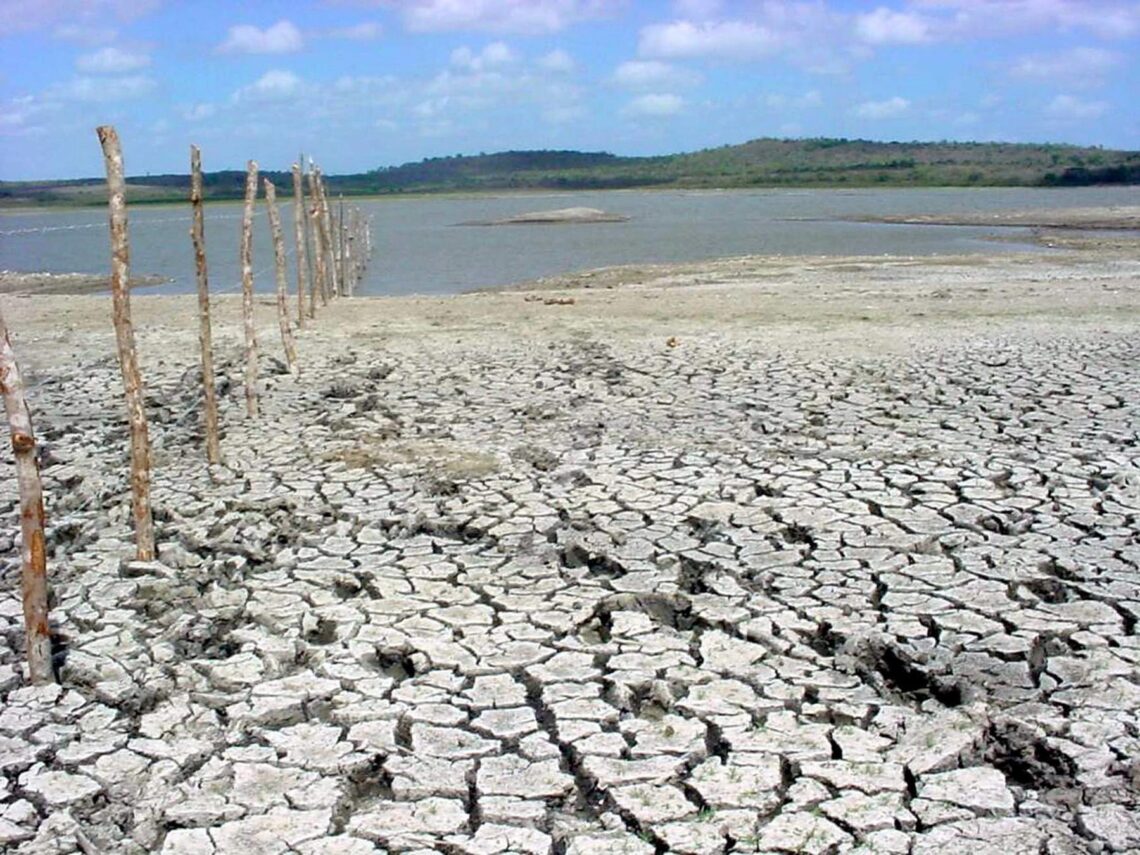
A notable increase in rainfall in September and October has improved the water situation in Cuba after several months of intense drought.
However, the Drinking water supply continues to be critical in several provinces in the east of the countryaccording to sector authorities in the Round Table.
Engineer Yulian Omar Rodríguez, vice president of the Terrestrial Water Management Business Group, explained that the national accumulation from May to September reached 609 millimeters, equivalent to 72% of the historical average, driven by the September rains.
Until October 20, the national average rainfall was 140 millimeters, 91% of the average for the month.
Despite this improvement, the low levels in eastern provinces such as Guantánamo (46%), Santiago de Cuba (51%) and Holguín (59%).
At the national level, the reservoirs They reach 53% filling, with a net gain of 941 million cubic meters, highlighting the recovery of the central region with more than half of that volume.
The provinces most affected by the lack of water continue to be Holguín, Santiago de Cuba and Guantánamo.
In Holguín, the reservoirs that supply the provincial capital do not exceed 30% of their capacity, while in Santiago and Guantánamo the average is between 30% and 40%.
What is happening with the drought in Cuba?
In this situation, they execute emergency actions and investments to guarantee supplysuch as new pumping positions at the Cacoyugüín dam, the operation of floating stations in Gibara and the reactivation of transfers to Guiráo and Gota Blanca.
The first vice president of the OSDE Water and Sanitation, Yunior González Núñez, reported that the rains have reduced the number of people affected by service interruptions from 3.5 million to 1.7 million.
He also mentioned the replacement of deteriorated sections in the Cuenca Sur highway, one of the most affected in the country.
Rodríguez added that Of the 12 existing transfers, six will be operational before the end of the yearand that the government has allocated one million dollars to acquire 18 new pumping equipment.
Part of them have already arrived and will mainly benefit eastern Cuban territories.
Although recent rains have brought relief, authorities acknowledge that The country must continue strengthening its hydraulic infrastructure to face the challenges of climate change and ensure a stable and sustainable supply of water.