The heavy rains and the floods that have affected the country in recent years not only leave material damage and human losses, they also generate a silent impact in the mental health of the population.
This is demonstrated by the research “Impact of rains and floods on the mental health“, presented by clinical and health psychologist Skralin Santanagraduated from the Technological Institute of Santo Domingo (Intec).
The study, with a mixed approach and based on surveys and interviews with residents of the National District with ages between 25 to 60 years, reveals that more than 70% of participants experience emotional changes or avoidance behaviors when faced with rain forecasts, and that more than half report symptoms of anxiety either post-traumatic stress linked to the flooding events that occurred in November 2022 and 2023.
“In the car the water reached my breasts. My parents’ house flooded and a power line came down. In 2022 I saw myself floating with the water halfway through the windows of the car in the Núñez de Cáceres with Gustavo Mejía Ricart.
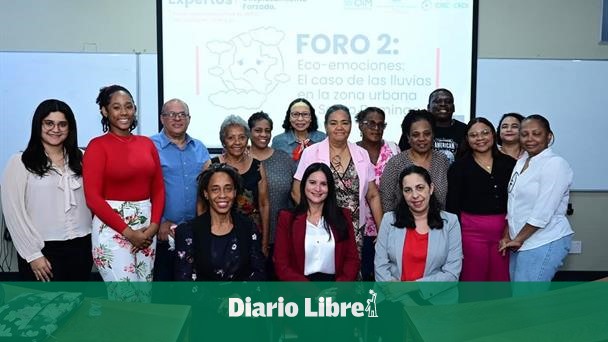
Fortunately, they helped me and I came out unharmed,” says one of the testimonies collected in the investigation that was presented during the Expert Forum “Climate Change and Forced Displacement” carried out by the Center for Gender Studies of the Intec.
These types of experiences leave psychological traces that can persist even in people who do not live in vulnerable areas or who did not suffer direct losses, explains Santana.
The forums are part of the project “Climate Change and Forced Displacement: its impact on the lives of women and girls”, sponsored by the International Development Research Center (IDRC/CRDI), in order to generate reflection, dialogue and proposals on one of the most urgent problems of this time.
Fear of rain
The research identifies the pluviophobia (intense fear of rain) and antlophobia (fear of floods) like frequent manifestations among those affected, characterized by obsessive thoughts, avoidance of daily activities and excessive worry about weather forecasts.
Among the symptoms manifested 58% of those interviewed said they felt anxiety and Post Traumatic Stress Disorder because of the floods; Although the majority did not have a traumatic experience and do not live in a vulnerable area, they still present avoidance behaviors or have worrying thoughts after those events that occurred in the month of November in 2022 and 2023.
According to Santanathe findings confirm the urgent need to integrate the mental health in the public policies risk management. “The social resilience In the face of climate phenomena it does not depend only on infrastructure or emergency protocols, but also on the emotional capacity of people to face them,” he stated.
Why is this fact important?
Among the practical recommendations, the psychologist proposes strengthening the strategies of emotional education, cognitive behavioral therapy and psychosocial early intervention protocols.
Likewise, it suggests the inclusion of professionals from mental health in emergency response teams, as well as the creation of community awareness that help recognize the symptoms and reduce the stigma associated with anxiety disorders.
“We need to understand that rains not only flood streets, they can also flood minds. Address the mental health is key to building truly resilient communities,” he stressed. Santana.
The study constitutes one of the first systematic approaches to the psychological impact of climatic events in Dominican Republicand seeks to serve as a starting point for future research and public policies oriented to emotional well-being in the face of climate change.