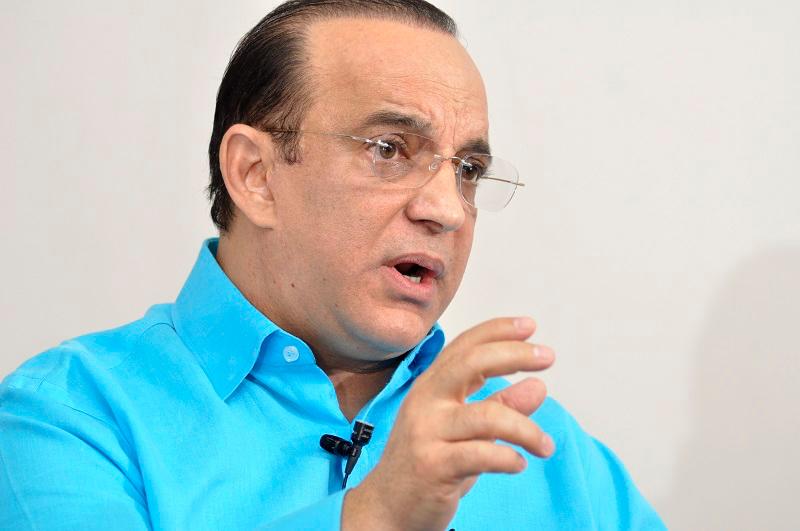
Santo Domingo.- The president of the Social Christian Reformist Party (PRSC), Federico Antún Batlle (Quique), declared that the last governments have indebted the nation at unsustainable levels, which he said generates concern in different sectors of society, “because the trend, throughout, represents a sentence of perpetual mortgage.
He assured that the Dominican Republic lives under the mirage of debt and each new government requests loans with the argument of “accelerate development”.
We recommend you read: Quique Antún attributes the electrical interruptions that affect the country to improvisation
“However, what is really accelerating is dependency, since debt multiplies, but national productivity does not grow at the same speed,” he added.
He also highlighted that, although public spending is inflating, the quality of basic services such as education, health, water and electricity continues to lag behind.
Quique Antún maintained that the crucial problem lies not only in the volume of the debt, but in its destination.
“We have borrowed largely to finance current spending, and not to finance investment projects that generate sustainable wealth,” he added.
He explained that this error transforms external credit “into a momentary patch that fails to resolve the structural causes of our economic fragility.”
He said in that sense, that governing is not simply spending, but planning with a vision of the State.
I have learned, he continued, that the easiest way to govern is by putting the country into debt, while the truly difficult thing is to manage with internal savings, efficiency in spending and clear priorities.
Balaguer’s governments
Quique Antún said that, contrary to what has happened in the last administrations that have directed the destinies of the Dominican Republic, in the governments of President Joaquín Balaguer “it was shown that it is possible to build a nation with its own resources, internal savings and discipline in spending.”
He cited the great works, such as dams, roads, housing and others, that were carried out prioritizing what was essential for the country, “avoiding mortgaging the country at the whim of each situation, without depending on excessive debts.”
The reformist leader understands that the cost of living on loans is high, since the fruits of the people’s efforts and the payment of their taxes are diluted in the obligation to pay interest to international creditors.
“In addition, investment in essential productive pillars such as agriculture and food security is neglected, elements without which development cannot be sustained,” he noted.
He pointed out that a country that lives off debt is comparable to a home that is maintained on credit cards, “that sooner or later, the interest becomes unpayable and the house collapses.”
The route to economic sovereignty
He went on to say that debt, when reasonable and well-directed, can act as a lever for development.
“But when it is normalized and becomes the main source of financing, it represents a sentence of perpetual mortgage,” he said.
Quique Antún insisted that the path to a dignified future is internal savings, “a more difficult route that requires character and discipline.”
He recommended, to achieve these savings, reducing superfluous and clientelistic spending; implement a fair tax reform that rewards production and does not punish those who have the least and prioritize strategic projects not only in education, energy and water, but also in health and food production
He affirmed that what is at stake with unsustainable debt is not a simple budget figure, but the economic sovereignty of the country.
“No nation can aspire to real development if it lives mortgaged, depending on loans to cover current expenses and resting its stability on the generosity of its creditors,” he stated.
The president of the PRSC finally said that the future is not bought on credit, “it is forged with discipline, vision and courage.”