Havana/Berta has just made an appointment, after trying for almost a month, at the Institute of Neurology and Neurosurgery in Havana, one of the places where the Government has launched a specialized consultation for convalescents from the coronavirus. chikungunya. They will attend to her within ten days.
Infected at the beginning of October, the woman, a resident of Centro Habana, spent several weeks in bed, bedridden with pain. When the fever subsided, he could not go outside and had to borrow a wheelchair. More than three months later, he is better, but he still has many after-effects. “I can’t sleep, I spend sleepless nights with pain in my hands and knees,” he tells 14ymedio.
Since the Ministry of Health announced, last December 22the beginning of care for patients with the consequences of chikungunya at the Neurological Center, Berta’s husband was trying to get an appointment, but he only got it two days ago.
“The first time the doctor saw you in the office, they gave me medication, but then, if you need physical therapy, they refer you to another place”
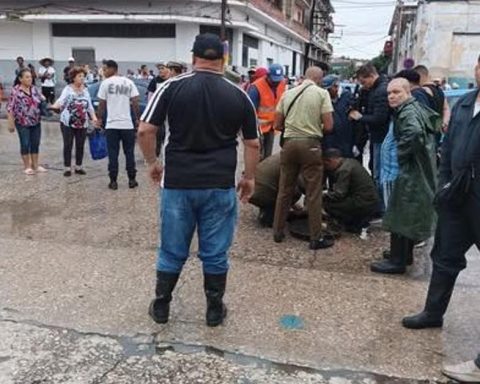
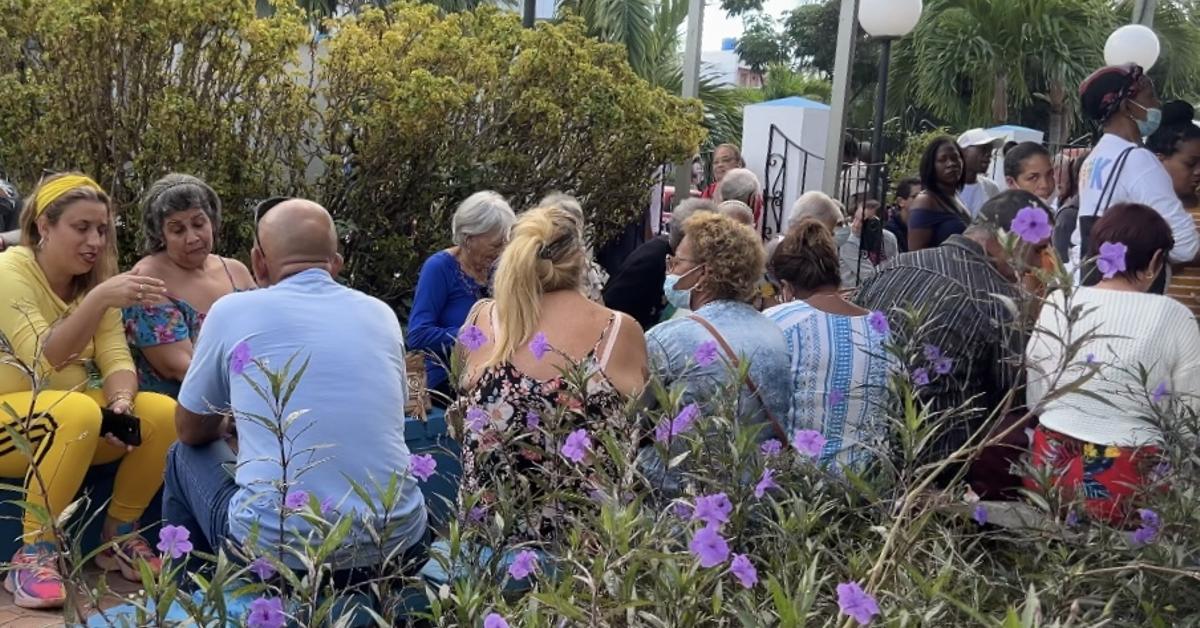
Hundreds of people unrepentantly form a line every day to make an appointment at the institution, located in El Vedado, on 29th Street, between F and D. This Wednesday, 14ymedio was able to witness two lines: one to request an appointment and another for the consultation. The first, I was going at a good pace; the second, he barely walked. “I’ve been here since seven o’clock, and from 8 o’clock they opened until 12 o’clock, only four had passed,” said an elderly woman who was waiting. “This is too slow.”
Appointments are being given for a period of approximately 15 days. “The first time the doctor saw you in the office, they gave me medication, but then, if you need physical therapy, they refer you to another place,” explained another woman, younger than the previous one. The doctors who could be observed were, for the most part, young and foreign. Most of those who were waiting, on the other hand, were over 60.
“I’m hoping they can help me, although my husband doesn’t believe it,” says Berta. “At least on the news they say that this does work.”
Indeed, the information disseminated by the official media could not be more optimistic. Thus, they promise the design of “personalized physiotherapy programs to promote rehabilitation and prompt return to daily and work activities.” The service, explained the Ministry of Health, is intended “for the management of neuropathic pain, joint conditions and paresthesias”, some of the consequences suffered by chikungunya patients, some chronically.
/ 14ymedio
“Our goal is to evaluate and treat each case individually, facilitating a path toward functional recovery and improving quality of life,” promised Orestes López Piloto, director of the Institute of Neurology. The project is carried out by a multidisciplinary team made up of neurologists, neurosurgeons, anesthesiologists and physiotherapists, the Ministry also stated.
In addition, health authorities drew a panorama with sophisticated studies such as tomography, ultrasound and even “specialized anesthetic interventions” to alleviate the consequences. Asked about this, López Piloto said that they could not know the exact number of people who would attend the consultation, but that the Institute had the necessary resources. “The strength of our health system allows us to organize this type of response,” he asserted.
The long wait in front of the establishment seems to contradict this.
“At least they have a consultation,” objects Amauri, a resident of Ciego de Ávila. “Here, those of us who have had the virus just have to be patient.” He, his partner and his mother had the disease in November, and still suffer its consequences. “I wake up in the morning with numb hands, I have to move them a lot to be able to function halfway well,” he confesses.
“I wake up in the morning with numb hands, I have to move them a lot to be able to function halfway well”
According to the Pan American Health Organization, which is based on official Cuban statistics, a total of 65 people have died from chikungunya and dengue. However, statistical calculations by the Cuban Observatory of Citizen Audit and Cuba Siglo 21 set the figure at 8,700 people.
The majority of those who died in the official registry are minors. Of this age group, the most vulnerable They are newbornswhose life is in danger if they fall ill.
In 2025, 51,217 cases of chikungunya and 30,692 of dengue were registered. The epidemic, as already happened with covid-19, has revealed the fragility of the health system, once an emblem of the Revolution. Added to the lack of medicines and the deterioration of health facilities is a 27% decrease in the number of doctors in just five years, which went from 103,835 in 2020 to 75,364 in 2024.
The challenge, published this Thursday Newspaper 26is to achieve “through an accurate line of research, the keys to impact the recovery of patients with sequelae” of the arbovirus. The authorities are still not clear. One of the measures has been to promote tests with Jusvinzaalso known as Cigb-258, a drug created by the Center for Genetic Engineering and Biotechnology (Cigb) more than a decade ago as a modulator of the immune system, originally intended for autoimmune diseases such as rheumatoid arthritis, and which has not yet been proven effective for chikungunya convalescents.