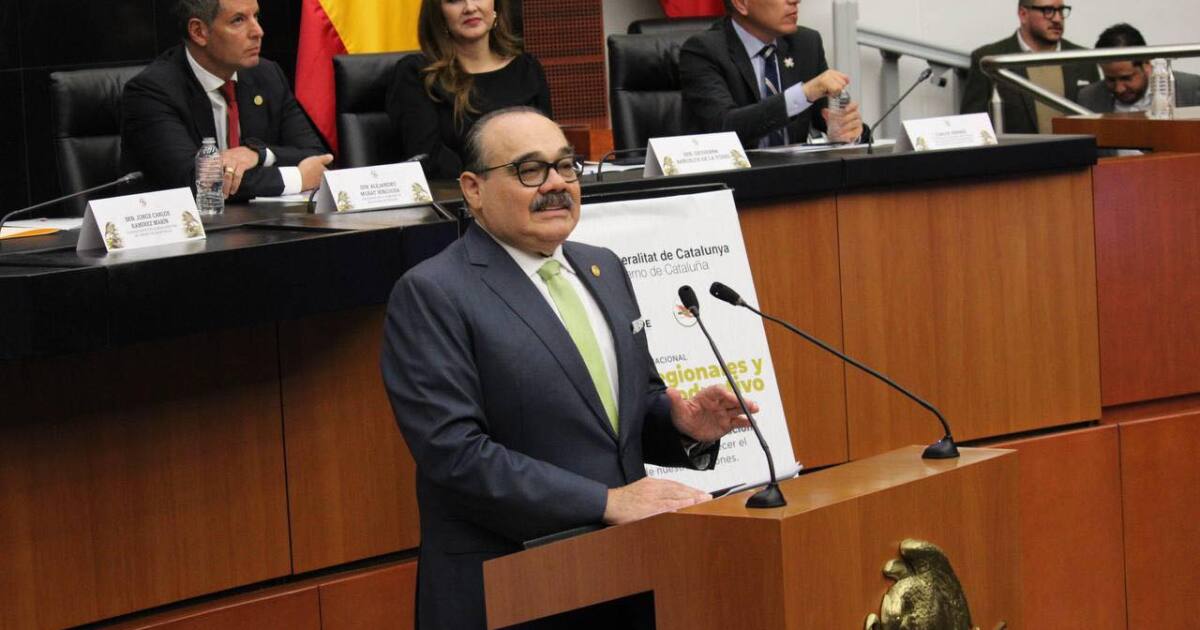
Melgar defended the validity of the current electoral system by highlighting that it has allowed political alternation.
“The electoral rules that we have today are good. With those rules Morena won in the 18th and with those he won in the 24th, and he won well in both cases. Why, if the rules are good, go against them?” he questioned.
In that sense, he emphasized, “the multi-member thing is definitely not going to be supported by the Green, because that goes against us.”
The legislator made it clear that the Green political alliance does not imply a renunciation of its principles.
“We are respectful, but for no reason are we going to be overwhelmed in making decisions that do not correspond to our values,” he stated and concluded, “I, Luis Armando Melgar, am not going to vote for that. Everyone is the owner of their vote.”
Both senators insisted that although there is an agreement with President Claudia Sheinbaum, at this moment they are waiting to maintain a dialogue to work on electoral reform, but they indicated that, as a matter of principle, they will not accompany a reform that weakens proportional representation, equity between parties or the autonomy of the electoral system.
The Green’s positioning is key because Morena does not have the qualified majority on its own to approve the reform and needs its legislative allies. Although the Labor Party has reiterated its political alliance with the ruling party after meetings with the Interior, it has not expressed explicit support for the reform.
In this scenario, the underlying debate is not only technical, but political: whether the reform seeks to strengthen the electoral system or concentrate power. While Claudia Sheinbaum prepares to send the initiative to Congress, the Green’s message is clear: without real consensus and without respect for plurality, there will be no automatic votes.