In the House of Representatives, a bill is processed through which it is sought to prohibit the shareholding of the Regional Autonomous Corporations (CAR) in the domiciliary public service companies.
It may interest you: They admit demand against the CAR for Expansion Project of Av. Boyacá
With the above, it is about preventing them from being owners or shareholders of domiciliary public services companies, which is ordered to give up those shares to municipalities or departments, and seeks to avoid conflicts of interest to strengthen Environmental and administrative transparency.
“It is not constitutional and legally viable that the environmental authorities responsible for granting and approve of the public service companies, permits and authorizations such as water concessions, discharges, sanitation plans, whether they are in turn, owners or shareholders of said companies, since the power control theory is also at risk that currently governs in the Colombian state system”, Says the bill.
This is done in order to strengthen the legitimacy and impartiality of regional autonomous corporations.
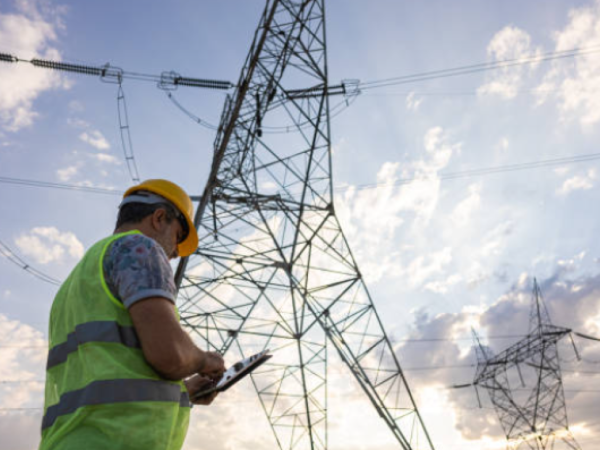
CAR must give their participation in public services.
Courtesy: Istock
How should the assignment be done?
The assignment must be done under criteria of equity, proportionality and weighting. Likewise, companies must adjust their statutes, guaranteeing that territorial entities have priority in governance.
“Once the transfer that this article deals with, the domiciliary public services companies will reorganize their statutes, in order to guarantee the priority participation of the territorial entities in the governance of these” will be reorganized.it stands out from the document.
Among the reasons that justify this bill, it is exalted that the CAR are environmental authorities that must monitor and sanction public service companies, so they cannot at the same time be due or partners of them.
However, today there are cases where some Car as: The Regional Autonomous Corporation for the Defense of the Bucaramanga Plateau (CDMB), The Regional Autonomous Corporation of Valle del Cauca (CVC) and the Autonomous Corporation of Cauca (CRC) have shareholding in aqueduct, sewage or energy companies.
According to the exposition of reasons, having the Car these links, self-regulation risks are generated since it is supervisors it to its own company.
In addition, possible losses of environmental resources are generated, since the profits of these companies do not always benefit environmental protection and another impact that it generates are the problems of transparency in hiring by the special regimes of public service companies.
It is worth mentioning that project 235 of 2023 Chamber had already been presented in 2023, which was a similar articulate, which was approved in the first debate, But it was filed due to the expiration of terms.
However, this is taken up with the same arguments and adjustments. Law 99 of 1993 defines the role of Regional Autonomous Corporations (CAR) as the environmental authorities, without power to be shareholders of public service companies and in Law 142 of 1994 it is established who can provide public services, not including the CAR.

Government delivered the 4G transverse project of the SISGA
Car
How many resources have the CARs receive related to public service companies?
According to the justification memory, the Regional Autonomous Corporation for the Defense of the Bucaramanga Plateau (CDMB), the Regional Autonomous Corporation of the Valle del Cauca (CVC) and the Autonomous Corporation of Cauca (CRC) that have shareholding in aqueduct, sewerage or energy companies have received several resources from these companies.
Under this premise, CDMB is made up of 13 municipalities: Bucaramanga Floridablanca, Girón, Piedecuesta, Vetas, California, Surratá, Matanza, Charta, Tona, El Playón and Rionegro and Lebrija.
For its part, the EMPS company manages and operates the sewerage of the sewerage system in the municipalities of Bucaramanga, Floridablanca, Girón and Piedecuesta. The above evidence that, the company owned by the CDMB provides its services in municipalities where such environmental authority exercises its legal functions, which implies a serious risk for environmental control and for the principles of impartiality and morality of the public administration, coupled with the imbalance in the power control that can be generated.
Regarding the economic resources obtained by the CDMB as the owner of the EMPS it was identified that since 2006 (date of constitution of the EMPs) until today, this environmental authority has only obtained profits in 2014 for the sum of $ 2,654 million.
Recommended: The impact of the ‘stubbornness of companies’ on the delivery of environmental licenses
On the other hand, the Regional Autonomous Corporation of Valle del Cauca – CVC, has as part of its assets actions that were delivered to it on the occasion of the transfer of assets and liabilities related to the electrical activity and the capitalization of the Pacific Energy Company of the Pacific SA – EPSA, ordered in 1993 by Law 99 and regulated in 1994 through Decree 1275 of 1994, by means of which the corporation was restructured.
According to the information provided by the CVC on August 20, 2024, to cut from the first semester of 2024, the shareholding and the amount of dividends amounted to about $ 1.4 billion for their participation in Celsia and Aquavalle SA Esp.
Finally, the Regional Autonomous Corporation of Cauca, according to the information provided by Asocars (2024), has in its statutes a shareholding in Aqueduct of Popayán and CEDELCA close to $ 107,291 million, which are part of its assets, which represents 37% of the total assets of said corporation.
Leidy Julieth Ruiz Clavijo
Portfolio journalist