A proposal with nuances
For their part, some institutions and specialized organizations such as the National Association of Water and Sanitation Entities (ANEAS)—organization that brings together the country’s drinking water and sanitation operating organizations—, the Water Advisory Council (CCA) and the Mexican Center for Environmental Law (CEMDA) They support the presidential initiative, but with nuances.
ANEAS highlights the importance of strengthening the National Water Commission (Conagua), regularize concessions, prioritize water for urban public service, promote reuse and rainwater collection, as well as promote a water culture with social and academic participation.
The CEMDA – dedicated to legal defense and promotion of public policies for the protection of the environment – celebrated that the Federal Executive resumed the legislative debt pending for 13 years, but asks Congress “check and adjust” the proposal to ensure that it fully guarantees the human right to water and the protection of ecosystems.
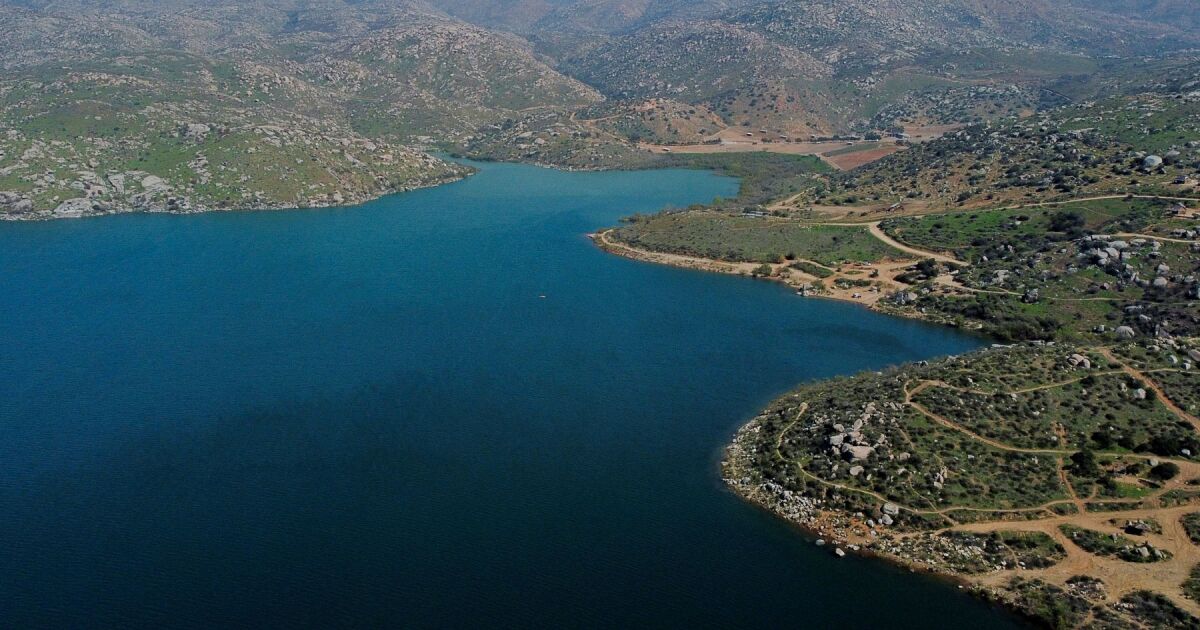
(Photo: GUILLERMO ARIAS/AFP)
The organization highlights the need to guarantee the ecological flow, that is, the minimum volume of water that must be maintained in rivers and aquifers to preserve environmental balance and warns that eliminating the prohibition to grant concessions on riverbeds or federal areas destined for mining waste or wastewater “could be regressive.”
Likewise, it points out that the protection of community water and sanitation systems is insufficient, since the initiative only recognizes them outside the area of operation of municipal or metropolitan services, “which could contravene international standards on community autonomy.”
The organization Blue Pitcherdedicated to strengthening community water and sanitation systems, warns that the project still presents important “gaps” in the legal recognition and protection of the citizen committees that today guarantee access to water in thousands of rural communities in the country.
“In Mexico, millions of people are supplied thanks to community management of water and sanitation. That the initiative names them is an advance, but the law must seriously recognize them: as subjects of law, with a voice and resources to carry out their work,” the organization says in a statement.
According to the organization, the project restricts recognition of community systems only to areas outside the municipal or inter-municipal sphere, which could allow local governments to displace committees that currently operate successfully, through simple administrative modifications.
In that sense, the association proposes that the law should guarantee mandatory federal minimums, including legal recognition, access to financing and technical assistance for committees and boards that operate in rural areas.
Cántaro Azul recalled that in previous legislative processes—such as the State Forums “Towards the Construction of a General Water Law” organized in 2020—concrete proposals had already been incorporated to professionalize and provide tools to Community Organizations for Water and Sanitation Services (OCSAS), including a Citizen Comptroller’s Office and clear coordination and financing mechanisms.
The organization also warns about the possible duplicity between the General Water Law (LGA) and the National Water Law (LAN), which could generate bureaucracy and confusion in the procedures for communities seeking to regularize their service. “On paper it sounds orderly, but in practice it can lead to sanctions and dismantling of systems that work today,” he warns.
Finally, he emphasizes that Congress should not leave behind those who already guarantee the human right to water in daily practice. “Recognizing community systems is not a symbolic gesture; it is the way to accelerate coverage, improve quality and take care of water from the bases. Water cannot wait another thirteen years,” he points out.