For the first time in more than six decades the Private sector of Cuba He surpassed the state in the value of retail sales, according to the most recent official data on this section of the island’s economy.
According to data from the National Office of Statistics and Information (Onei), managed by the agency Reutersthe non -state sector generated 55 % of retail sales of goods and services – the public is not included – during 2024, when a year before it had remained at 44 %.
#Economy | Know the quarterly GDP of Cuba in 2024.
First quarter – 11 952.1 million pesos.
Second quarter – 12 619.9 million pesos.
Third quarter – 12 244.0 million pesos.
Fourth quarter – 13 877.3 million pesos.1/6 pic.twitter.com/b0cf2CFAKX
– National Statistics and Information Office Cuba (@cubaonei) July 28, 2025
One of the factors that have allowed this growth lies in the extension promoted by the Cuban government to private management in economic relations.
The first steps in that sense, recalls the medium, occurred in 1991, after the collapse of the so -called socialist field, headed by the then Soviet Union, thus reversing the policy followed since the beginning of the revolution with nationalization.
The contraction of 11 % of the state economy has also influenced this turn during the last five years, and which is expressed mainly in the shortage of necessities, high inflation and energy crisis, refers to the publication.
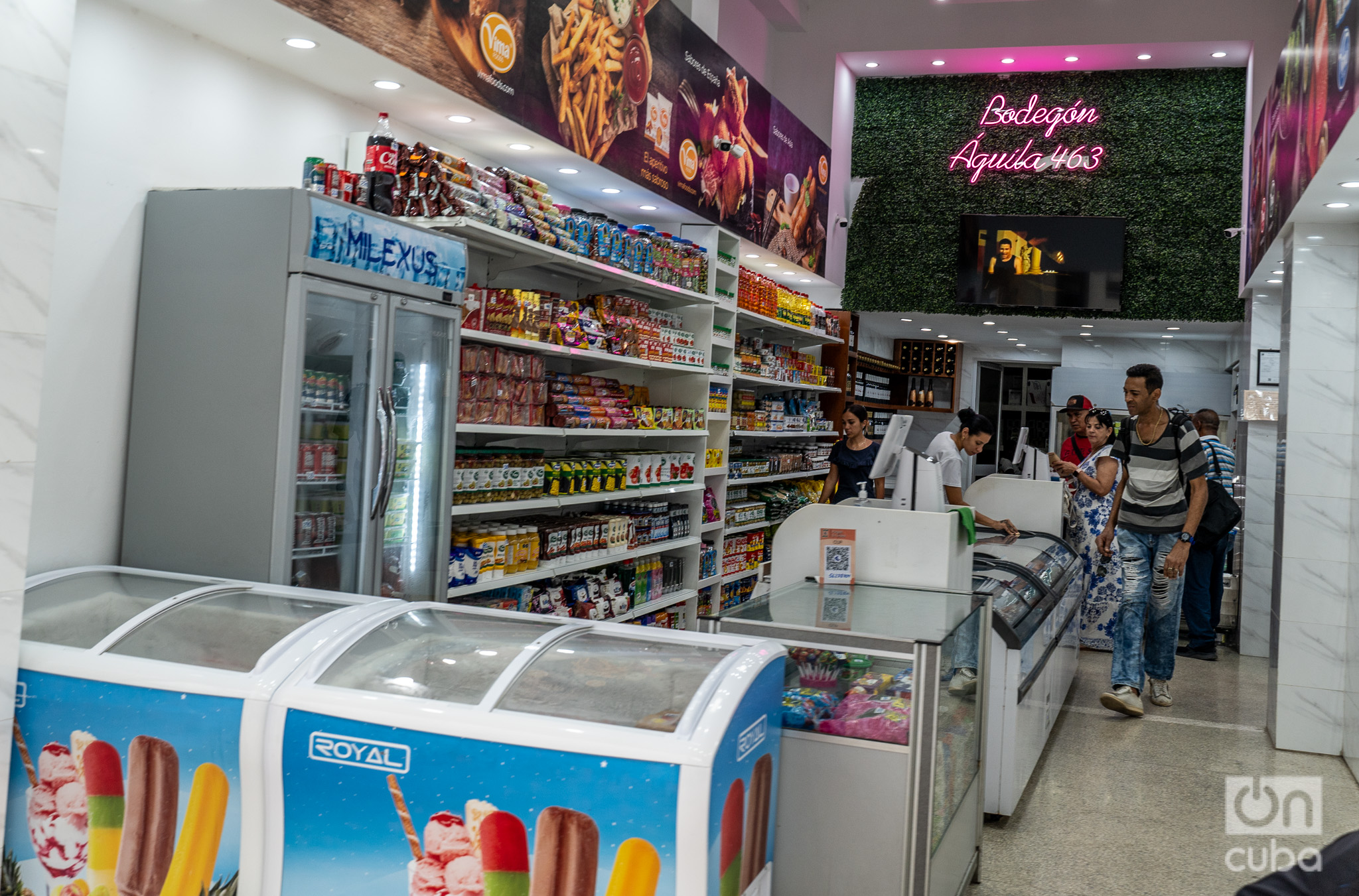
Although the State still runs a good part of retail shops, these are not able to cover the demand for products and services that the population needs.
This emptiness has been gradually occupied by private entrepreneurship, in which the availability and variety compared to state stores, although with high prices, is remarkably greater.
Expert looks
Cuban economist Omar Everleny warned that high prices prevailing in the informal market promoted the value of the private sector and that retail data did not reflect the total volume.
“Prices are usually subsidized in the state sector and are much higher in the private,” he said. “But the State has little effective to import goods … so people have to resort to the private sector, which is more flexible.”
The veto to the private sector began to give in 2008, from the greatest pragmatism assumed by the government, then headed by Raúl Castro.
To the date, it went from outlawing to be considered “strategic” for the alleged economic takeoff, also assumed by Miguel Díaz-Canel, despite the fact that the system continues to point to the socialist company as the main actor of the economy.
Many experts, including Everleny, believe that “there is an ongoing debate within the country’s leadership, among those who advocate greater liberalization of private company and those who oppose,” says Reuters.
Exports and imports of the private sector grow in the first semester of 2025
In turn, remember that in the parliamentary sessions held this July the head of the Ministry of Economy and Planning (MEP), Joaquín Alonso, acknowledged that the total imports of the country have decreased, in contrast to those of the private sector, which exceeded the 1000 million dollars, which translates into an increase of 34 % compared to the same period of the previous year.
The minister said that fewer state companies recorded losses “mainly due to a price increase and not an improvement in efficiency,” according to state media reports, cited by the environment.
He also indicated that “non -state economic actors are advancing,” and added: “We do not want to confront this sector, but properly guide it.”
Recook in view?
Although the figures are eloquent on the land earned by private entrepreneurship in the country’s economic framework, other data corresponding to the present year point to the rise of Micro, small and medium enterprises (MSMEs) On the island accuses symptoms of slowdown.
Oniel DíazGeneral Manager of AUGE -private company that offers corporate services to private businesses -recently declared the agency International Press Service (IPS) that “in the first years, since 2021, around 100 weekly mipymes were approved. From May 2024 to today, a handful have barely been approved.”
MSMEs barely grow and their slowdown brakes competition and economic dynamism
He also insisted that this situation generates a palpable discomfort among hundreds of applicants who have been waiting for months or even more than a year.
“This sets a certain business number and limits the possibility of competing in the market through better prices, quality and variety of products and services,” he added.
For his part, the economist Pedro Monreal warned from his account in X that “the stagnation of the number of MSMEs in Cuba raises a problem for the announced law of state companies”, based on the need for a greater private sector to be able to absorb unemployment that this regulation would generate.
Official figures indicate that approximately 1.6 million people, among the 4 million that make up the workforce available in the country, work in the private sector.