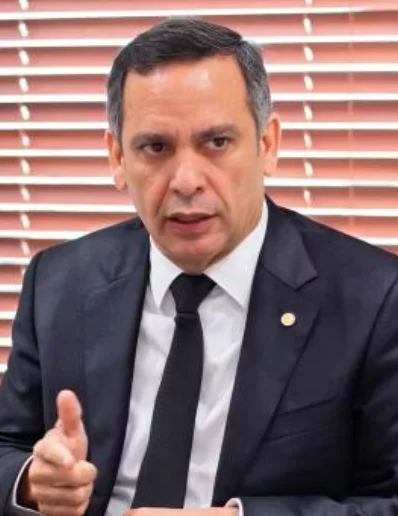
The president of the Judiciary, Luis Henry Molina, reaffirmed the importance of promoting a culture of agreements for the early and non-adversarial resolution of conflicts, ensuring that this is the only way in which the adversarial criminal system can effectively fulfill its mission.
Molina explained that, in criminal matters, they work jointly with the Public Ministry and the Public Defense, promoting alternative mechanisms that allow timely, efficient and humane solutions.
As an example, he cited the program initiated in the Hermanas Mirabal province, where cases resolved by agreements went from 13% to 75% in the last quarter of last year, after the Day of the Judiciary was commemorated, this could be his last celebration as head of the institution.
The magistrate, who also presides over the Supreme Court of Justice (SCJ), pointed out that the recent reforms to criminal justice represent a great challenge, but also an opportunity to make the system more efficient and humane, especially with regard to procedural deadlines, which are not yet met uniformly and affect both victims and people deprived of liberty.
He indicated that one of the main objectives has been to eradicate judicial delays, a civic obligation that cannot be postponed, since behind each file there are people in uncertainty, paralyzed investments, victims without answers or innocent people deprived of their liberty.
In that sense, he highlighted that in the Supreme Court of Justice the reality has changed substantially, achieving that 90% of the cases are resolved in one year or less, with more predictable and favorable deadlines for the lives of the people and the development of the country.
“It is said quickly, but the truth is that more than 40 years of structural judicial delays have been eliminated, establishing iron discipline and a culture of rejection of delay,” said Molina.
He humbly expressed that the Supreme Court of Justice models the rigor that animates the system, which is why the fight against lateness has extended to all the courts in the country. He reported that 87% of courtrooms nationwide are up to date, with updated judicial information online.
However, he acknowledged that of the 11 judicial departments, only Santo Domingo has not yet reached 80% of courts per day, which constitutes an immediate work priority, along with matters such as real estate, where congestion persists.
Likewise, he highlighted that administrative matters were reduced from 49% to 36% of the total cases, which allows judges more space to fulfill their constitutional function of deciding conflicts between people.
The president of the Judiciary thanked the National Congress for its work, pointing out that these advances would not have been possible or sustainable without the approval of three fundamental laws: the one that regulates the use of digital media in the Judiciary, the Cassation Appeal Law and the Organic Law of Civil Status Acts.
Other achievements of the Judiciary
Among the most notable advances, Molina mentioned the opening of six new Forensic Interview Centers, expanding access to justice for people in vulnerable conditions, such as women victims of violence, children, older adults and people with special conditions.
Thanks to digital access, more than 27 thousand people can manage their cases without transfers or lines, participate in virtual hearings and consult files from anywhere, even from abroad.
Citizens can also find their way through JURISTECA, the public repository of jurisprudence managed by the National School of the Judiciary, as well as through LEIA, the virtual assistant of the Judiciary.
Progress is being made towards an integrated access ecosystem, which will allow justice just a click away, bringing together information, services, case tracking, digital procedures, real-time statistics, access to jurisprudence and validation of documents in a clear and timely manner.
In real estate matters, the Real Estate Registry took a leap towards a more agile, secure and close service, through digital tools such as Registry Alerts and interoperability with the courts, strengthening the protection of property rights.
In terms of infrastructure, the first Judicial City of Santo Domingo Este was enabled, transforming one of the jurisdictions with the worst conditions into one of the most modern and dignified in the country, which guarantees greater access and better conditions for citizens and judicial servants.
Transparency, trust and accountability
Molina stressed that transparency is the foundation of public trust, highlighting that for the first time the justice system reaches 100% in the transparency index, which reflects regained trust.
He noted that the annual performance reports of Supreme Court judges are promptly submitted to the National Council of the Judiciary, breaking decades of tradition and establishing a standard of accountability.
He also highlighted the creation of the Judicial Branch Observatory, where the performance of each court is available in open data, allowing any citizen to know how justice is progressing in their community.
More than 400 thousand judicial decisions are available online in the Juriteca, which transforms the way of studying law, litigating and understanding Dominican jurisprudence.
Justice of the Future and vision 2034
Judge Molina reiterated that Future Justice is the basis for continuing to advance, through the Future Justice Plan 2034, which seeks justice without delay, accessible, digital, inclusive and centered on people.
“We are aware that the strength of our democracy is not improvised: it is built every day with independence, legality and absolute respect for human dignity,” he concluded.
These statements were offered during the solemn hearing for the Day of the Judiciary, held in the Augusta Chamber of the Supreme Court of Justice, with the presence of the President of the Republic, Luis Abinader, as well as judicial, legislative, diplomatic authorities and representatives of various State institutions.
Red Mass for the Day of the Judiciary
During the traditional Red Mass, celebrated in the Primate Cathedral of America and officiated by Monsignor Carlos Tomás Morel Diplán, it was highlighted that values such as independence, impartiality, transparency and credibility are virtues that sustain the legitimacy of the justice system.
The prelate recalled that justice is not limited to the mechanical application of the law, but requires wisdom, righteous conscience and a sense of the common good, in an act that he described as an authentic institutional reflection.