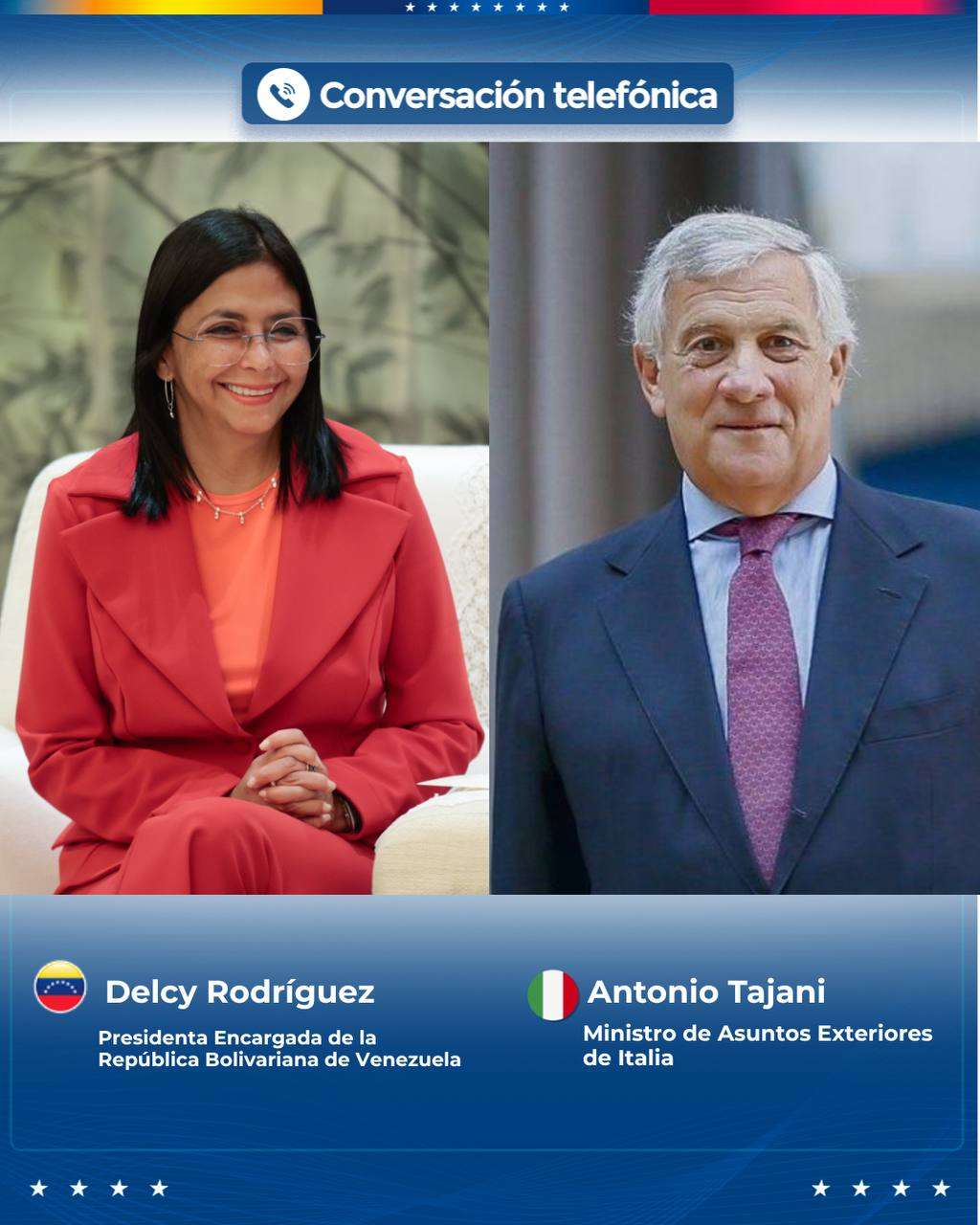
The President in charge of the Republic, Delcy Rodríguez, held a telephone conversation with the Minister of Foreign Affairs of Italy, Antonio Tajani. During the exchange, both senior officials described the dialogue as respectful and constructive, marking a milestone in the rapprochement between Caracas and Rome. The call made it possible to address crucial aspects of bilateral cooperation and strengthen ties between both nations.
Rodríguez focused the communication on the review of a common economic agenda that seeks to enhance commercial exchange and attract new investments. This direct contact reflects the dynamism of Venezuelan foreign policy, aimed at consolidating strategic alliances on the European continent. The official highlighted that these opportunities for mutual growth benefit national development and project the economic stability of the Caribbean country.
The dialogue also served to vindicate the historical and human weight of Italian migration on Venezuelan soil. The vice president recognized the value of this community, which remains deeply integrated into the social and productive structure of Venezuela. This recognition reinforces the basis of a diplomatic relationship that transcends politics to focus on the cultural heritage shared by both peoples.
The dismantling of European narratives
Rodríguez took advantage of the diplomatic space to confront the biased views that persist in certain media sectors in Europe. With clarity, he exposed the reality of Venezuela in the face of what he described as distorted narratives accumulated over years. This action reaffirms the informational sovereignty of the Venezuelan State and seeks to balance the international perception of the nation’s internal situation.
In an exercise of diplomatic firmness, the official rejected the use of the term “political prisoners” used by Foreign Minister Tajani. Rodríguez specified that the people mentioned under that concept face judicial proceedings for highly serious common crimes. The clarification highlighted that these individuals engaged in acts of corruption, drug trafficking and illicit sale of weapons, in accordance with current legislation.
Venezuela’s position in this phone call made it clear that national justice acts independently in the face of transnational crimes. By detailing the nature of these cases, the president in charge closed the way to political interpretations of ordinary criminal processes. This technical and political rectification before Italy seeks to clean up the bilateral dialogue and establish a basis of respect for Venezuelan institutions.
This approach represents a firm step in Caracas’ strategy to normalize and strengthen its relations with powers in the European Union. Venezuelan diplomacy is committed to pragmatism and the defense of the truth to tear down communication walls abroad. The Bolivarian Government maintains its willingness to dialogue with the world under principles of equality and absolute respect for its sovereignty.