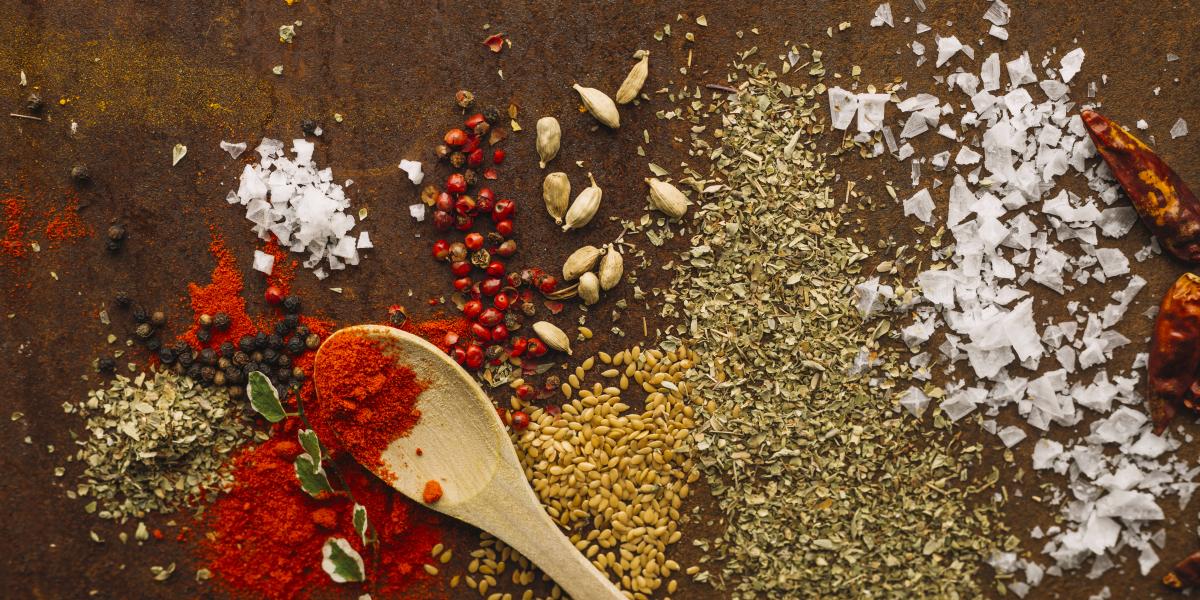
One of the most common mistakes in cooking is thinking that the flavor depends only on the amount of salt. When a dish does not convince, the immediate reaction is usually to add more, even when the problem is not there. The result is usually a salty meal, but just as flat.
Real seasoning is built from the balance between four fundamental elements: salt, acidity, fat and heat. When one fails, the dish loses depth, contrast or clarity. Learning to recognize this balance is what makes the difference between following recipes and cooking with understanding.
Salt: structure and definition of flavor
The Salt not only adds flavor, it also organizes it.. It highlights the sweet, attenuates the bitter and helps the ingredients better express their own characteristics. That’s why, a dish without enough salt often feels dulleven if it has good ingredients.
The key is to salt in stages. A little at the beginning helps the ingredients season from within; Adjusting during cooking allows you to control the result, and correcting at the end refines the flavor. Salting only at the end usually generates a sudden and poorly integrated impact.
Salt
Not all ingredients require the same amount. Vegetables, proteins and broths react differently to salt, and it also influences whether or not the liquid will reduce during cooking.
When a dish tastes bland, the first adjustment should always be salt, but carefully and constantly testing.
Acidity: the element that awakens flavors
Lemon, vinegar, tomato, wine, yogurt or fruits provide acidity. Its function is not to make an acidic dish, but to balance it. The acidity cuts the fat, refreshes the whole and prevents the food from feeling heavy or monotonous.
Many stews, soups or sauces that “they taste good but don’t excite” they actually need a few drops of acid at the end. This small adjustment usually makes an immediate difference.
Acidity
The Acidity works best when added at the end of cooking, once the dish already has salt and body. This way it acts as a fine concealer, not as a dominant flavor.
If a dish feels densetired or without contrast, probably It doesn’t need more salt, but acidity.
Fat: the vehicle of flavor
Oils, butter, cream, seeds, avocado or animal fats not only provide texture: They are the medium through which flavor is perceived and remains.
A dish can be well salted and balanced in acidity, But if it lacks enough fat, the result feels short or incomplete. Fat rounds out the flavor, provides depth and generates a feeling of satiety.
Butter or margarine.
The moment in which it is used also matters. Some fats work better initially for cooking, such as neutral oils; others are better integrated at the end, like butter or olive oilto give closure and shine to the dish.
When a preparation tastes correct but uninteresting, It usually needs fat, not more seasoning.
The heat also season
Heat management is one of the most underrated factors of seasoning. Boiling is not the same as browning, nor cooking quickly than slowly. The right heat allows for flavor-generating reactions like browning and caramelization.
Cook always on low heat for fear of burning the food, it prevents deep flavors from developing. On the other hand, excess heat burns oils, bitters herbs and dries out proteins.
Cook
Learning to control fire is as important as knowing how much salt to use. Heat not only cooks, it defines the character of the dish.
How to identify what is missing from a dish
Before adding random ingredients, it is a good idea to taste and analyze. Some key questions help to correct accurately:
- If the dish tastes flat, it probably lacks salt.
- If it feels heavy, it needs acidity.
- If it is correct but without depth, it is missing fat.
- If it tastes dull or lacking character, the problem may be heat management.