The landing of the Federation of União Brasil (UB) and Progressives (PP) parties of the Lula government aims to try to inherit the faithful votes of former President Jair Bolsonaro, the political scientist João Feres Júnior evaluates.
The announcement of the departure was on the same day as the trial of the coup plot at the Federal Supreme Court (STF), which approaches Bolsonaro’s possible conviction for attempted coup.
Full professor at the Institute of Social and Political Studies of the State University of Rio de Janeiro (IESP-UERJ), Feres Júnior told Agência Brasil that these from the right parties that make up the government fear electoral weakening in the face of polarization between PL and PT.
“Their departure from the government is looking for a revitalization through the vote and then they glue in Bolsonarism. After all, Bolsonaro is able to mobilize a huge amount of votes and elect unknown, as he did in 2018 and 2022. On the other hand, I think there will be no room for everyone in this competition,” said Feres.
The Union-PP Federation brings together 109 deputies in the House, together, together, the largest bench in the house. In the Senate, the Federation brings together 14 parliamentarians, six from União Brasil and eight from progressives.
Political scientist and professor at the University of Brasilia (UnB) Michelle Fernandez pointed out that the departure of these government parties is related to political movements for the 2026 general election.
“Some parties charged their parliamentarians who were detached from the government so that they could be in the composition of the opposition in next year’s electoral process,” he said.
The exit
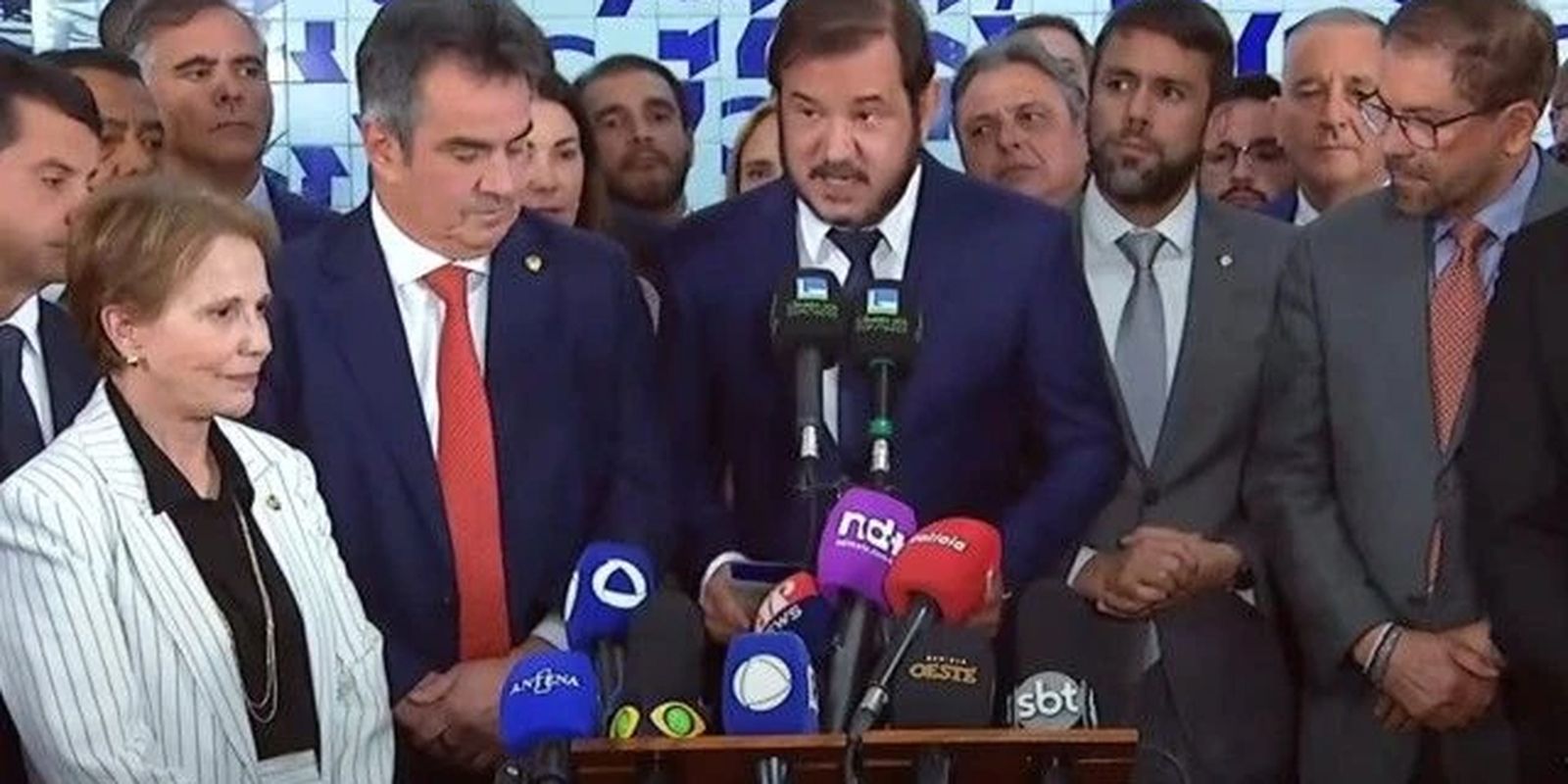
By announcing the departure, the federation said the decision “represents a gesture of clarity and coherence. This is what the Brazilian people and voters demand from their representatives.” The subtitles charged the departure of the ministers Which are on the Esplanade, such as Tourism, Celso Sabino (Union), and the sport, André Fufuca (PP).
On the other hand, the Minister of Institutional Relations, Gleisi Hoffman, charged a commitment to the government of those who decide to stay.
“They need to work with us to approve the government’s guidelines in the National Congress. This goes for those who have mandate and for those who have no mandate, including those who indicate people for positions in the government, whether in direct, indirect or regional administration,” he said on a social network.
The estate
For João Feres, as Bolsonaro seals his destination, he increases the anxiety of the right field in the competition for the former president’s votes.

Political scientist João Feres Júnior, professor at the Institute of Social and Political Studies of the State University of Rio de Janeiro. Photo: Personal Archive/Disclosure
“The right saw Bolsonaro as this vote chest and a lot of people benefited from it. With him leaving the political scene, probably never to return, I think the competition is very big,” added UERJ’s political scientist.
For Professor João Feres, the dispute for this vote also explains the support that these parties are giving the Amnesty Bill to those convicted of attempted coup.
“It’s an attempt to revive Bolsonaro because he organizes this right-wing field. If they get Bolsonaro’s amnesty, they imagine that the former president puts order on the right and the vote fratricidal competition decreases. Without Bolsonaro, it gets more complicated. There is an anxiety of these guys to see these votes if they dissipate,” said the expert.
Michelle Fernandez also pointed out that the movement of the governor of São Paulo, Tarcísio de Freitas (Republicans), to press for amnesty to the convicts for attempted coup d’état is part of this strategy of inheriting the scholarship votes.
“Tarcisio still needs Bolsonaro to be able to politically take off as a possible candidate in next year’s elections, if he will apply for the Presidency of the Republic, because this is not something right either,” he said.
For João Feres, Tarcisio may have no consensus from the right. “Tarcisio will not be a candidate for consensus, they will not produce a consensus candidate,” he said.