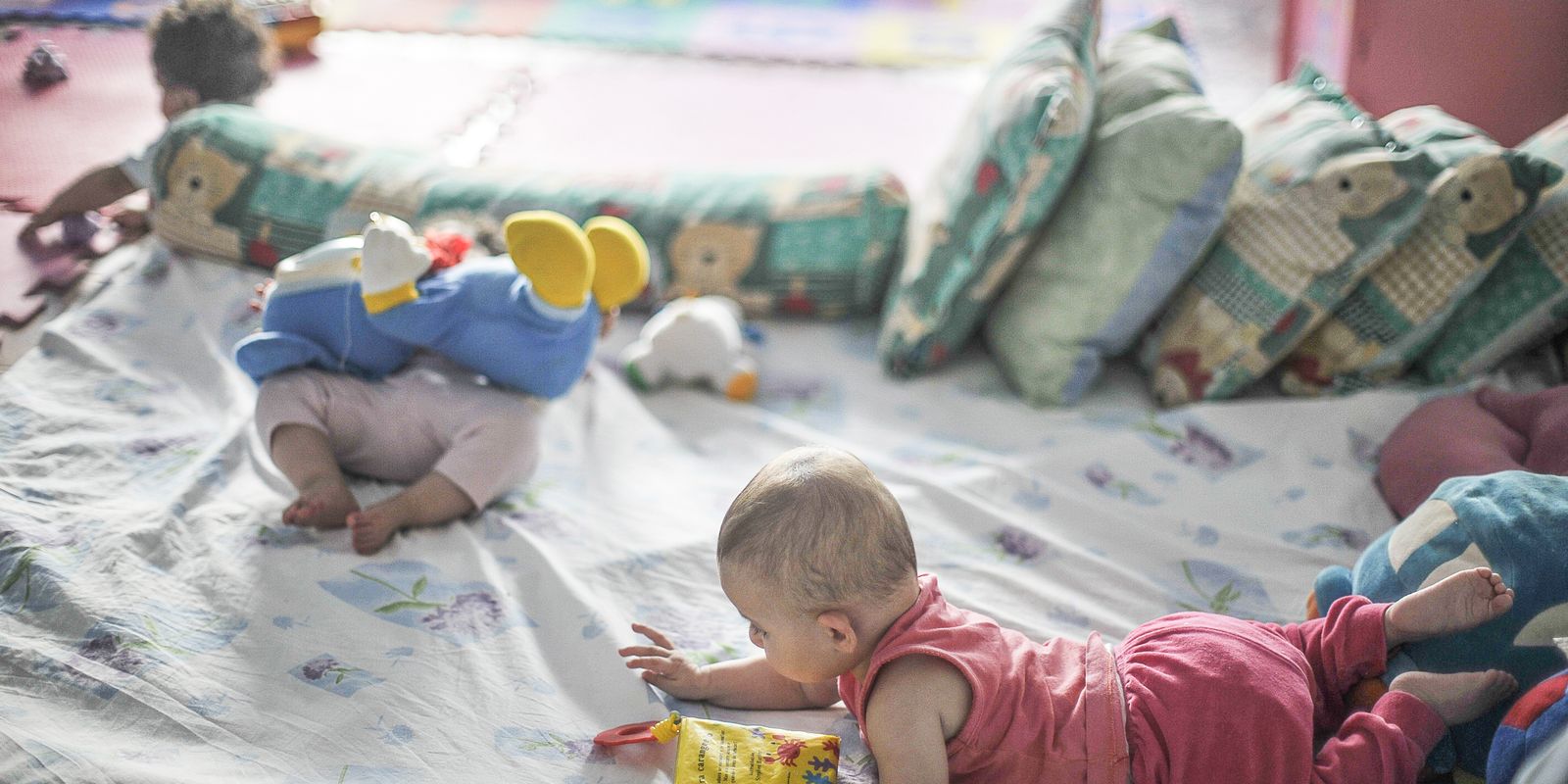
Babies in poor homes have impaired motor development. The finding comes from a study by the Federal University of São Carlos (UFSCar) that related the variety of movements of children to their living conditions. The result was published in the scientific journal Acta Psychologicaat the beginning of February.
By following 88 babies in the interior of São Paulo, the study showed that, from the age of six months, it is possible to observe delays in those living in poverty. They were only able to grasp objects, turn around and sit down later than others who lived in better socioeconomic conditions.
“The main finding of the research is that, at six months, these babies show less motor development, that is, they have a smaller movement repertoire”, explained the author, Caroline Fioroni Ribeiro da Silva.
According to her, they vary their movements less when sitting down, when picking up a toy, sometimes they can’t even do it. Caroline’s work was funded by the São Paulo Research Foundation (Fapesp).
The investigation raises an alert because, according to existing studies, delays in child development can produce children who learn less.
“The literature indicates that, due to the lack of resources and stimulation for babies, losses can occur in school life, such as attention deficit with hyperactivity [TDAH] and coordination disorders”, said Carolina, who is a physiotherapist. She considers, however, that more studies are needed to prove the relationship.
On the other hand, UFSCar research revealed that the reversal of motor delays can occur quickly, with the right stimuli. At eight months, babies evaluated no longer had significant problems. The improvement is mainly attributed to the engagement of mothers, who reproduced simple exercises, such as placing the child on their stomach (tummy time), using crumpled paper as a toy, talking or singing to the baby.
“When we talk to the baby, he has the opportunity to observe the movements we make; when he is on his stomach, he is free to move and explore movement, just like when he plays with wrapping paper, which is eye-catching [pelo barulho e textura]”, explained the physiotherapist. “No expensive toys are needed, just guidance”, she added.
During visits to families, the researcher says that interaction between mother and baby was encouraged. “We talked a lot about reading books, singing, talking and putting the baby on her stomach,” he revealed. The floor is the safest space for the baby, because there is no danger of him falling and he can explore his movements, he recalled.
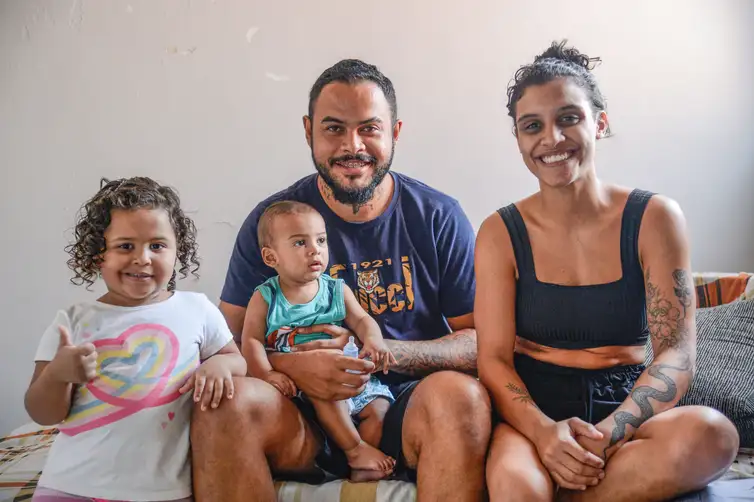
The family of baby Murillo Luiz Martins, his sister Maria Helena Martins, parents Patrick Rodrigues Viana and Danielly Martins during a vaccination appointment at home – Photo Tomaz Silva/Agência Brasil
The moments when babies lie face down on a safe surface, with supervision, serve to strengthen the muscles of the head, neck, shoulders, back and arms and prepare them for more complex movements. With this exercise, it is also possible to develop coordination, allowing him to roll, sit, crawl and stand at the right time.
The researcher highlighted that the majority of mothers exposed to poverty were teenagers and did not know how to encourage their children. In these cases, specialized help, with visits from health agents and physiotherapists, are crucial, he said.
“As it is not possible to eliminate poverty or teenage pregnancy, I would recommend visits from health professionals to provide guidance on stimuli at this stage of life.”
In poorer homes, the research found that babies spent more time in strollers or restrained and had fewer opportunities to explore their environment. This happened, most of the time, due to lack of space.
The presence of more adults in the same household, instead of stimulating babies, was also identified as a negative factor. The research hypothesized that these homes are more “chaotic,” with fewer safe spaces or opportunities for babies to move around.
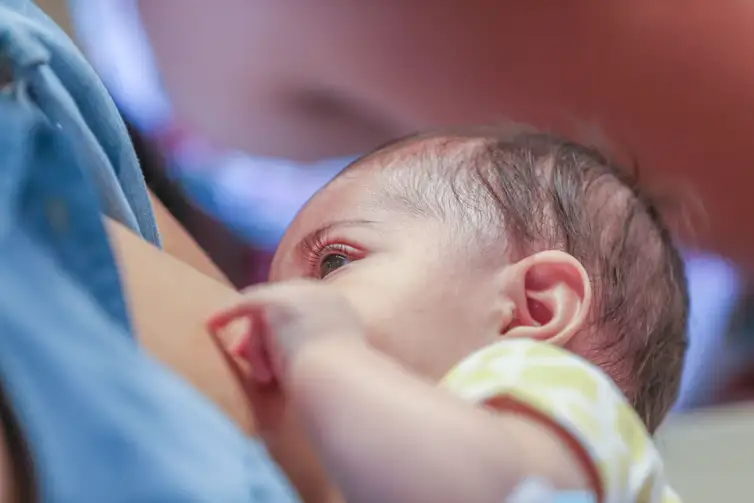
Lorrane Paiva participates, with her baby, in the “mamaço” in the middle of the Samambaia subway station, in Brasília – Photo Elza Fiuza/Agência Brasil
The presence of fathers or mothers at the same address was associated with better results, alongside higher maternal education.
“Solo caregivers end up more overwhelmed and have less time to play and stimulate the baby”, analyzed Caroline. “So, having another person supporting you helps a lot in development.”
Among other factors that contribute to the development of little ones is the use of toys that stimulate fine motor skills, even improvised and more economical ones, such as rattles – which can be made from grains of rice or beans and plastic bottles.
About 400 million children live in poverty around the world, according to the report “State of the World’s Children 2025: Eradicating Child Poverty – Our Common Duty”, published by the United Nations Children’s Fund (Unicef) in November 2025. They are subjected to severe deprivations in health, development and well-being.
https://agenciabrasil.ebc.com.br/radioagencia-nacional/direitos-humanos/audio/2025-11/mais-de-400-milhoes-de-criancas-do-mundo-estao-na-pobreza