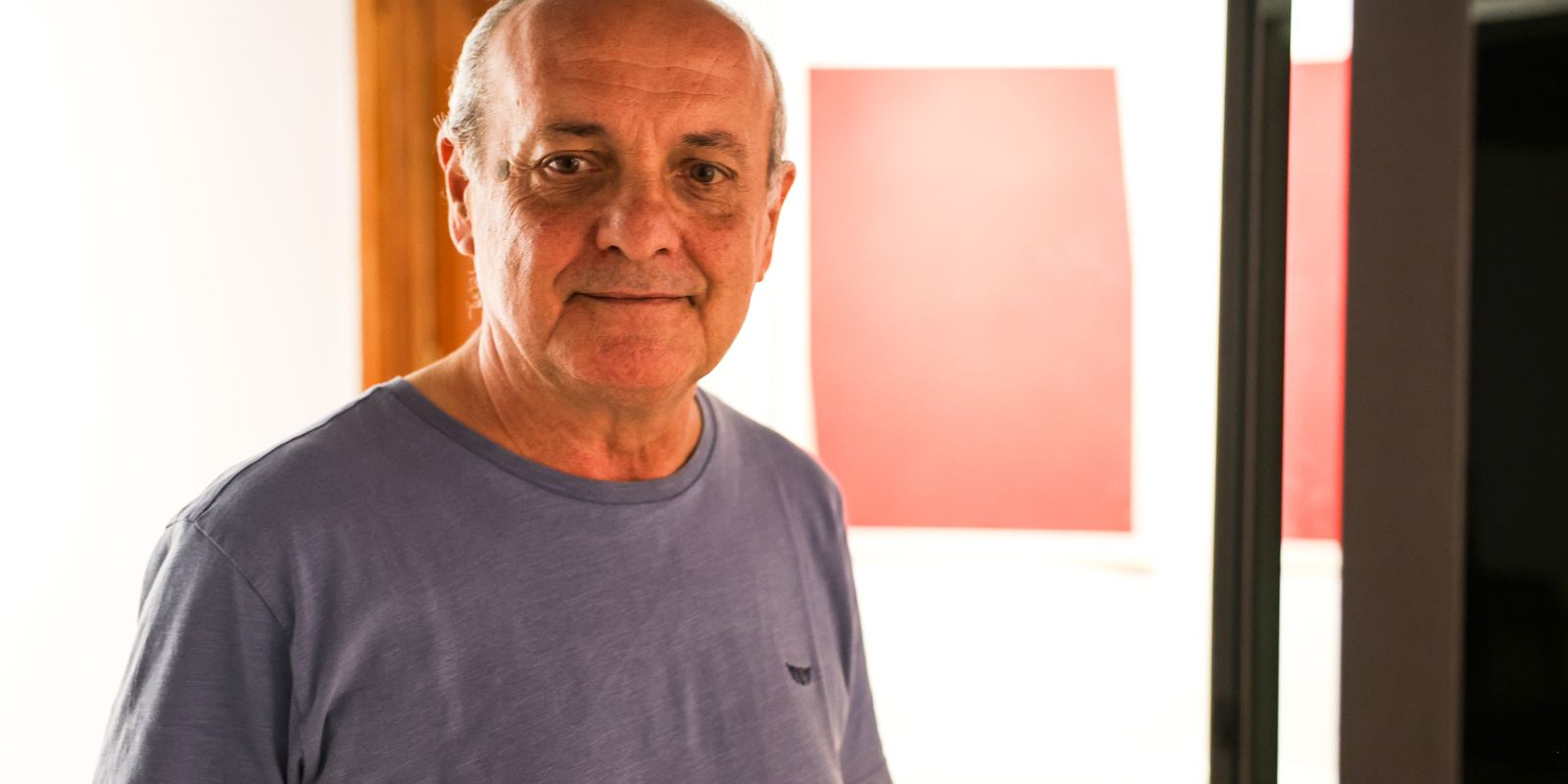
Portuguese artist José Pedro Croft (photo) inaugurates this Wednesday (24) his new exhibition at the Banco do Brasil Cultural Center (CCBB), in Rio de Janeiro. Sample José Pedro Croft: reflexes, enclaves, deviations It brings together 170 works, including prints, drawings and sculptures, and will be on display until November 17, with free admission.
One of the most awaited pieces is the installation created especially to occupy the roundabout of the historic CCBB building. In it, mirrors reflect fragments of space architecture, forming a large visual puzzle that surrounds the visitor.
Croft – considered one of the most relevant names of Portuguese contemporary art – explores different languages in its production. In the designs presented, made on engraving evidence, the artist uses nanjing lines of only 0.25 mm. “I make the designs by hand, bringing this world of pixel images to our reality, which is still physical. It is a way to resist the speed of always being linked to excess of stimuli,” he explains.
In addition to the drawings, the public can interact with iron, glass and mirror sculptures, created for exhibition. For the curator Luiz Camillo Osorio, there is a permanent dialogue between the different languages that make up Croft’s work.
“Metal, glass, mirrors, line, color, graphic memory, overlays and instability all reverberate between engravings, drawings and sculptures,” he says.
Career
Osorio also emphasizes the importance of the artist’s trajectory, which began in the 1980s: “He expresses the desire for freedom and experimentation. He has had a remarkable presence in Brazil, in spaces such as the Museum of Modern Art, the São Paulo Biennial, the Pinacoteca and the Imperial Palace.

Works by José Pedro Croft can be seen until November at CCBB do Rio – Photos – Tomaz Silva/Agência Brasil
In an interview with Brazil agencyCroft highlighted the way he expects the public to relate to his work. “The best way to see an exhibition is to enter with an open mind and without preconceived ideas. Look, feel and then reflect on what was seen.”
He recalls that many of his works dialogue with each other: “In the first room, there are black and red prints. Black are more drawings, reds are color spots, but which refer to mirror sculptures. There is always a correspondence,” he says.
The artist stressed his concern with the relationship of the works with the space. “Even when I create monumental work, I am concerned that they always have a human scale and do not impose themselves for the grandeur. I think this has to do with the notion of democracy,” he concludes.