These solutions are disrupting transits and reducing cargo space on ships, while operators remain in the dark about how China allocates US ownership or control in its assessment of fees.
“The list of vessels available to call at Chinese ports is definitely smaller than before, across all shipping markets,” said Stamatis Tsantanis, chief executive of dry bulk shipping company Seanergy Maritime Holdings.
“In the end, all the costs will fall on the actual consumer, and that will make things very expensive,” Tsantanis said.
The Shanghai Containerized Freight Index (SCFI) added 12.9% to a four-week high, boosted by gains on transpacific lanes that saw big rate moves over the weekend after China announced its port rates, Jefferies analyst Omar Nokta said in a note on Friday.
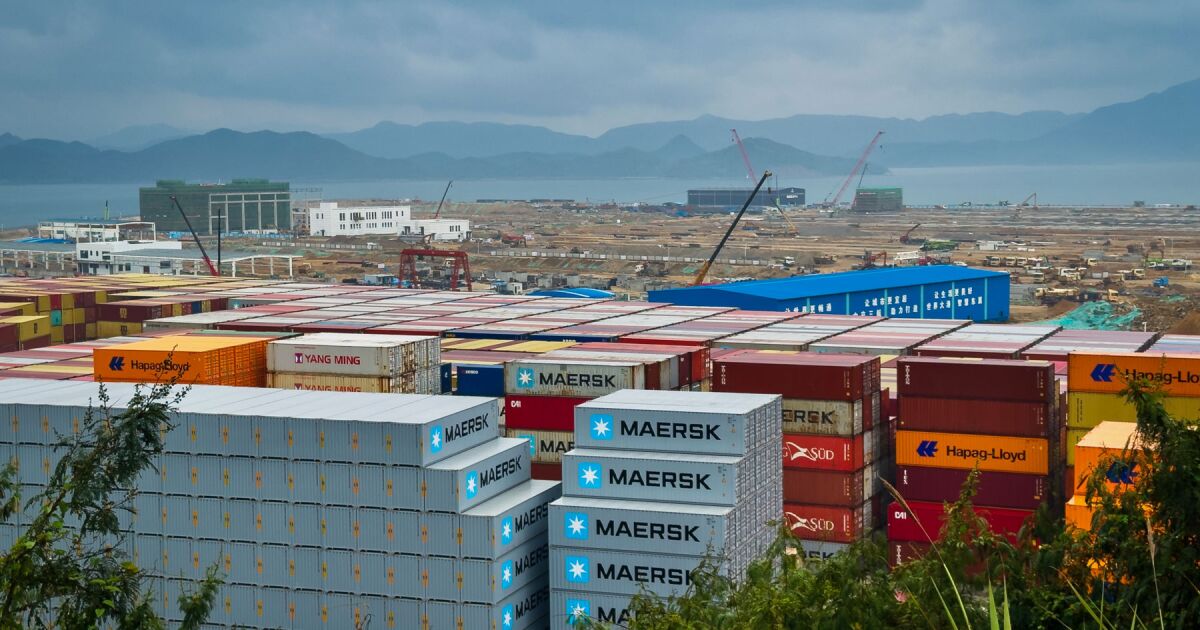
Major container shipping lines such as Maersk, Hapag-Lloyd and CMA CGM have already reorganized trade route allocations to avoid US port charges.
This week, Maersk and Hapag-Lloyd, members of the Gemini Alliance, informed their customers that their Maersk Kinloss and Potomac Express ships would skip calls in Ningbo, the only Chinese port visited by these US-flagged and South Korean-built ships.
“This new regulation will cause further dislocation of ships and trade flows,” said Gernot Ruppelt, chief executive of Ardmore Shipping ASC.N, which transports clean petroleum products, chemicals and vegetable oils.
“Markets have yet to begin to value this complexity premium,” said Ruppelt, who noted that Ardmore has no scheduled stops in China.
Turbulence triggers oil tanker rates
China’s retaliation for port fees imposed on ships linked to the United States has driven up rates on large oil tankers bound for China, the world’s largest crude importer.
This is because the new levies have reduced the supply of tankers that can be chartered to avoid incurring high port fees.
Benchmark prices for large oil tankers hit two-week highs on Tuesday following the implementation of port charges, before cooling slightly towards the end of the week.