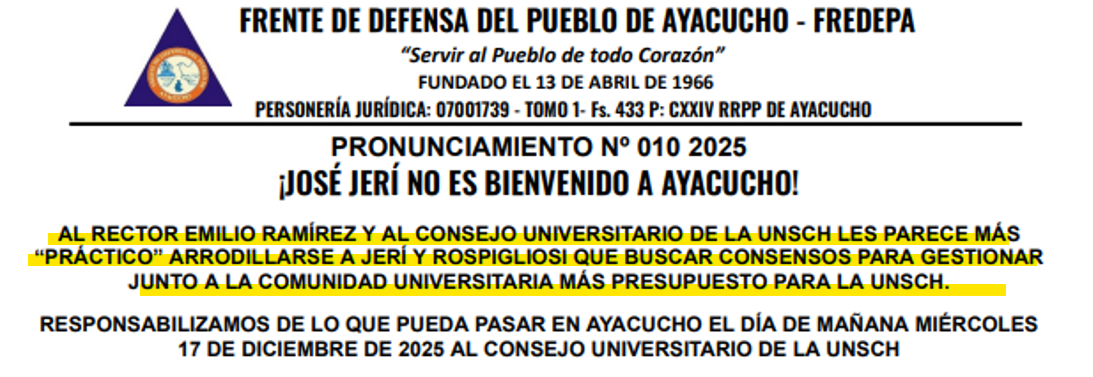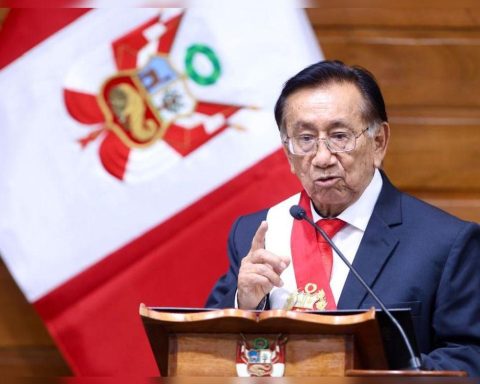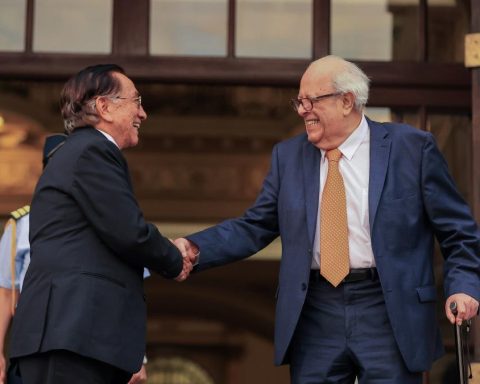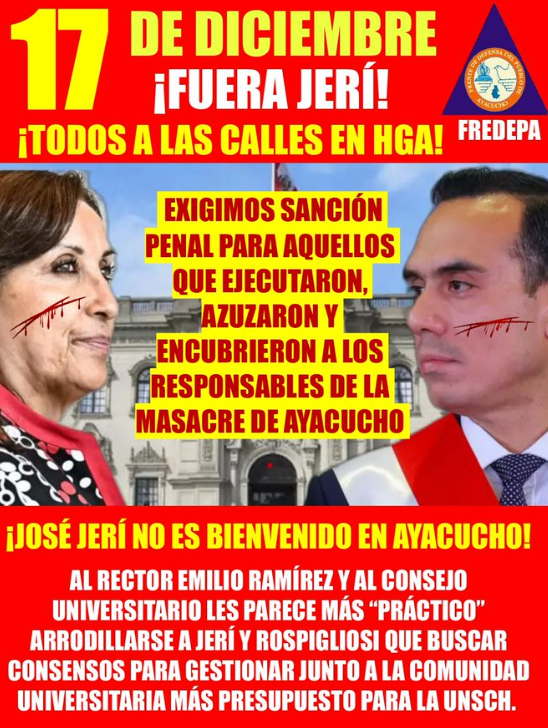
The Defense Front of the People of Ayacucho (FREDEPA) called for a mobilization for this December 17 in rejection of the president’s visit José Jerí to the National University San Cristóbal de Huamanga (UNSCH). The organization questions that its presence occurs in a context marked by the lack of justice for the Ayacucho massacre and accuses the university authorities of facilitating a political act that, in its opinion, seeks to legitimize the current political power.
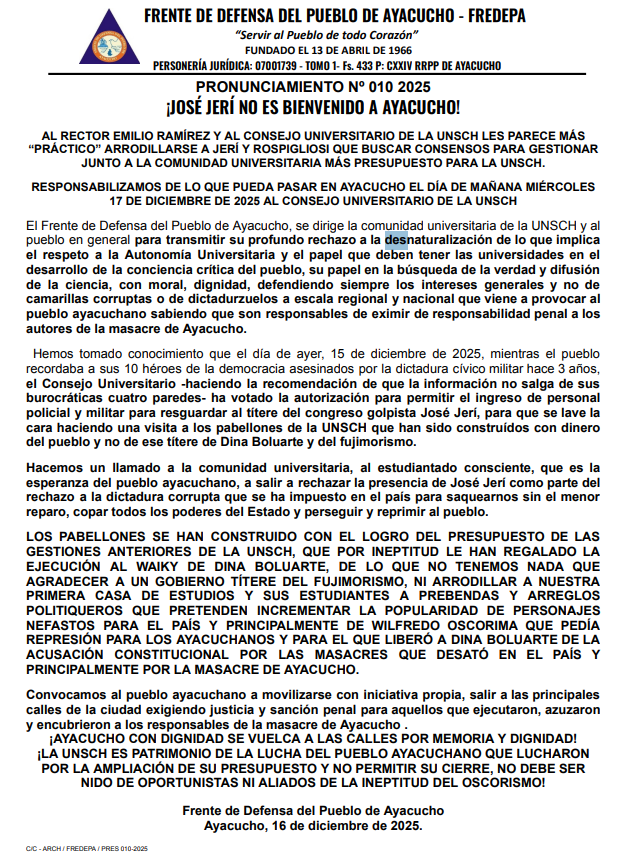
“José Jerí is not welcome in Ayacucho! (…) we convey our deep rejection of the denaturalization of what respect for University Autonomy and the role that universities must play in the development of the critical consciousness of the people implies,” reads the statement in which they emphasize that the UNSCH should not lend itself to political interests outside the university community.
Likewise, the organization also criticized that the University Council has authorized the entry of police and military personnel to protect Jerí’s visit, a decision that was adopted, according to their complaint, while the population remembered the victims of the repression that occurred in December 2022. To FREDEPAthis fact aggravates social tension and constitutes a provocation to the Ayacucho people.
“We hold the UNSCH University Council responsible for what may happen in Ayacucho tomorrow, Wednesday, December 17, 2025,” they warned, pointing directly to the university authorities for the consequences that the president’s visit may generate.
Furthermore, FREDEPA called on citizens and the university community to mobilize and demand criminal sanctions for those who, as they point out, “executed, incited and covered up” those responsible for the Ayacucho massacre and reaffirmed that the UNSCH is the heritage of the people’s struggle and not a space for the legitimization of questioned political figures.
YOU CAN SEE: Martín Vizcarra: PJ admits appeal to annul 14-year sentence for Lomas de Ilo and Hospital de Moquegua cases
Criticism of the rector and university authorities
In the statement they also pointed directly against the rector of the UNSCH, Emilio Ramirezand the University Council, whom he accuses of prioritizing political agreements over the defense of university autonomy and the management of greater resources for the university.
“It seems more ‘practical’ to Rector Emilio Ramírez and the UNSCH University Council to kneel down to Jerí and Rospigliosi than to seek consensus to manage, together with the university community, more budget for UNSCH,” they point out.