Cordel’s verses, the percussion of Maracatu and Frevo’s frantic movements brought the popular culture of Pernambuco to the main stages of the festival treat, which was held in Olinda from Friday (12) to Sunday (14), after seven years of seasons in other cities in the country and the world. 
The closing of the event coincided with the National Frevo Day, celebrated on September 14, in honor of the birth of journalist Oswaldo da Silva Almeida. He is attributed to the creation of the name “frevo”, in reverence for the “boil” that the rhythm causes.
The frevo was recognized in 2012 as an intangible heritage of humanity by the United Nations for Education, Science and Culture (UNESCO).
Grêmio Musical Henrique Dias, the first vocational school of non -profit Olinda musicians, founded 71 years ago, played with his orchestra on the main stage of Mimo, at Praça do Carmo.
>> Follow the channel of Brazil agency on WhatsApp
The presentation was led by conductor Lúcio Henrique Vieira da Silva, who is a musical director, a saxophone teacher and also a musician formed by the school, where he entered the 10 -year -old, in 1988, and where he never left: “I just intend to leave when there is my procession, and to the sound of frevo.”
“It is an honor to be able to show our identity at a festival with this greatness. Frevo Olindense is different from what is touched anywhere in the world,” said Maestro Lucio, as he is known.
“Frevo is strong in the time of Momo, in January and February. But the idea of us is that it is strong all year round, because it is an instrumental song like any other.”
The presentation included classics of Brazilian popular music, as Party and Lunar taxiand great successes that helped spread the rhythm of frevo in the country and worldwide, as Fireworks without rifle and Broom.
For the conductor, despite being widely known by Brazilians, the frevo repertoire needs renewal and support from the public power.
“Here in the city [Olinda]I can say that in the last century there was more dissemination [do frevo]more recordings. The radios recorded in June or May, and were released in January to be playing during the year. Today, there is no more. We run with the frevans of the last century on the streets, ”he says.
“May they have more new compositions, have more launches and new artists. It takes a cultural incentive from the government, let’s suppose, with a contest for composers. This will enrich the culture, bring new thoughts, new ideas.”
Since 1954, more than 2,000 students have passed through Grêmio, where today they also receive classes of regular subjects of school grid, such as mathematics, Portuguese and history.
The musical director says that it is not difficult to attract young people who want to learn frevo: “They are in love. This is the culture of ourselves. I think if the public power looked welcome to our ideas, [o frevo] It would be much more relevant to our culture. ”
Frevo National Day also did not go unnoticed by the Bandolynist Hamilton de Holanda, who performed in trio with pianist Solomon Soares and drummer Thiago Big Rabello. Carioca and son of Pernambucans, Hamilton de Netherlands included frevo in his presentation to “honor his ancestors,” he said.
Another musician who declared himself to Pernambuco was singer and songwriter Edu Lobo, who performed the festival’s opening show, on Friday (12). Lobo is also carioca and son of Pernambucanos and joked that “not everyone is lucky” in recognizing the importance of the Pernambuco cultural heritage he received at home.
Cordel and Poetry

Poet Lirinha, from Cordel do Fogo Encantado, participates in a conversation wheel at the Mimo Festival – Rogério Von Krüger/Mimo Festival Disclosure
Born in a family of musicians in Arcoverde, in the Pernambuco backlands, José Paes de Lira Filho, the Lirinha, also dedicated his passage through the pamper festival to extol the culture of his state and the entire Northeast, through the declamation of poetry and the theatricality that mark the work of the Cordel do Fogo Group since its foundation.
The closing of the first night of the festival marked the return of the group’s original formation, with voice and poetry of Lirinha accompanied by Clayton Barros (guitar), Emerson Calado (drums), Rafa Almeida and Nego Henrique (Tamores), in the show Words to color the sky.
The day after the show, Lirinha participated in a chat with the public, mediated by journalist and researcher Chris Fuscaldo, in which he stressed the originality and indigenous influence on poetry, cordel, suddenly and in the way of declaring poems that is traditional in the region.
“Why do they say is something that comes from medieval troubadour? Why does it come from the Iberian Peninsula? This also came to other places, but why did it develop this specific way? Today, we suspect that the big crossing, the big question, is a very close philosophy of perspectivism [de povos indígenas]”He asked.
For the composer, writer and poet, the string never lived a moment of as much visibility as the current one. “And where did he go? He went to the internet,” added Lirinha.
According to him, academic knowledge and Cordel’s understanding as literature are advancing on the part of a new generation of researchers.
“With the strength that Cordel’s literature has won, the sudden poets have come to say that they do cordel. There are a lot of fragile, and it’s all very recent. It’s the new generations that are, in fact, studying that. This is happening now.”
“This literature is testimony, it is pleasure and is a denunciation,” concluded the poet.
Maracatu on the street
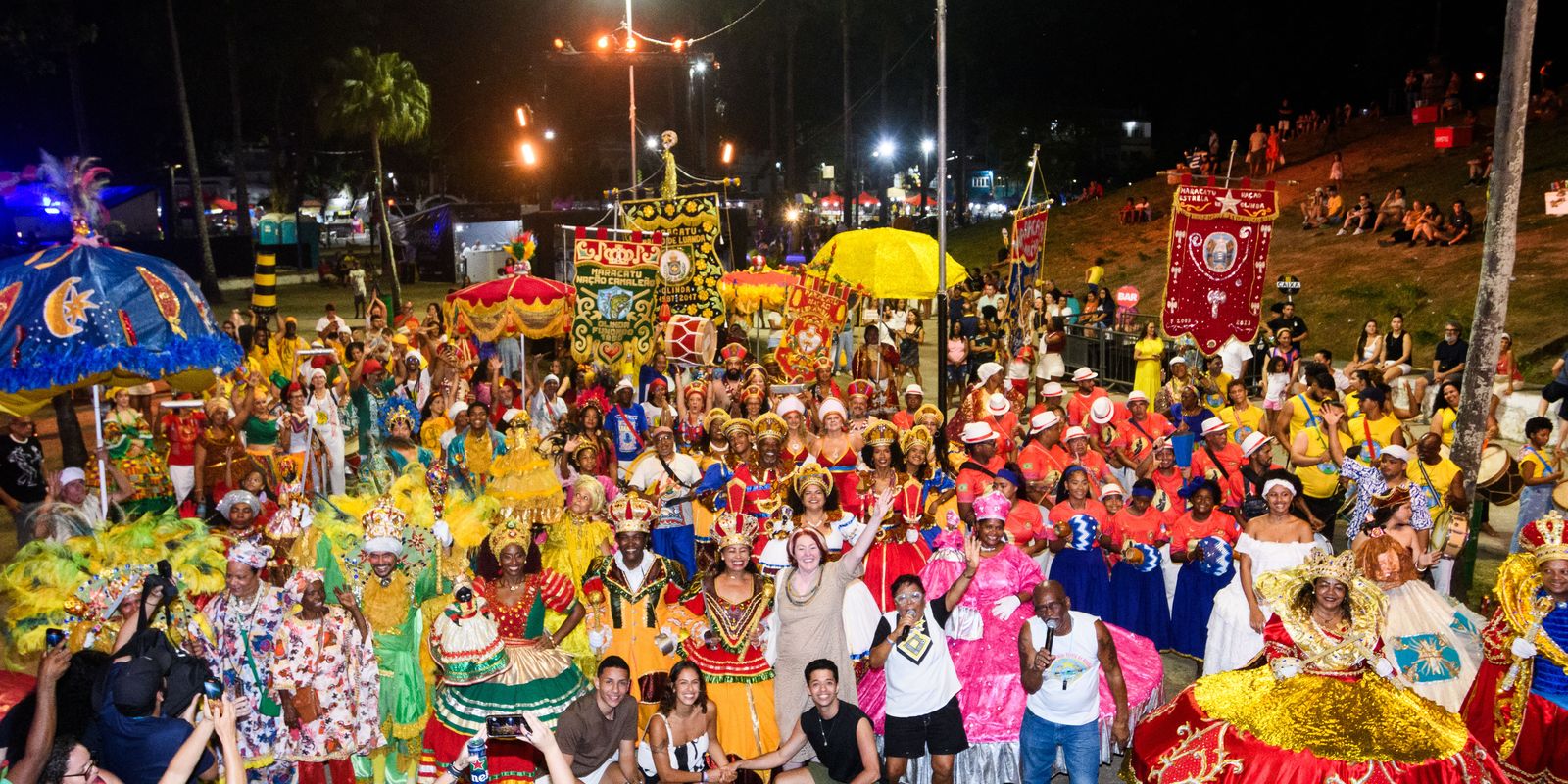
The party of popular culture during the festival was not restricted to the stage and also occupied the streets. On Saturday afternoon (13), the second day of the festival, five Maracatu nations traveled the streets of Olinda and gathered before the main stage of the Festival: Maracatu Nation Camaleão, Maracatu Star of Olinda, Maracatu Nação Pernambuco, Maracatu Nation Luanda and Maracatu Sol Brilhante.
Recognized as intangible cultural heritage From Brazil in December 2014, Maracatu Nation is a popular and carnival demonstration of the Recife Metropolitan Region, in which a royal procession parades the streets, accompanied by a percussive musical ensemble.
Composed mostly by blacks, these groups rescue the ancient coronations of kings and queens of the ancient African Congo. This year, the government officialized candidacy with UNESCO so that the cultural manifestation is also recognized as an immaterial cultural heritage of humanity.

Maracatu nations brought popular tradition to the festival treat – Rogério Von Krüger/Mimo Festival Disclosure
Cultural producer of Maracatu Camaleão Nation and representative of the Olinda Maracatus Association (Amo), Katia Luz says that the organization mobilized to be present in the return of the pamper festival to Olinda, for the opportunity to strengthen the relevance and visibility of Maracatu.
“For me, it was a momentuming moment of happiness,” he said.
“People need, the public power needs to understand that where they have culture, projects and festivals, popular culture has to be present, it cannot be set aside. When they said ‘the pamper will come back’, I saw that we had to be present.”
The presentation was part of the preparation of Maracatu nations for Black Awareness Day on November 20, when Amo intends to take a great action with 15 nations of Maracatu in Olinda, Katia Luz said.
“Now that President Lula decreed that it is a national holiday [o Dia da Consciência Negra] and sanctioned the National Day of Maracatu [1° de agosto]we can’t help but do that. Maracatu is an immaterial good, and we need to have this understanding. We will always be in the fight, ”said Katia.
For the creator and artistic director of the Festival Mimo, Lu Araújo, Pernambuco culture has always made contributions and was present in the treat, both in curatorial choices and in musical programming.
“Perhaps it was a little more missing these traditions, which are strong, which are brave, who resist,” said the festival director.
It evaluated the public’s return to this presence as positive. “The public loves, because the Pernambuco people are very proud of this culture. I say that if I learned to be proud of me, my festival, I learned from them. They honor, they identify themselves and I think they are very happy to see it in the treat, on a stage where they always see big names.”
*The reporter traveled to Olinda at the invitation of the organization of the Festival Mimo