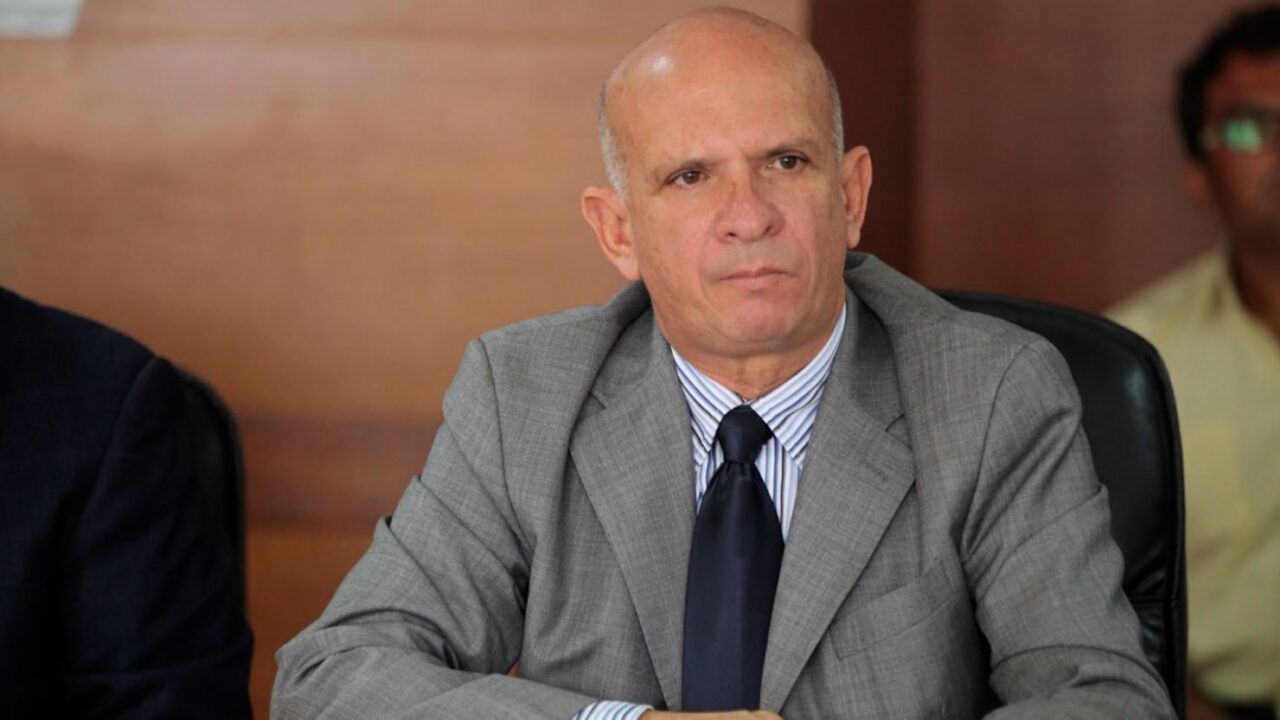
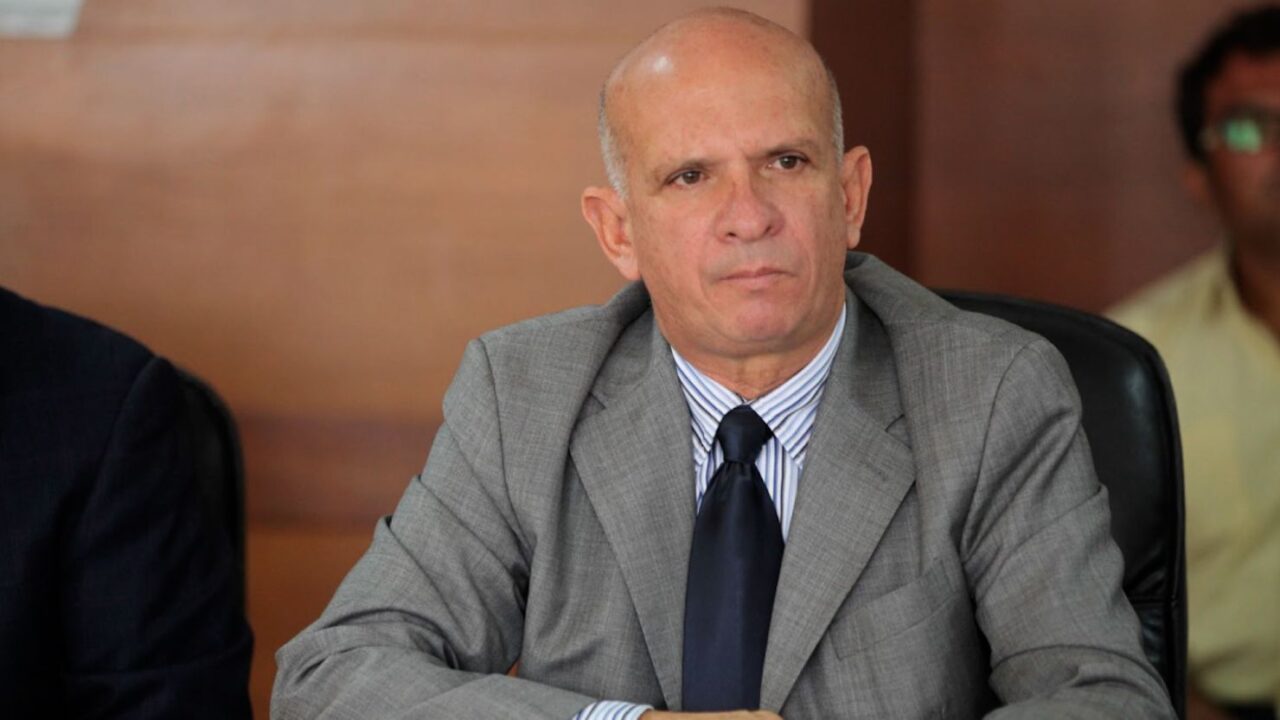
Hugo “el Pollo” Carvajal, former head of the General Directorate of Military Counterintelligence (Dgcim), revealed in his statement to the International Criminal Court (ICC)while he was preventively detained in Spain, that the orders to repress protests such as those in 2014 and 2017 came directly from Nicolás Maduro, captured by the United States on accusations of drug trafficking.
According to audios revealed by journalist David Placer, Carvajal explained that the control of protests in Venezuela has two types. One is formal control in which organizations are used to maintain public order in accordance with the law and the other is carried out by parastatal or paramilitary criminal organizations.
The formal one is the responsibility of the Minister of the Interior, who has the Bolivarian National Police (PNB) to guarantee public order. In the event that the capacity is exceeded due to the size of the demonstration, the leadership of the Bolivarian National Guard (GNB) is used. Although there is an office for this matter, Maduro decided everything when he held the position of head of state, he even had direct communication with both the PNB and the GNB to redirect public order actions.
“Moreover, in practical terms, the strategy in this matter of public order was decided by Maduro since he came to power and communicated to the minister, publicly, that any protest had to be repressed. He needs to demonstrate that his power and strength are above any political or civil attempt to resolve society’s claims, regardless of the consequences,” Carvajal expressed in his statement.
That is why the protests of 2014 and 2017 were not only controlled but also stifled and ended without regard to people’s lives: “We should remember the phrase ‘little candle that lights up, little candle that goes out’. This represents a direct order to, without saying words, violently attack any protest. On the other hand, Minister Néstor Reverol (today the Minister of the Interior is Diosdado Cabello), to guarantee damage control, orders the director of the Cicpc to carry out technical and criminalistic investigations to incriminate the protesters and their leaders, exonerating the law enforcement agencies and, consequently, himself from responsibility.”
Regarding informal control, Carvajal indicated that Maduro created many illegal formal ones to neutralize protests. They can be summarized, however, in two groups. First, the irregular use of intelligence and security bodies—Sebin, Dgcim, Conas and FAES—and, second, the use of armed groups coordinated in different ways and with different political operators.
The former head of Venezuelan Intelligence stressed that such policies are a widespread and systematic attack against the Venezuelan civilian population for political reasons. Nicolás Maduro had only one objective: to keep the power he lost on January 3; and the strategy, according to Carvajal, included putting the people under submission with electoral fraud, use of force to control protests, forcing people to migrate and persecuting political leaders until they were imprisoned, exiled, submitted to their political project or physically eliminated.
“I must inform you that any illegal order given within the regime would never be given in writing. They are direct verbal orders. Therefore, the only way to demonstrate things, such as prior and full knowledge of perpetrating attacks on the population in clear State policy, would be through testimonies to which this prosecutor’s office can have access,” explained the former military man.
“Based on my experience of more than seven years directing Venezuelan military Intelligence and Counterintelligence, in the presidency of Hugo Chávez and a few months with Maduro, I was able to learn from a privileged position about the behind-the-scenes politics of the Venezuelan regime. I can testify that no minister would ever dare to cause deaths in demonstrations, even accidental, without the president having given the order,” he said.