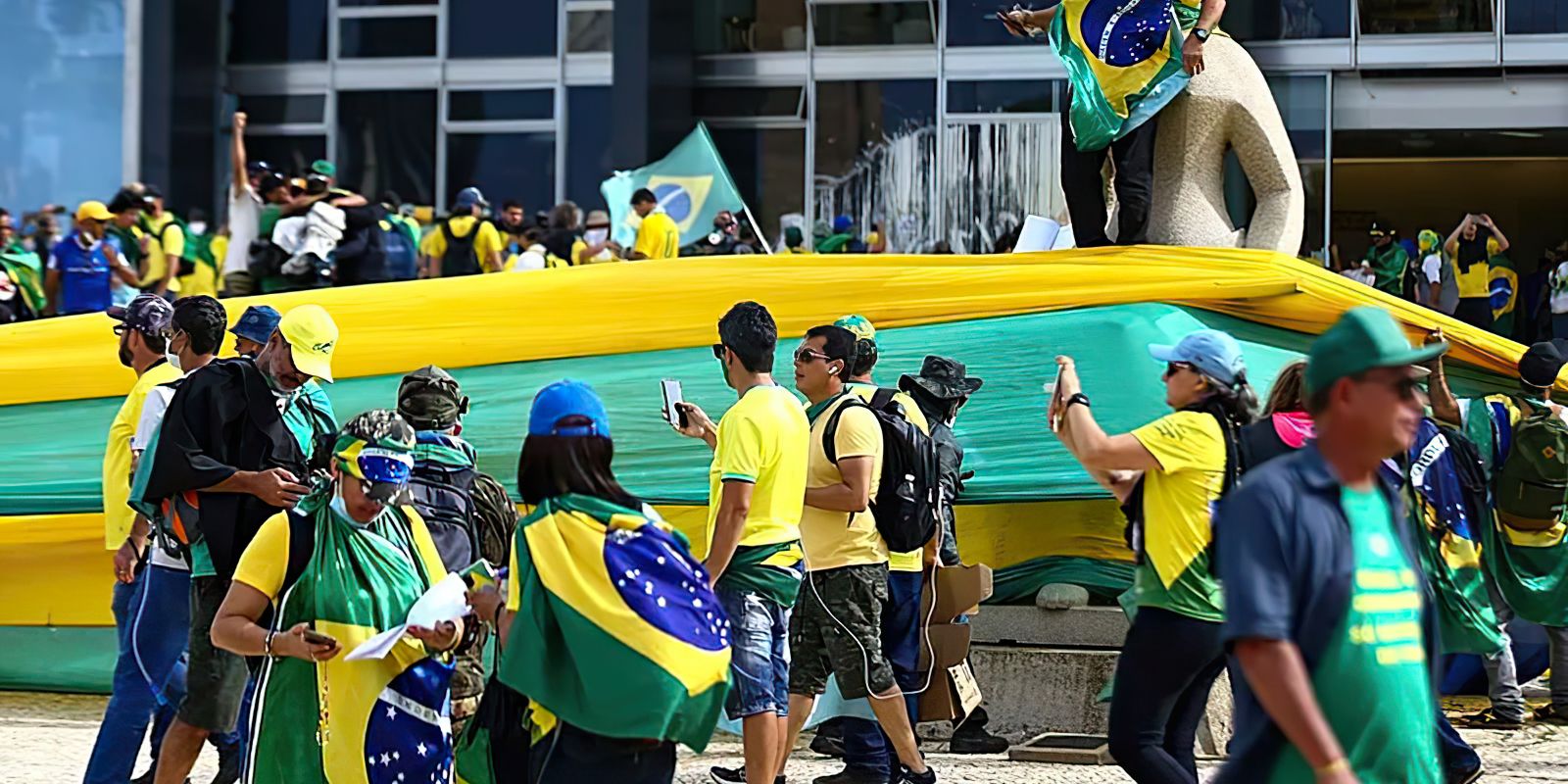
In the agitated movement of the political tides, the Bolsonarist wave would be close to becoming foam. The metaphor expresses the vision of political scientist Gabriel Rezende, which characterizes the political phenomenon led in recent years by former President Jair Bolsonaro as “right-wing populism.” In broader historical analysis, Brazil would have lived four populist waves, and the latest of them shows signs of weakening.
PhD from the Pontifical Catholic University of Rio de Janeiro (PUC-Rio), Gabriel will release, in early October, the book The rise of right -wing populism in Brazil, by the publisher Appris. The work treats populism as a political phenomenon and a tool of representation, which always emerges in times of crisis.
In a telephone interview with Brazil agencythe author argues that Brazilian political, economic and social crises, between 2013 and 2016, formed the “perfect storm” for the rise of the Bolsonarist wave. Among the main characteristics, this new right -wing populism would have presented itself with a central charismatic leader, discourses that oppose “the people” to a “the elite of the old politics”, nationalist and religious narratives, and the strategic use of social media.
In this sense, Gabriel Rezende understands that the failed attempted coup d’état by the Bolsonarist core and the role of the judiciary in confronting authoritarian tendencies place right -wing populism on a decreasing route.
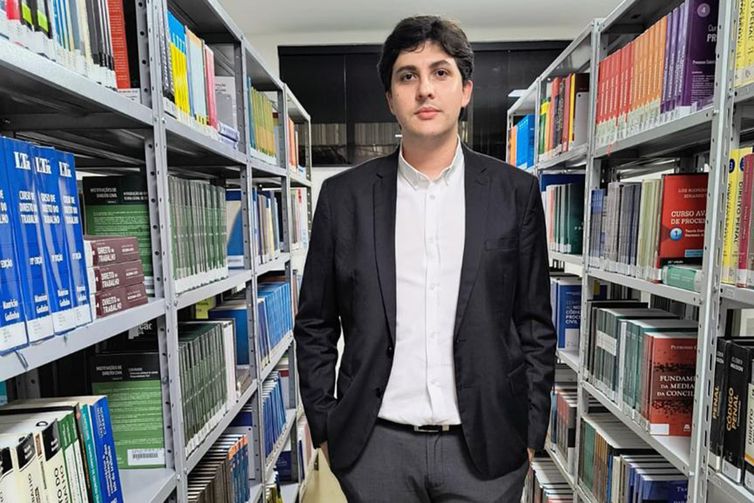
Gabriel Rezende, a political scientist, launches a book on right -wing populism. Gabriel Rezende/Personal Archive
Check out the interview
Agência Brasil: Could you speak, in general, what motivated to research “right -wing populism” and how the theme is addressed in the book that is about to launch?
Gabriel Rezende: The book is the result of my doctoral thesis. What aroused my curiosity was to realize the emergence of populist leaders around the world. First, in 2016, with Donald Trump, in the United States; Kaczyński in Poland; Beppe Grillo in Italy; Viktor Orbán, Hungary; and Jair Bolsonaro in Brazil. This showed me the need to study the phenomenon.
I sought to identify, in my book, what were the structural factors for the rise of this type of populism in Brazil, between 2016 and 2022. From there, I understood pockets as a political movement. And that Brazil has always lived populist waves.
The first populist wave was from the 1930s until the 1960s; The second populist wave in the 1990s, the so -called neoliberal populist wave, with Fernando Collor as protagonist; The third wave, which was Rosa, Left Populism, which, besides Brazil, was also present in Latin America with Evo Morales [Bolívia]Chavez [Venezuela] and Kirchner [Argentina]; And the fourth, which we are living now, parallel to the right -wing populist wave that also happens in Europe and the United States.
Agência Brasil: Populism is a term with many senses, disputed by different theorists and political movements. It can be seen as pejorative or positive phenomenon of greater inclusion of popular demands. How do you characterize this concept in your work?
Gabriel Rezende: I do not understand populism as ideology or political regime, since it cannot be attributed to it a specific syllabus. He regulates a set of ideological questions within a center.
It is a political phenomenon that always arises in crisis processes of democracy. It can also be seen as a representation policy tool, either right or left. To be characterized like this, you need some elements.
First, a central figure, a charismatic leader who will amalgamate all social dissatisfaction. And when he does this, he is founded from antagonism, the differentiation between “us” and the “other”, or rather between the people and the elite. That is, he works in a dichotomous order. He seeks to make a distinction between the people, which is the mass, and those who dominate these masses. In right -wing populism, for example, the enemy can be the immigrant, members of the political class. Bolsonaro widely used this rhetoric over the old policy and the new policy.
Agência Brasil: What would be the differences between right and left -wing populism?
Gabriel Rezende: In the case of right -wing populism, the national narrative is very working, for example, such as Trump with motto Make America Great Again [Faça a América grande de novo, em inglês]. This idea of strengthened America. The second very common element is religion. In the case of Brazil, we are a nation over 60% Christian. So populism uses conservative and moral narrative.
In the case of Brazil, in 2018, the right managed to mobilize it, because those in power until then was a left party, the PT. And the right hit this antisystem question a lot.
Already leftist populism is different. It seeks an expansion of the gaps in social life, for example, more progressive issues regarding minority rights. He seeks to amalgamate these people on the sidelines and the speech will be a binding element.
The guidelines will be focused on democracy, to issues of moral freedom. For example, the great critique of right -wing populism in Brazil was liberal issues in relation to the LGBT population, abortion, etc.
Agência Brasil: What particularities involve right -wing populism by pockets?
Gabriel Rezende: Bolsonaro was elected because he managed to mobilize five elements. First, the question of laundry. Remembering that Sérgio Moro himself was minister in his government. Bolsonaro goes to the wake of the moral and ethical issue in politics.
The second structural pillar was the issue of evangelicals. Despite being Catholic, he was very agile in dealing with these religious leaders through speech, with himself, “Brazil above all, God above all.” And evangelicals can mobilize a very expressive electorate.
The third element is agribusiness, the fastest growing sector in Brazil, which covers a significant slice of GDP. Agribusiness, in fact, embraced Bolsonaro’s campaign for various issues. To cite an example, the backing in relation to the invasion of land. The government had Teresa Cristina at the Ministry of Agriculture, an important figure of agribusiness.
Another important element is digital media. Bolsonarism was very skilled on social networks, with a series of representatives that helped a lot in the mobilization of the agenda and the electorate.
And the last element is the approach with the military as a way to moralize politics. They have even been part of the Esplanade of Ministries and are involved in this recent conviction by coup d’état.
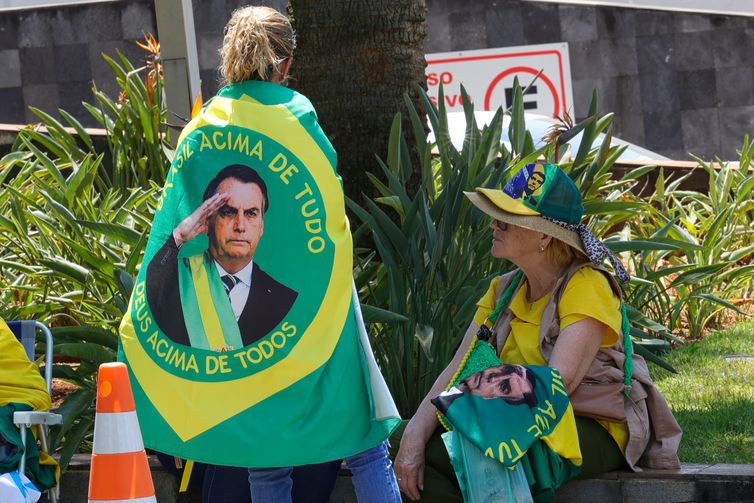
Supporters of former President Jair Bolsonaro in front of the hospital where he was hospitalized on September 14 Fabio Rodrigues-Pozzebom/ Agência Brasil
Agência Brasil: And how do you analyze the judiciary in this context of acting of right -wing populism. We have seen some Supreme Judges be characterized by pockets as enemies of their interests.
Gabriel Rezende: The Supreme Court, in the case of Brazil, fulfills the role of guardian of the Constitution, as established in 1988. In recent years, the judiciary has been growing by receiving demands that were proper to the executive or the legislature, but which they could not respond. So many cases were judicialized. In my view, what is seen is a responsive judiciary, which is led to position itself in the face of very complex demands.
The concern on the part of the right -wing populism is to try to mitigate the power of the judiciary, because he was the only one in Brazil that managed to counteract Bolsonaro’s government. And that acted, with many quotes, like moderating power.
We have the recent issues of amnesty projects and the PEC of the Armage, which were answers of this Bolsonarism to the judgment of the First Class of the Supreme Court to the accused for attempted coup d’état. These are far right answers to try to show that they have the power to measure with the judiciary.
But the effect was contrary. What happened was that the Armage PEC was not well received socially. The PEC is an argumentative void, because it goes against what these congressmen themselves preached when they were elected. The agenda of morals, law and order.
Agência Brasil: You spoke in populist waves, which means they have start and end movements. What can we expect from now on in relation to this right -wing populism? Is it possible to project whether it is closer to a weakening or a strengthening?
Gabriel Rezende: For some time, our institutions were not very skilled in dealing with this authoritarian far right. For example, the Attorney General’s Office was unable to get issues in relation to the Bolsonaro government ahead. The judiciary was the one who worked the most in this regard.
With his condemnation recently, there is a weakening in the political sense. Faithful supporters lose a base, a more concrete reference. The prohibition of him giving an interview weakens a lot. Imagine a right -wing populism in which the main figure cannot speak.
We have seen other people wanting to take this position. THE [pastor Silas] Malafaia, Michelle Bolsonaro [ex-primeira dama]his children, Tarcisio [de Freitas, governador de São Paulo]. A very large flank of those who will compete in the legacy of this populism opens. In this sense, we can say that there is a weakening of populism. They are measuring how much the image of pockets is damaged and if a rearrangement is possible in relation to the main political figure.
At the same time, the [presidente] Lula has not yet been able to build a succession, another figure that assumes his legacy. Who will be the candidate who will be able to amalgamate all these principles in relation to the left, if Lula himself cannot or will not want to reelect himself?
The moment is political rearrangement. In politics, a week is a world. A thousand things can happen before the 2026 election.