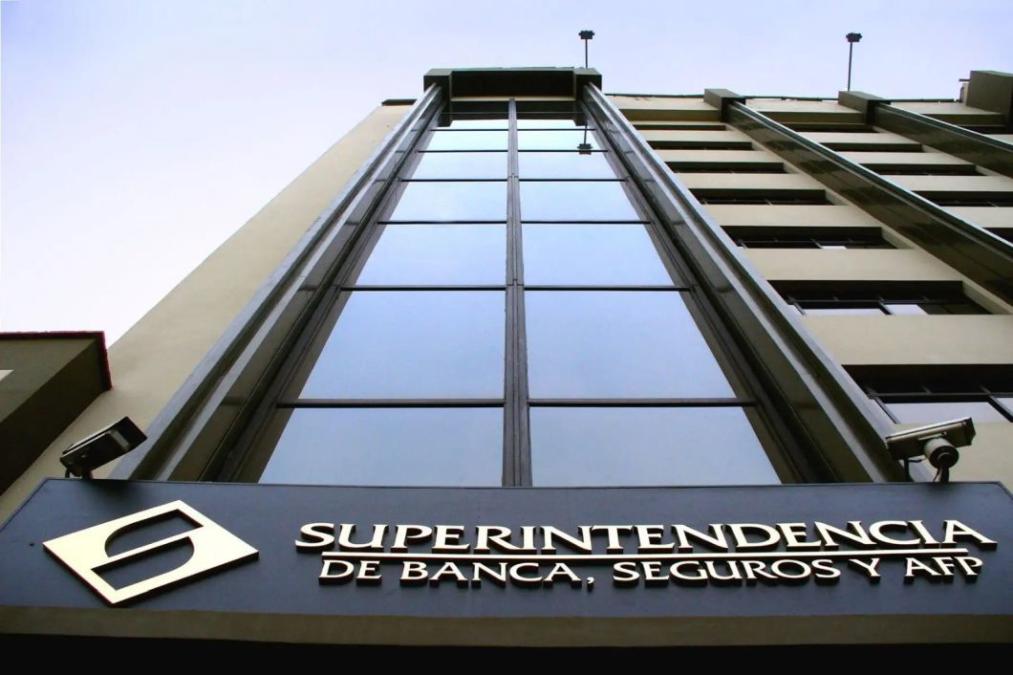
The Superintendency of Banking, Insurance and AFP (SBS) adapted the Regulations for the Election of Representatives before the Board of Directors of the Municipal Savings and Credit Banks (CMAC) with the provisions introduced in the Public Sector Indebtedness Law for Fiscal Year 2026.
This last rule, in its article 1.1, states that “its purpose is to regulate the conditions for public sector debt for Fiscal Year 2026”, but not to regulate the formation of the boards of directors of financial entities.
The changes made by the SBS, in compliance with the aforementioned law, are part of a legislative initiative that, since it did not have the consensus of the congressmen, was stalled without receiving the second vote required for its final approval.
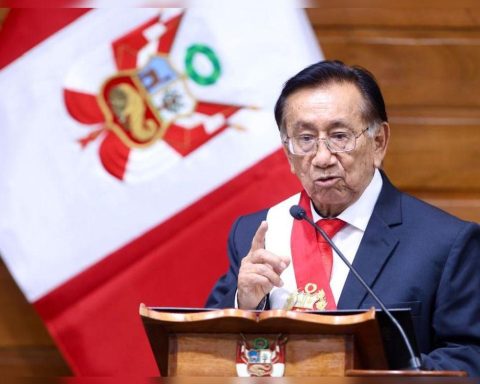
Behind this rule were congressmen Ilich López and José Jerí, today president of the Republic. Since Jerí was in charge of the Executive, some changes proposed by the initiative, such as limiting the term of the presidents of the boards of directors and modifying the election of the directors representing the mypes, were incorporated into the debt law as complementary provisions.
Jerí’s interest was to provide exclusivity to the National Confederation of Merchants (Conaco) to appoint the directors representing the mypes on the boards of directors of the municipal savings banks.
In a statement, the SBS specified that the changes incorporated in the regulation of the savings banks “consider the moral suitability, the permanence of the president of the board of directors and the incorporation of the Vice Ministry of MYPE and Industry of the Ministry of Production in the selection process of the representative of the small merchants and producers of the territorial area in which the CMAC operates.”
“It is important to specify that the participation of the Vice Ministry is aligned with its institutional role, since this entity is in charge of the process of appointing the representative of the MYPE in other public entities,” indicated the SBS.
However, financial management is not within Produce’s expertise. This is a role that Cofide plays as the financial arm of the State. Furthermore, the way in which the directors of these entities are appointed is based on the model of the municipal savings and credit associations in Germany. Hence, its creation rule of 1981 was modified in 1986.
“Likewise, the candidates appointed must comply, without exception, with the requirements of technical and moral suitability,” added the financial system regulator. However, that does not mean that those appointed come from the government of the day with particular objectives.
The risk of changes
A group of experts gathered at the Lima Bar Association recently denounced that around S/34,000 million in public deposits and the history of municipal funds of more than 44 years are in danger due to the political interference of the transitional government of José Jerí and the third vice president of Congress, Ilich López.
“I am very surprised that a provision with such aforementioned antecedents, a law that was voted against and had to be archived, is resurrected again. And resurrected by the grace of the third vice president of Congress, former president of the Economy Commission, and that the current president of the Republic is the co-author of the law,” said Luis Miguel Castilla, former Minister of Economy.
“There is something very important here that goes beyond the boxes: it is the manipulation and manipulation of laws that are absolutely key for the politicians in power,” he added.
Municipal savings banks were born in 1980 and their rules of the game were issued in 1981. However, these were modified in 1986 under the advice and model of the German government, which has allowed them to successfully meet their objectives to date.
According to research by economist Richard Webb, co-authored by Lucy Conger and Patricia Inga, in 1983 the advice of the German Cooperation recommended these entities to “reduce the potential political influence that any mayor could have on the operations of the fund.”
According to the study, German government consultant Claus Peter Zeitinger said in an interview: “Naturally, we wanted to break with the Latin traditions of favoritism, friendships and informal relationships that characterize societies that are not completely capitalist.”
Zeitinger’s fears were justified. Webb’s research highlights the negative impact that the political influence of General Velasco’s government, as well as the political parties of the time, had on the sustainability of savings and credit cooperatives and mutual societies.
According to the study, in the 1970s, “the board in charge of the largest savings and credit cooperative in Peru, Santa Elisa (…), was captured by the center-left Apra in 1977, then by Patria Roja, a far-left party, in 1978; and recovered by Apra in 1979.”
“The finances and corporate governance of mutual societies followed a similar course during the 1970s and 1980s (…). By the end of the 1980s the mutual system had been entirely captured by Apra, the ruling party. A clear indicator of the collapse was that the number of employees in the mutual system doubled between 1985 and 1987,” he details.
Operational continuity
The SBS in its statement added that another point sought by the modification to the regulation of directors of the savings banks is to strengthen better corporate governance in the CMACs, ensuring the operational continuity of the boards while the corresponding replacement is appointed, in case of removal.
“This will favor having a quorum for timely decision-making and will avoid prolonged periods of vacancy in their positions,” he said.
According to the regulator, it also seeks to specify and strengthen the designation process, ordering the verification and communication process of the Internal Audit Unit of the CMAC; as well as regulate the nomination process in case the CMACs have the participation of third-party shareholders.
Beyond the modifications of the regulator, the risk pointed out by specialists is not in the specific regulatory design, but in the use of a Public Debt Law as a vehicle to introduce changes that alter the institutional balance of municipal funds. Something that is not minor if you take into account that they manage billions of soles in public deposits.
The history of the Peruvian financial system shows that when the interests of politicians interfere in the entities, the costs for users and the country end up being high. In the case of municipal savings banks, political interference not only threatens their corporate governance, but also a model that has managed to sustain itself for more than four decades precisely by staying outside the swings of power.
Receive your Perú21 by email or WhatsApp. Subscribe to our enriched digital newspaper. Take advantage of the discounts here.
RECOMMENDED VIDEO