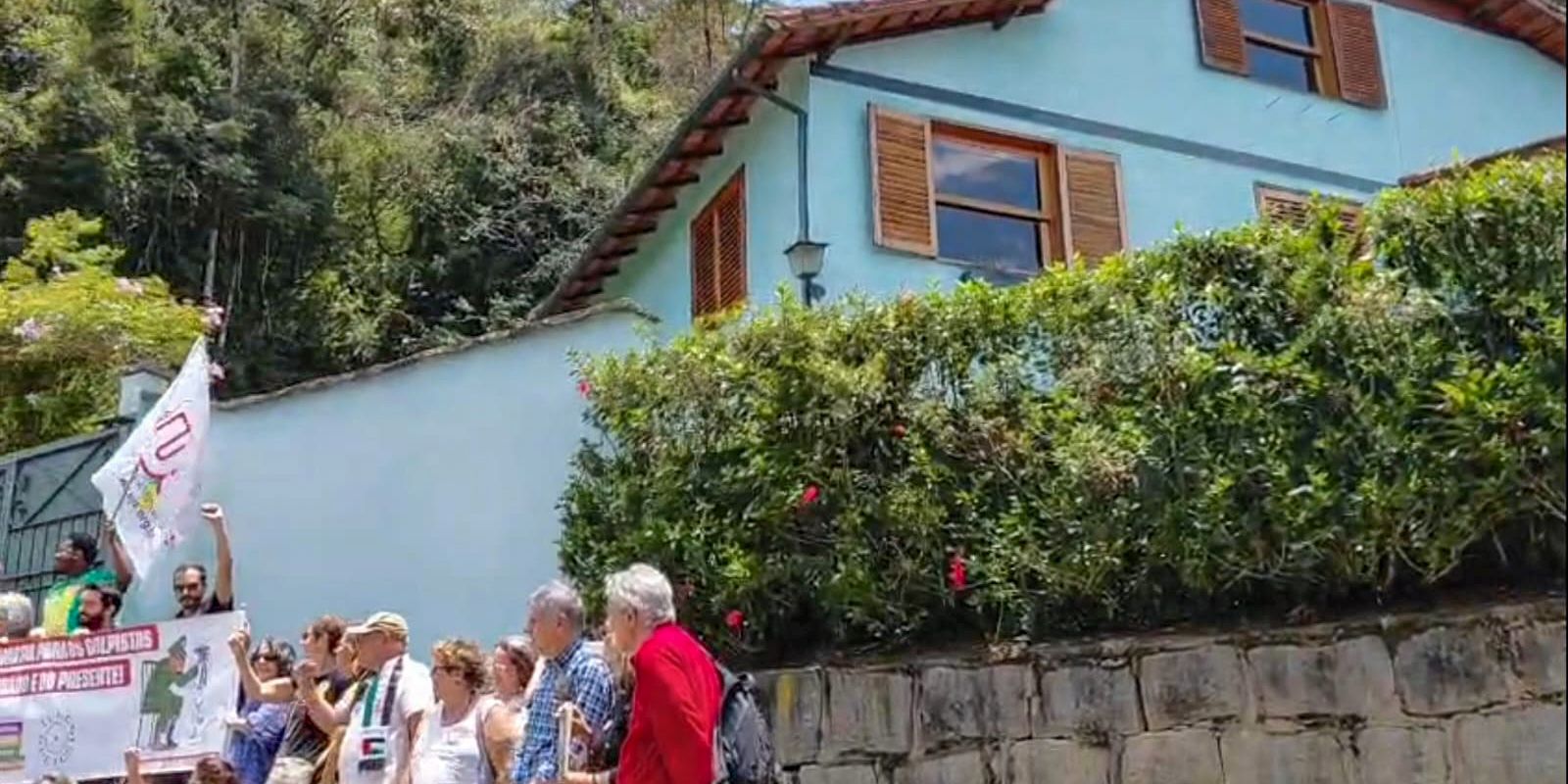
The launch of Ponto de Cultura Inês Ettiene, a project that seeks to preserve political memory and defend human rights in Brazil, moved Petrópolis last Sunday (30). Researchers, activists and family members of those missing from the House of Deatha property located in the mountain city and which was used by the military dictatorship to torture and murder opponents.
The initiative emerged to strengthen community actions that promote reflection, education and resistance. The inspiration comes from the struggle of political activist Inês Ettiene Romeu, the only survivor of the House of Death.
She was detained there between May and August 1971, when she was tortured by military personnel. Later, once free, he denounced everything that happened in the house. The activist died in 2015.
Precisely because of the region’s past and the history of Inês, the event began with a public event in front of the property. The group that makes up Ponto de Cultura asked for the expropriation of the house to transform it into a place dedicated to memory.
Culture point
“Relatives of the disappeared participated in the House of Death. Some of them have been proven, others not yet. But there are indications that this [o desaparecimento] may be limited there, which was one of the main centers for assassinations of political activists”, says Vera Vital Brasil, member of Ponto de Cultura Inês Etienne.
A process of expropriation of the property was opened. Petrópolis city hall received authorization from the 4th Civil Court earlier this year to take office, but the case was not concluded.
Therefore, the property remains private property. “The movement has been fighting for years to transform it into a center of memory. There is a Memorial House of Death that is in operation and there is a search for resources to acquire the house, which is private and is in the hands of a person who bought it from the [Ricardo] Lodders, who was the one who gave it to the Army”, recalls Vera.
Icon
Due to her trajectory and for being the only survivor of the place, Inês Etienne is the great icon of the Culture Point that bears her name. “She is this symbol of resistance, a survivor of the most barbaric and cruel situations. Inês is for us a symbol of struggle and resistance that opened a path of recognition of what was in those basements of the dictatorship”, he adds.
The group plans new activities. Vera says that “the intention is to promote the exhibition of films, music and cultural works that remind and provide information about what happened during the military dictatorship in Brazil”, he concludes.