Last September, a new edition of That sun of the moral worldthe history book of Cuban ethics that Cintio Vitier left us. During the event, one of the panelists wondered how it was possible that a book like this had been banned in our country for more than twenty years. Another testified that Cintio had always been “fiercely revolutionary.” I would like to briefly comment on both interventions.
Regarding the first, the obvious answer is that in our government, as in any other human enterprise, there have been retrograde forces that have sometimes been able to prevail. Regarding the second, I confirm that Cintio was fiercely revolutionary, but not fiercely revolutionary. (See the difference between both words in “Brief hunt for distinctions”.) And for that reason he was never an unconditional supporter of the Cuban government, nor would any of the heroes of our history have been, starting with Martí.
In his formidable letter of October 20, 1884 to Máximo Gómez, Martí clearly establishes the conditions of his personal support for the independence cause. The summary of these conditions is that the Revolution did not lead to military despotism, which would be “more serious and difficult to uproot, because it would be excused by some virtues, embellished by the idea embodied in it, and legitimized by triumph.”
Bridging the gap, the conditions of Cintio Vitier’s support for the Cuban government were similar: anti-imperialism and the option for the poor. These two pillars are actually one. Being at the service of the poor implies being accountable to them, and not acting with the impunity and clumsiness of someone who does not fear the consequences. In another article in this column We have spoken of impunity as the most condemnable, dehumanizing feature of imperialism. Hence, “unconditionality” for a revolutionary government is anything but support, since it does not help it persevere in its central commitment, which should be none other than to distance itself from impunity, the essential modus operandi of its historical enemies and all current or previous despotisms.
William Blake said that a bad artist was a bad citizen. This phrase always caught my attention, without completely convincing me—negative judgments, negative rules are so dubious—but currently I feel quite reconciled with it, because art has always been a form of justice, and it is a forgotten truth that “the most beautiful is the most just.”
Apparently, each era must dust off the truths that are neglected in ancient books such as the Ethics of Aristotle or the Dào Dé Jīng. Let’s say it another way then.
The nature of poetry is exactly the same as that of justice: it consists above all of placing where there is lack and removing where there is excess. Human beings, left to their own devices, tend to do the opposite: they tend to take away from where there is lack to add where there is excess. While poetry, left to its own devices, tends to correct it. There is no justice better or more complete than that of harmonious features that we call poetic justice.
Let’s see examples. Among the political currents of our 19th century, colonialism, autonomism, annexationism, reformism, independence, only the most just and necessary of them, could inspire Martí’s prayers and ideas. And how could it have been otherwise?
Poetry capable of showing new symbols and harmonies never militates except on the side of justice. It is justice, and it is, by its very nature, protected from the moral or intellectual fallibility of human beings. This is law without exceptions. Regardless of the moral or intellectual position of the poet, or whether we call him progressive or reactionary, the great racist novel of Rudyard Kipling, the great Francoist theater of Paul Claudel, the great fascist poem of Ezra Pound, the great militarist story of Jorge Luis Borges, or the great imperialist speech of Winston Churchill do not exist and cannot exist.
Churchill was undoubtedly a great orator. But it is no coincidence that all his oratory pieces emerged while his country trembled, for a change, under the shadow of a more capable, stronger and more infernally motivated enemy. Nor is it a coincidence that when he sought, time and again, to perpetuate the plundering of India, motivated by an imperialist and racist vision, Churchill did not leave a single memorable speech. The same throat that knew how to put the English language on a war footing against Nazi power, fell silent qualitatively —not because he stopped talking—because he was not at the service of justice.
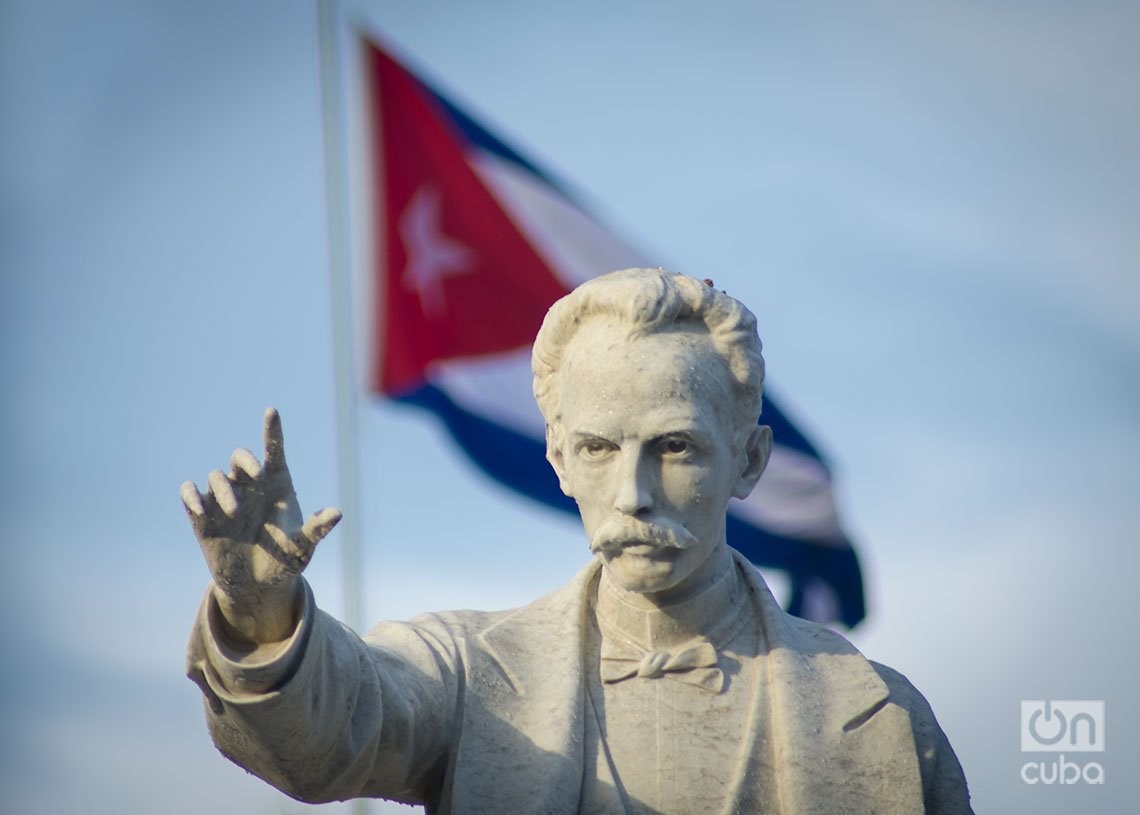
And talent, wrote Fina García Marruz, is not something you have like an account in the bank; but rather it is like the collision of two stones “that know nothing of the orange god in the middle.” One of those stones is the self, the poet, the human being; the other is the world, the circumstance, the others. The world can be transformed, reformed, deformed. Poetry, no. Men and women can change their ideas or ideals. Not poetry. She is the path and, simultaneously, she is the victory of an eternal ideal. As long as that flag flies, there will be things to defend.
On the other hand: poetry is the first to “detect” the decline of a society. When a government has become tyranny, she is the first to declare it by drying up its sources. History can be written by the victors; Poetry can only be written by poets. History can be rewritten, deformed or forgotten, but poetry cannot be easily destroyed or forgotten. This is what Mikhail Bulgakov was referring to with his famous apothegm “manuscripts do not burn.”
And the judgment of poetry is more final and immediate than that of History, because it is not an intellectual judgment. It is independent of the eventual opportunism of poets or artists, who are not morally superior to any other human group. Poetry doesn’t care if the poets are sincerely wrong or if they are rats jumping ship, or anything in between. She will simply deny sight of the colors of her cloak to all defenders of a cruel despot. And as long as they persist in this defense, they will not produce poems or songs or speeches capable of moving anyone. And as justification for this they will not be able to adduce the adversity of the circumstances, nor the cunning maneuvers of the Enemy, since these factors have previously served to inflame poetic inspiration when it has been illuminated by the feeling of justice, “that sun of the moral world.” The poetic sterility of tyrannies is due to the fact that poetry cannot be brandished against justice or against life, because all three are the same thing.
Then rebellion, disobedience, civil war may or may not come, but the non-cooperation of poetry will have anticipated everything. She is like the Messenger who bursts into the throne room, and to whom Macbeth orders: “To use your tongue you come, your story, quickly.” And what he comes to tell him is that Birnam Forest is climbing the high hill of Dunsinane, in the siege of the castle. Cintio Vitier recreates this scene in an unforgettable poem, in which the voice of the Messenger cries: “Succumb you, usurper and mute power, drowned by the forest. I will continue announcing.”
The content and destination of That sun of the moral world It is an example of what we call poetic justice. Cintio was always a poet, and for Percy B. Shelley poets are the secret legislators of history. Each of us is giving, or will give, when the time comes, our personal verdict on the future of our circumstance. But whatever our judgment, we will find that poetry, with its incomparable voice and silence, has preceded us.