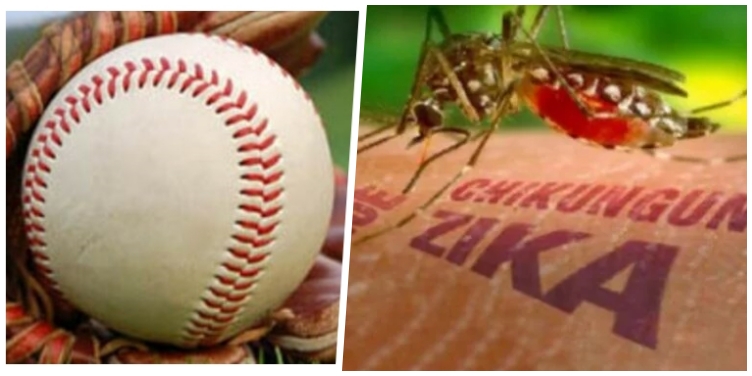
Since its beginning last August, the 64th National Baseball Series has had an eventful development.
LIMA, Peru – The existing epidemiological crisis in Cuba affected the development of the 64th National Baseball Series this weekend due to the illness of several of the participating players.
The news, released by the ruling party journalist Wilber Pastrana, indicates that this last Saturday the sports calendar had to do without the confrontation between the Granma and Mayabeque teams.
“There is no play today or tomorrow at the Nelson Fernández Stadium. Several Granma athletes are sick, among them the team’s three catchers. The duels will take place at the end of the qualifying stage,” he points out. a post on Facebook of the reporter.
According to Pastrana, the team’s situation is currently being evaluated to make decisions regarding its transfer to the Isle of Youth, where a subseries of five games was planned.
“The health of the athletes will always come first,” highlights the journalist without detailing which of the viruses circulating on the Island (dengue, Zika and chikungunya) have affected the baseball players.
Since its beginning last August, the 64th National Baseball Series has had an eventful development. Several game cancellations have been motivated by problems such as lack of fuel, influence of rain and meteorological events (Hurricane Melissa), and more recently the epidemiological situation.
The rise of diseases on the Island has not only affected sports activities, but also the cultural billboard this weekend. For its part, the National Ballet of Cuba (BNC) announced the immediate suspension of its performances scheduled for this past Saturday, November 8 and Sunday, November 9 due to the illness of several members of its company.
A report from the official media Cubadebate reports that the cultural institution was forced to cancel the presentations “despite the efforts made to maintain its programming.”
The national epidemic
The Cuban Ministry of Public Health (MINSAP) recognized that the country has treated 20,062 cases of chikungunya, a figure that shows the sustained expansion of this disease transmitted by the Aedes aegypti mosquito. The information was offered by the Vice Minister of Health, Carilda Peña García, in her regular space on the Caribbean Channel.
According to official data, the most affected provinces are Havana, Matanzas, Camagüey, Cienfuegos, Artemisa and Villa Clara. In addition, 62% of mosquito outbreaks are concentrated in Havana, Santiago de Cuba, Camagüey and Villa Clara.
The MINSAP announced the deployment of intensive fumigations and the active search for people with fever through Medical Sciences students. He also reported that clinical trials will begin in the province of Matanzas with the drug Jusvinza to treat persistent joint sequelae in patients with chikungunya.
However, the opinions and claims of the population contrast with the institutional discourse. In cities such as Santiago de Cuba and Havana, residents have reported that fumigation is not carried out systematically, and in some neighborhoods it has become a service that is only provided through informal payments, despite being a state obligation.
Likewise, residents report shortages of basic medications, long lines at polyclinics and hospitals, and entire families affected at the same time by severe fever symptoms.