Major General Lockiby Belmonte officially presented the progress of the Plan for the Communal Corridor of the Caribbean Peoples, an ambitious territorial articulation initiative that seeks to transform the social and productive reality of the areas connected between the capital and the central coast.
Under the premise of the “Obedient Government”, this project is differentiated by being designed directly from the grassroots, which unites efforts between state and municipal authorities and community spokespersons to mitigate the effects of the economic war on the most vulnerable sectors.
This plan is leveraged on the methodology of the Seven Transformations (7T), where it uses the Self-Government Rooms to prioritize the real needs of the population, which is why Belmonte detailed the achievements obtained in specific axes:
- Economy and Infrastructure (T1 and T2): Critical works have been carried out on roads, white water and sewage systems, as well as improvements in electricity and telecommunications services (Cantv).
- Community Organization (T5): This axis has been key for the adaptation of spokespersons and the consolidation of Socially Owned Companies.
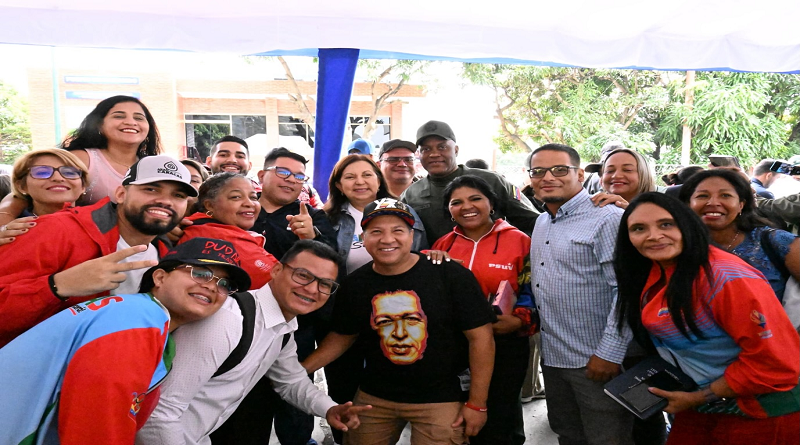
“It is a popular festival; people take ownership of its plan and make it possible,” said M/G Lockiby Belmonte, who highlighted that previously stigmatized sectors have today become centers of work and active production.
The People as protagonists of territorial destiny
The success of the corridor lies in the direct participation of the Venezuelan people, through citizen assemblies and the 1×10 system of Collective Good Government, where the community itself is in charge of approving, reporting and supervising the works.
This approach guarantees that it is the people who direct the destiny of their territory, which combines material development with spiritual and organizational strengthening.
Finally, Belmonte stressed that the Caribbean People’s Corridor has the vision of becoming a management model for Venezuela and the world. Furthermore, he stressed that the project not only seeks administrative efficiency, but also integrates respect for Mother Earth (T6) and a solid geopolitical vision (T7), which reaffirms the communities’ commitment to the defense of their land and productive sovereignty.
VTV/ND/MQ