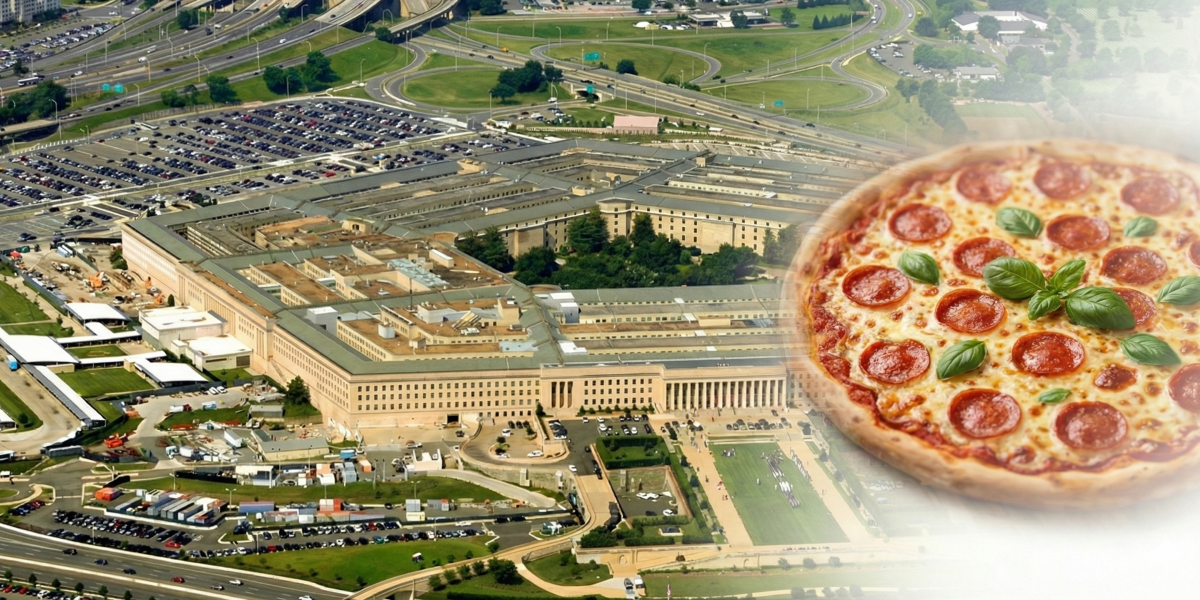
There are signs that were not born to be intelligence, but end up looking like it. One of the most cited and tastiest is pizza. For years, the idea has been circulating that when nighttime activity around the Pentagon intensifies, pizza orders in the area skyrocket. This pattern, which has become a modern myth, is popularly known as the “Pentagon pizza index”.
The logic is domestic: if there are long meetings, extended shifts, and more concentrated staff, someone has to have dinner. Pizza, practical and shareable, is usually the answer. The interesting thing is that this daily consumption can leave visible traces for anyone who observes the city in real time.
From journalistic anecdote to contemporary folklore
The origin of the story dates back to the beginning of the 1990swhen journalists documented late-night spikes in orders at key U.S. government buildings at times of high international tension. That coverage turned a specific observation into a story that would be repeated every time the geopolitical table shook.
As time went by, the anecdote became urban folklore. Not as an official tool, but as a wink: “If there is pizza at odd hours, something moves”. The idea survived because it was understandable and because it connected high politics with an everyday gesture.
Jumbo Slice Pizza – Washington
The era of open data: looking at the city from the counter
In the last decade, the phenomenon found new life with digital platforms. Today it is not necessary to call a pizzeria to know if there is movement: just look at public estimates of influx, peak hours and nighttime activity on maps and networks. From there they emerged accounts dedicated to following the topic as public curiosity, amplifying each peak as if it were an alert.
Media such as The Washington Post and The Guardian have explained the phenomenon with caution: It is an indirect readingbased on imperfect data, closer to digital culture than to formal intelligence. Still, it illustrates how daily life leaves observable traces.
The ovens under the magnifying glass
When the “index” is mentioned, specific names of pizzerias in and around the Arlington area appear, close to the Pentagon complex. Chains like Domino’s and Papa John’s, as well as independent neighborhood establishments, often figure in these conversations because they are part of the area’s everyday fast food circuit.
Pizza
The paradox is evident: the Pentagon has internal dining options, so an external increase in orders It is neither a necessary nor a sufficient condition. to explain their activity. Still, the story persists because it fits a simple intuition.
Real indicator or appealing coincidence?
Here is the key point: pizza does not anticipate wars or military decisions. What it may reflect, at best, is an increase in night work. Confusing correlation with cause is the permanent risk of this type of reading.
But the interest of the topic is not in its precision, but in what it reveals about our time. In 2026, security, the city and food share a common open data space. Pizza, without intending to, becomes a cultural clue: a way of understanding that even the most closed systems leave visible crumbs.
At that intersection between gastronomy and power, The cardboard box is not an official alarm. It’s a reminder: when politics speeds up, someone always ends up having a late dinner.