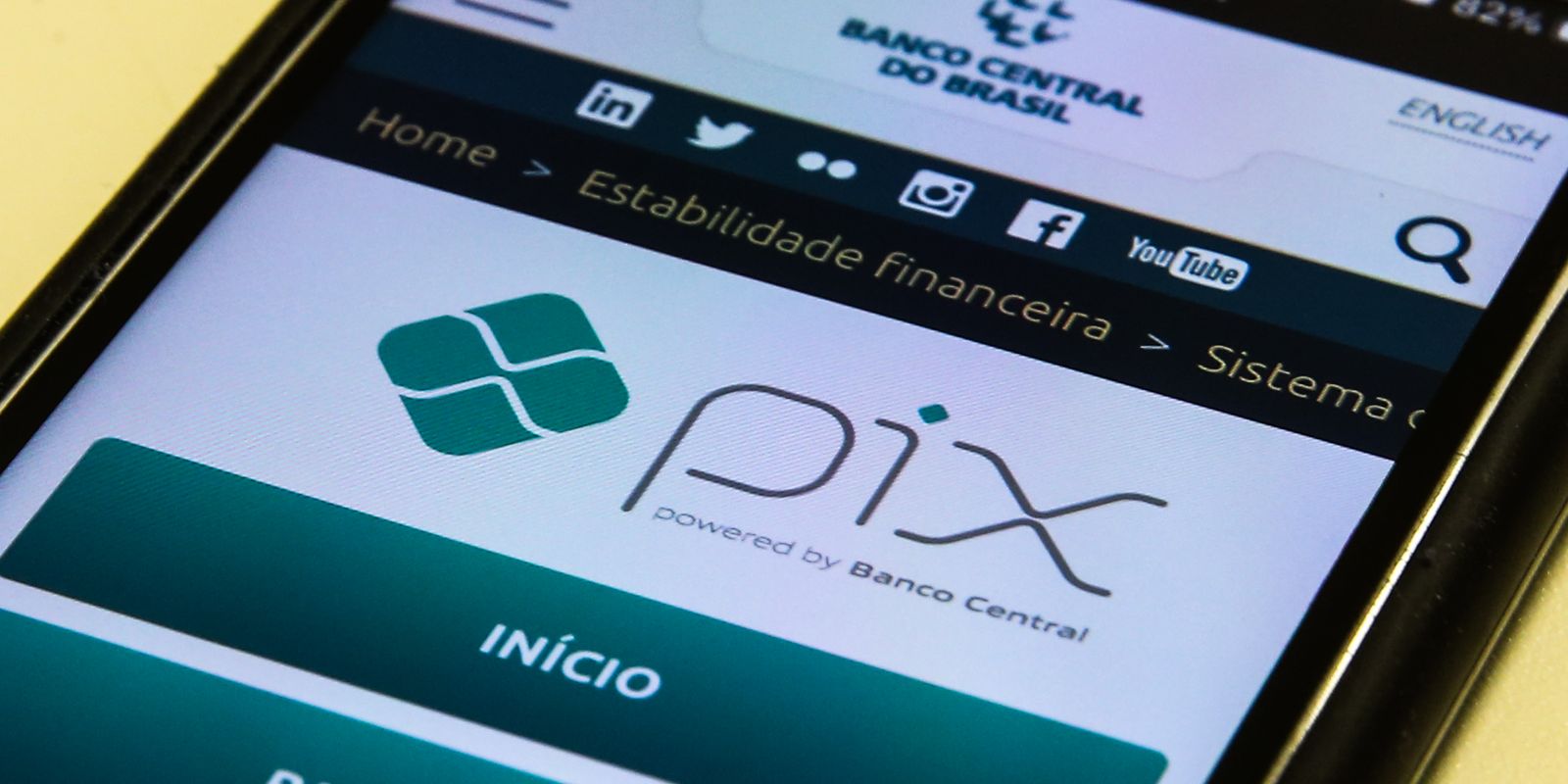
Modality created to speed up transactions via Pix, Pix by approximation turns one year old this Saturday (28) with the challenge of attracting public interest. According to the most recent statistics from the Central Bank (BC), money transfers in this category corresponded to just 0.01% of total Pix transactions and 0.02% of the amount moved in January.
Of a total of 6.33 billion Pix transfers last month, only 1.057 million were made by bringing the cell phone closer to a card machine or a computer screen. In relation to values, R$568.73 million were moved, out of a total of R$2.69 trillion in January.
According to the executive director of the Association of Payment Transaction Initiators (Init), Gustavo Lino, the Central Bank’s security restrictions and operational limits make adherence to Pix slower. However, he says that the last few months show an expansion trend in the modality, especially among companies.
“The potential is great, especially when the offer matures and starts to support more use cases, including in the corporate environment, maintaining trust as a foundation”, he states.
For Lino, with the consolidation of Pix’s offer through contact by commerce and other companies, use tends to expand, especially in points of sale with large queues. “One year later, Pix by contact reinforces Pix’s direction of evolution to be more present in high-recurrence payments and at the point of sale”, he adds.
In the case of payments in the corporate environment, in which a branch transfers resources to the headquarters, for example, Init’s executive director believes that the development of specific journeys (payment procedures) for companies will increase interest. According to him, the entire process is being carried out with the preservation of security controls.
Evolution
Despite the low participation in the Pix system, the approach method has grown. In July 2025, five months after launch, only 35,300 transactions using this option had been made. In November last year, the number of transfers surpassed the 1 million mark for the first time.
The amounts grow exponentially. From R$95.1 thousand in July last year, it jumped to R$1.103 million in the following month, to R$24.205 million in November and reached R$133.151 million in December.
Security Limits
To inhibit scams by criminals who use card machines to withdraw amounts, the BC established a standard limit of R$500 for each Pix per approach when the transaction is made via Google Pay, a digital wallet for Android devices, present on just over 80% of Brazilian cell phones.
When the transfer is made through the applications of financial institutions, which are required to offer Pix by contact, the limits may be changed. The account holder can reduce the amount per transaction and also create a maximum amount per day.
Differential
Pix’s biggest difference is the speed of the transaction. In traditional Pix, the user has to open the bank app, connect to the internet, enter the key or scan a QR Code and enter the password.
To use the contactless method, simply open your digital wallet or the institution’s app and touch your cell phone to the machine or computer screen in the case of purchases in stores. websites. Simply activate the Near Field Communication (NFC) function in the device settings. smartphone.
The modality brings the payment experience closer to that of credit and debit cards. This reduces payment time in stores with high footfall or long queues.
>> Understand how Pix works by approximation
Be careful with interest
Several financial institutions use Pix by contact to offer Pix paid by credit card. The payer, however, needs to be aware because, in these cases, interest is charged.
In December, the BC gave up regulating Pix Installmentsbut financial institutions can offer installments with Pix interest, as long as they use similar names, such as Pix no Crédito or Parcele o Pix.