Petrobras will enable people in socially vulnerable situations registered in the Cadastro Único (CadÚnico) so that they can get employment in the oil and gas industry. In addition to promoting income opportunity for low -income families, the initiative seeks to fill a specialized manpower gap in the company’s operations.

The company will join the CREATE STEP PROGRAM OF THE MINISTRY OF DEVELOPMENT AND SOCIAL ASSISTANCE, FAMILY AND HUNGER FIGHTING. The intention protocol will be signed by the company’s president, Magda Chambriard, and Minister Wellington Dias on Thursday afternoon at the state’s headquarters in Rio de Janeiro.
Related News:
CadÚnico is a set of information about poverty families and the government’s main instrument for the selection and inclusion of people in social programs, such as Bolsa Familia, Foot, Social Electricity Tariff, Aid Gas and my house my life. There are about 40 million subscribers.
Petrobras Social Project Manager, Marcela Levigard, explained to Brazil agency That the state of oil will use the company’s existing autonomy and income program as an arm of operation in partnership with the federal government.
Vulnerabilized groups
Within the cadunic, Petrobras will give priority to vulnerable groups such as blacks and browns, women, people with disabilities (PCD), trans, indigenous people, quilombolas and refugees, as well as unemployed. Students also receive a monthly assistance scholarship. To the Registrations can be made at this address.
“The Autonomy and Income Program is our way to contribute to this federal government initiative to qualify vulnerable people so that they can expand their employability opportunities in an oil and gas segment,” says Levigard.
According to Minister Wellington Dias, about 70 organizations have a partnership with the folder program. “We believe that the generation of opportunities will bring quality of life and greater social participation to families who are vulnerable,” said the minister, who also signs the partnership with the Brazil Foreign Trade Association (AEB) , also in Rio de Janeiro.
Specialties
Petrobras estimates to offer about 20,000 vacancies in the qualification courses in 2025 and 2026. The company made a mapping in various company operations, such as exploration, production and oil refining, to identify which qualified labor gaps.
According to Levigard, most vacancies will be for those who attended at least the 5th grade of elementary school. They are functions such as caldereiro, welder, scaffolding and industrial painting. For those who have high school, they are technical courses in areas such as electrical, occupational safety and mechanics.
Karoline Batista is a student of the technical course of Electrotechnical in Araucaria, Paraná, a city where the Presidente Getulio Vargas refinery is. At 28, she says she saw in the open place the opportunity to go back to school, “having the chance to be a vocational course in a renowned institution.”


It is an opportunity to go back to study, says Karoline, – Photo: Karoline Batista/Personal Archive
“This course opened my head, we had the opportunity to do our inaugural class inside Petrobras, where it is my dream to work, so I know that if I work hard, I will be able to go very far,” he told Brazil agency.
Manager Marcela Levigard explains that the workforce formed by the Qualification Program will not be directly hired by Petrobras, which requires a public tender. The idea is for professionals to be absorbed by outsourced companies that are part of the state’s supply chain.
To adapt vocational training to the needs of the oil and oil chain, Petrobras sought institutions such as the National Industrial Learning Service (Senai) and Federal Institutes for Science and Technology Education to format the courses.
Local labor
Levigard says that the courses are offered in regions where Petrobras is active, so that the training of local labor meets pressures by occupation of the communities themselves.
“Pressure of that community that is around, who sees that big work going on and thinks ‘I want to work, I want to be part of it,’” he says.
She adds that for the company it is “much more interesting” to be able to count on local workers. “There will be no cost of accommodation, it will not impact public service equipment. If your workforce comes from outside, you generate these impacts, rent price, cost of living in all this. ”
According to the manager, some Petrobras operations can have more than 80% of workers in the region itself. “The workforce that comes from outside is very specific, very specialized.”
The courses are offered in 47 cities in seven states, Rio Grande do Sul, Paraná, Sao Paulo, Minas Gerais, Espirito Santo, Rio de Janeiro and Pernambuco, most of refinery operations.
In Pernambuco is most vacancies, more than 7,300, because of the expansion works of the Refinery Abreu e Lima, in Ipojuca, Metropolitan Region of Recife.
“At the peak of the work, we will have 10,000 to 12 thousand people there. There is a cry of those communities that are around our operations that they need to be main actors in the process. There is no need in their view, of ours too, to import labor to that region, ”says the executive manager of Social Responsibility, José Maria Rangel.
Rafaelson Barbosa da Silva lives in Cabo de Santo Agostinho, a neighboring municipality of Ipojuca, and takes a Caldereiro course, hoping to employ in Abreu e Lima.
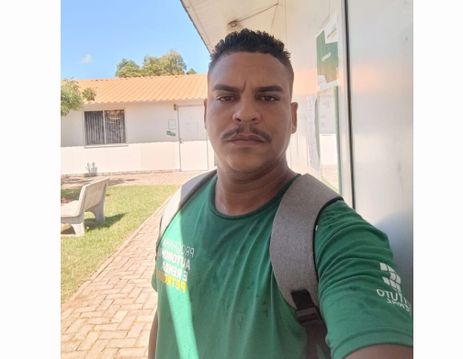
Barbosa da Silva, takes a Caldereiro course, says the new course is a gateway – Photo: Rafaelson Barbosa/Personal Archive
“I see this course as a door of new opportunities, because I already worked a lot in a workshop, a little with assembly and won the welder classification. I saw people working as a caldereiro and I felt like it,” he told the Brazil agency The 35 -year -old Pernambuco.
It is on the radar of the company to make a mapping to institute the training program in Amapá, a state that will serve as the basis for the exploration of oil in the equatorial margin, considered of great potential.
The intention is that, once exploration is released by Brazilian Institute of Environment and Renewable Natural Resources (Ibama), there is no flood of outsiders.
“An assessment of the expansion of the program is on our radar, surveying what are the careers we will have there,” said Rangel.
Female majority
The Autonomy and Income program began the first qualifications in September 2024 and ended last year with 1,100 subscribers. The first classes will form in March.
Among those looking for training, 75% are black or brown. Among students, 60% are women and 45% are women with children up to 11 years old.
The assistance scholarship is $ 650. For women with children up to 11 years old, the amount rises to $ 858. “The woman to be able to study with a small child, will have to have a buck to pay someone to take care of the child”, Levigard says, noting that children’s care work is still very attributed to women.
The fact that most vacancies are occupied by women can be a momentum to alter the current reality of the oil and gas industry, occupied mostly by men.
“Potential we have to spare! I believe that, with all the preparation and knowledge acquired, we can and we will deliver a service of excellence as much as men, ”says Karoline of the course in Araucaria and mother of an 8 -year -old boy.
Requalification
Autonomy and income also has the function of requalifying workers. José Maria Rangel contextualizes that six years ago Petrobras suffered a “dismantling” process, which left unemployed people. According to him, the company currently needs these workers back.
“Only this workforce has not been practicing, without training for six years. So the project goes to this line. ”
Contracting Companies
Petrobras encourages trained workers to register curricula in employment banks of the National Employment System (Sine) and at the Worker Service Post (PAT), while encouraging oil chain companies that make vacancies available on these banks .
By making public competitions to close outstanding contracts, Petrobras cannot require these firms to admit only employees qualified by autonomy and income, but articulates for workers to be used.
“A movement to show entrepreneurs that there is a skilled labor there,” commented Rangel.
Regarding the first opportunity in the world of work, the executive manager stated that there are clauses that require 15% to 30% of vacancies occupied by people in the first job.