THE Petrobras informed, this Friday (8), that the Interest in returning to the direct sales of liquefied petroleum gas (LPG) – popularly known as cooking or cylinder gas – is explained by the high margin in the negotiation of fuel product.
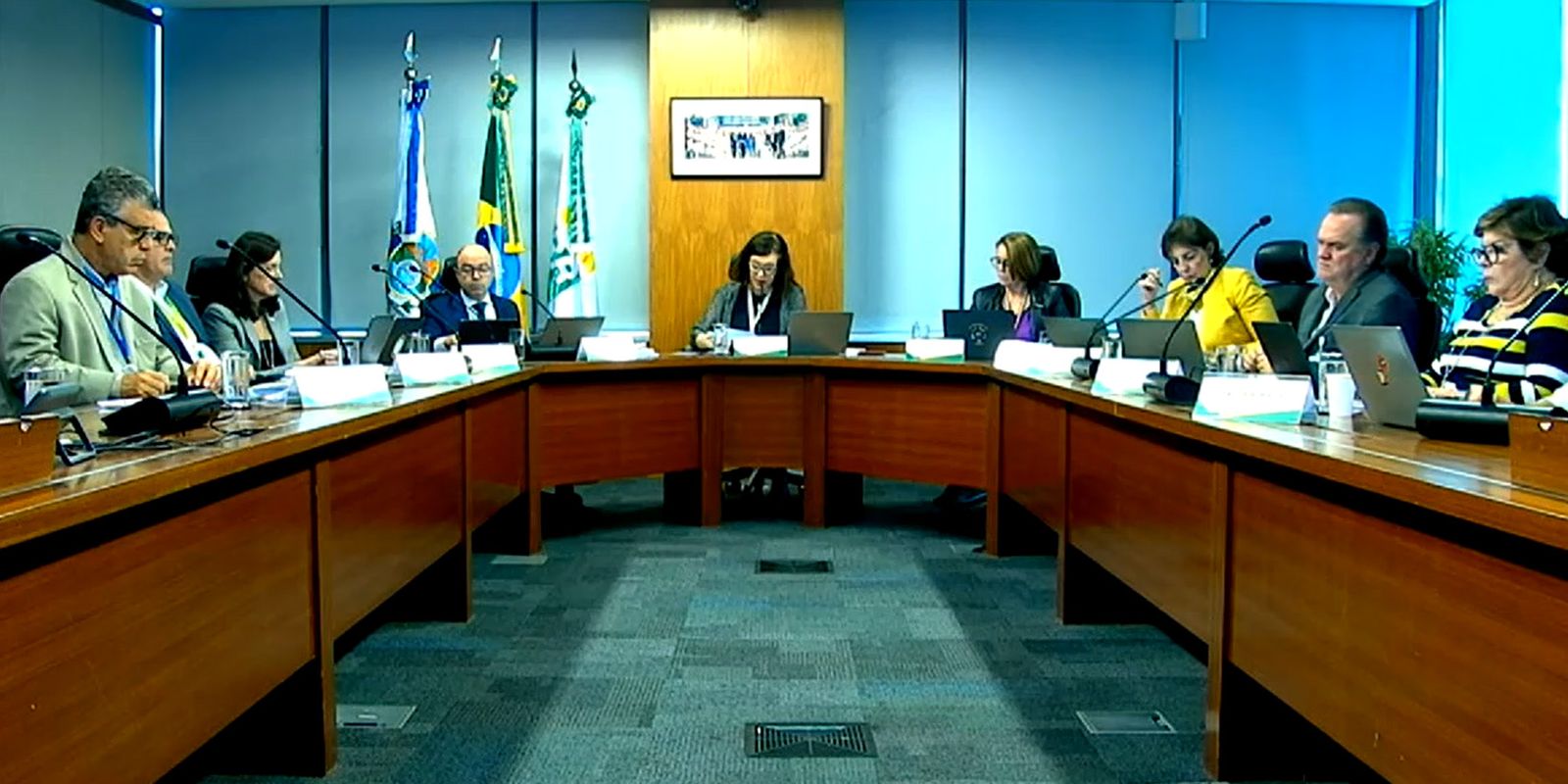
In an interview with journalists during a presentation of the second semester balance of the company, the president of the state company, Magda Chambriard, criticized the decision of the previous government of abandoning business branches and exalted the growth of margins obtained by cooking gas dealers.
“Why are we going to close this door? Leaves the door open,” said Magda Chambriard, referring to the determination that the company left sectors such as ethanol and the direct selling of cooking gas.
“It leaves the door open because, it will be useful, it will guarantee a profitable business, it will bring a good return to the company,” said the president of the state, before pointing out the growth of the business margin.
“What was the business that, in such a short period of time, has increased its attractiveness in 188%? This is what we are talking about, we will not self -limitation.
Margin
The 188% growth cited by the executive is in a technical note prepared in October 2024 by the Energy Research Company (EPE), linked to the Ministry of Mines and Energy (MME).
The study points out that, while inflation measured by the Getulio Vargas Foundation’s General Price Index (IGP-M) was 48% between 2019 and 2023, The net margin of distributors grew 188% in the same period, from an average of R $ 285.22 per ton (T), in 2019, to R $ 821.90/t, in 2023.
Net margin is the difference between the LPG resale price practiced by distributors and the cost of acquiring raw materials and operating costs, such as freight, labor, storage, taxes and advertising. The higher the net margin, the greater the profits.
BACK TO THE BUSINESS
The information that Petrobras is interested in acting on the kitchen gas distribution market It was released on Thursday night (7).
The company left the business in 2020, during the government of Jair Bolsonaro (2019-2022), through the privatization of Liquigás, sold to two private groups: Copagaz – Gas Distribuidora SA and the National Distribuidora Gas Nacional.
At the time, Petrobras’ command argued that the state -owned company was giving up on certain areas to focus on reducing debt and exploration and production of oil and gas in deep and ultra -deep water.
The strategic decision happens in a scenario in which the government, the main shareholder and controller of the state, has Concerned with the price of gas cylinder.
At the time of privatization, Liquigás had a presence in all states, 23 operating centers and a network of approximately 4,800 authorized dealers. Petrobras’ subsidiary owned 21.4% market share, ie out of five cylinders sold, one of Liquigás.
Large customers
Petrobras Logistics Director Claudio Romeo Schlosser explained during Friday’s interview that The company is already looking for large customers – a profile that applies mainly to industries and commercial use.
“We are effectively looking for customers, large LPG customers in order to offer direct sale. We have a possibility in some infrastructures to take advantage of what we already have and move, obviously, in this market. What we seek is to really access the market,” he said.
In September 2024, Petrobras inaugurated the Boaventura Energy Complex (former Comperj)in Itaboraí, in the metropolitan region of Rio de Janeiro. The industrial pole processes pre-salt natural gas and has LPG among its products. At the inauguration, Magda Chambriard pointed out that the unit would contribute to expand the gas supply in the domestic market and minimize LPG imports.
Ethanol
The presentation of results was attended by the new Director of Energy Transition and Sustainability, Angelica Laureano, who took office for less than a monthreplacing Mauricio Tolmasquim.
She stressed that the company has an interest in the ethanol market, “seen as a low carbon strategic market” and that it looks for business partners.
“We are looking for partnerships, we want to be partners of large companies that have a robust portfolio, who have a way to grow in this market. But in minority participation. We intend to grow in this already mature market,” he said.
Profit and dividends
In the second quarter of 2025, Petrobras registered net profit of R $ 26.7 billion. The result is 24.3% lower than that determined in the previous quarter, but higher than the same period of 2024, when the company had a loss of R $ 2.6 billion.
The company also announced the distribution of R $ 8.66 billion in dividends and interest on equity (JCP) to shareholders. Both dividends and JCP are forms of a company divide part of the profit with shareholders.
In the case of Petrobras, the federal government should receive about 29% of the amount, since it has this proportion of the quotas. Another 8% go to the National Bank for Economic and Social Development (BNDES), a public bank to fund the federal government.