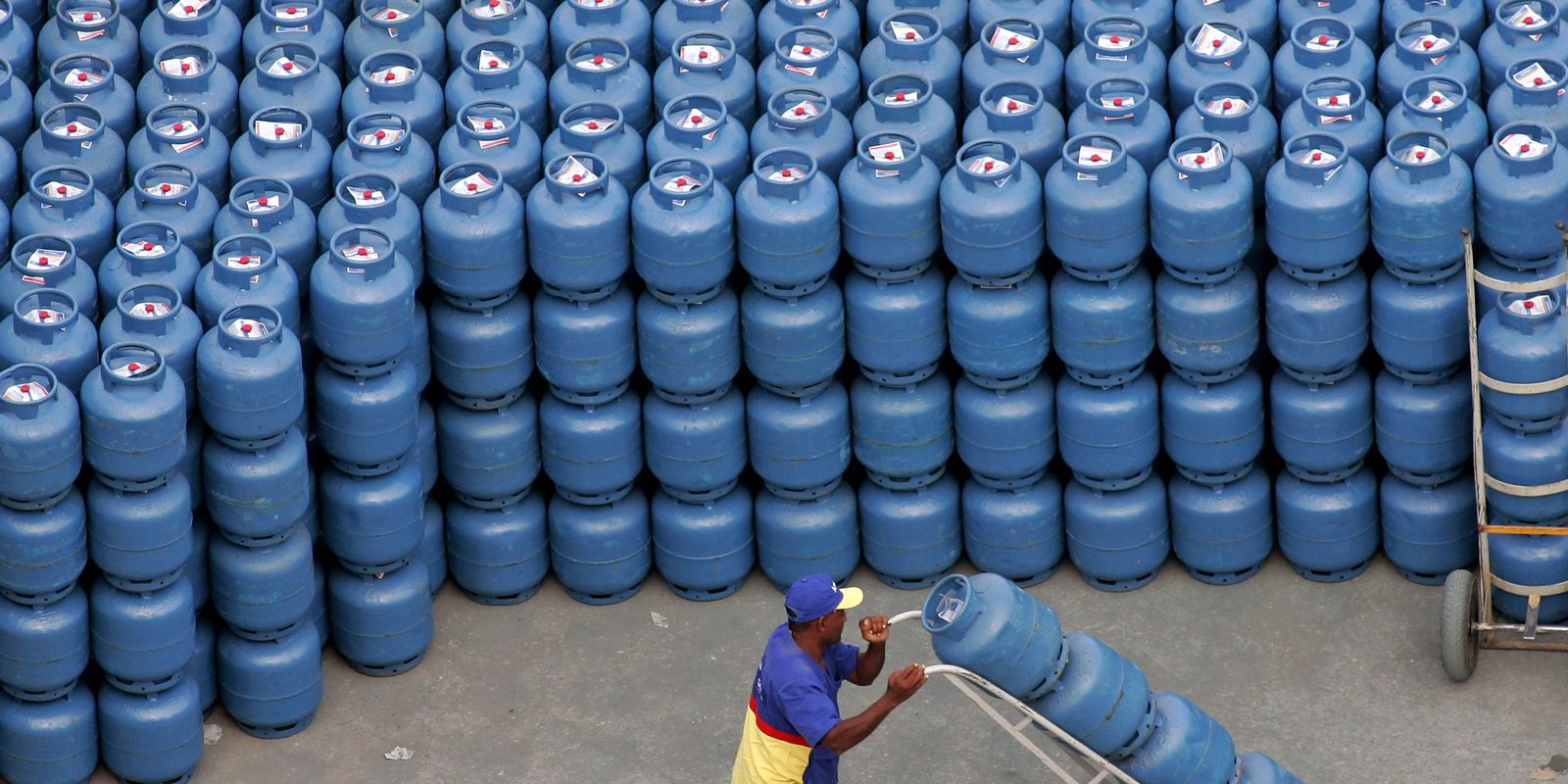
Petrobras informed, on the night of Thursday (7), that the board of directors of the state approved the Return to the Liquefied Petroleum Gas Distribution Business (LPG)popularly called cooking gas or cylinder. 
The company had opened the sector’s hand during the government of Jair Bolsonaro (2019-2022). By 2020, the company sold the company Liquigás to two private groups: COPAGAZ – SA GAS DISTRIBUTOR AND NATIONAL BUTANO GAS DISTRIBUTOR.
In the statement this Thursday, the company does not detail how it would be around the gas distribution market, for example, if it would be in direct sale of cylinder to residential consumers.
The strategic decision happens in a scenario in which the government, the main shareholder and controller of the state, has expressed concern about the price of gas cylinder.
At the end of May, during the inauguration of the transposition of the São Francisco River, in Cachoeira dos Índios, Sertão da Paraíba, President Luiz Inacio Lula da Silva exposed the contradiction with the price of the cylinder that reached families.
“Petrobras sends cooking gas to $ 37. When is it here? One hundred and ten reais, $ 120, it’s been $ 140. And I can tell you that it is wrong. You can not pay $ 140 for something that costs $ 37 from Petrobras. It is sure that there is the cost of transportation, But you don’t have to pay so much“He complained at the time.
Privatization in 2020
In the past government, when he decided to privatize Liquigás, then -Petrobras president Roberto Castello Branco, argued that the state -owned company was giving up on certain areas to focus on reducing debt and exploration and production of deep and ultra -evidence oil and gas.
At the time, Liquigás had a presence in all states, 23 operating centers and a network of approximately 4,800 authorized resellers. Petrobras’ subsidiary owned 21.4% market share, ie out of five cylinders sold, one of Liquigás.
Gasoline
The direct sale of gasoline, that is, in the bombs of the posts, was not cited by the decision of the Board of Directors. Also in the previous government, the state -owned company decided to Sale of BR Distribuidora to Vibra Energia SA. ─ Also with the justification in optimizing the portfolio and improvement of allocation of the company’s capital.
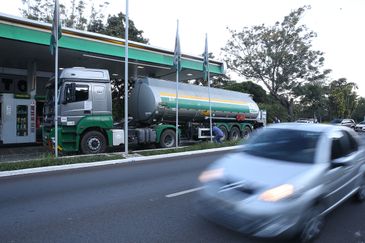
The sale included license for the buyer to keep the BR brand until June 28, 2029. That is, despite showing the BR brand, the posts spread across the country are not owned by the company, which has also signed a non-commercial term (without competition, business jargon), preventing the company from competing with vibration. Petrobras is only a fuel supplier.
In January 2024, however, Petrobras reported to Vibra that it has no interest in renewing the brand use license after 2029. “License’s non -renewal will allow the eventual evaluation of new brand management strategies and business opportunities for Petrobras,” said the state -owned company.
In May, the president of the oil company, Magda Chambriardshe regretted the fact that Petrobras no longer acts on sale directly on the bombs and regretted seeing BR flag selling fuels with more expensive prices than she considers fair.
“It worries us, yes, to have our brand spread and spread throughout Brazil, selling a gasoline above the price, incorporating margin,” he said.
Profit and dividends
The board’s decision to return to the distribution of cooking gas was the same day that Petrobras announced the Balance of the second quarter of 2025. The company registered net income of R $ 26.7 billion. The result is 24.3% lower than that determined in the previous quarter, but higher than the same period of 2024, when the company had a loss of R $ 2.6 billion.
The company also announced the Distribution of R $ 8.66 billion in dividends and interest on equity (JCP) to shareholders. Both dividends and JCP are ways for a company to share part of the profit with shareholders. ((https://agenciabrasil.ebc.com.br/economia/noticia/2025-08/petrobras-aprova-paggation-de-dividendos-avidends
In the case of Petrobras, the federal government should receive about 29% of the amount, since it has this proportion of the quotas. Another 8% go to the National Bank for Economic and Social Development (BNDES), a public bank to fund the federal government.