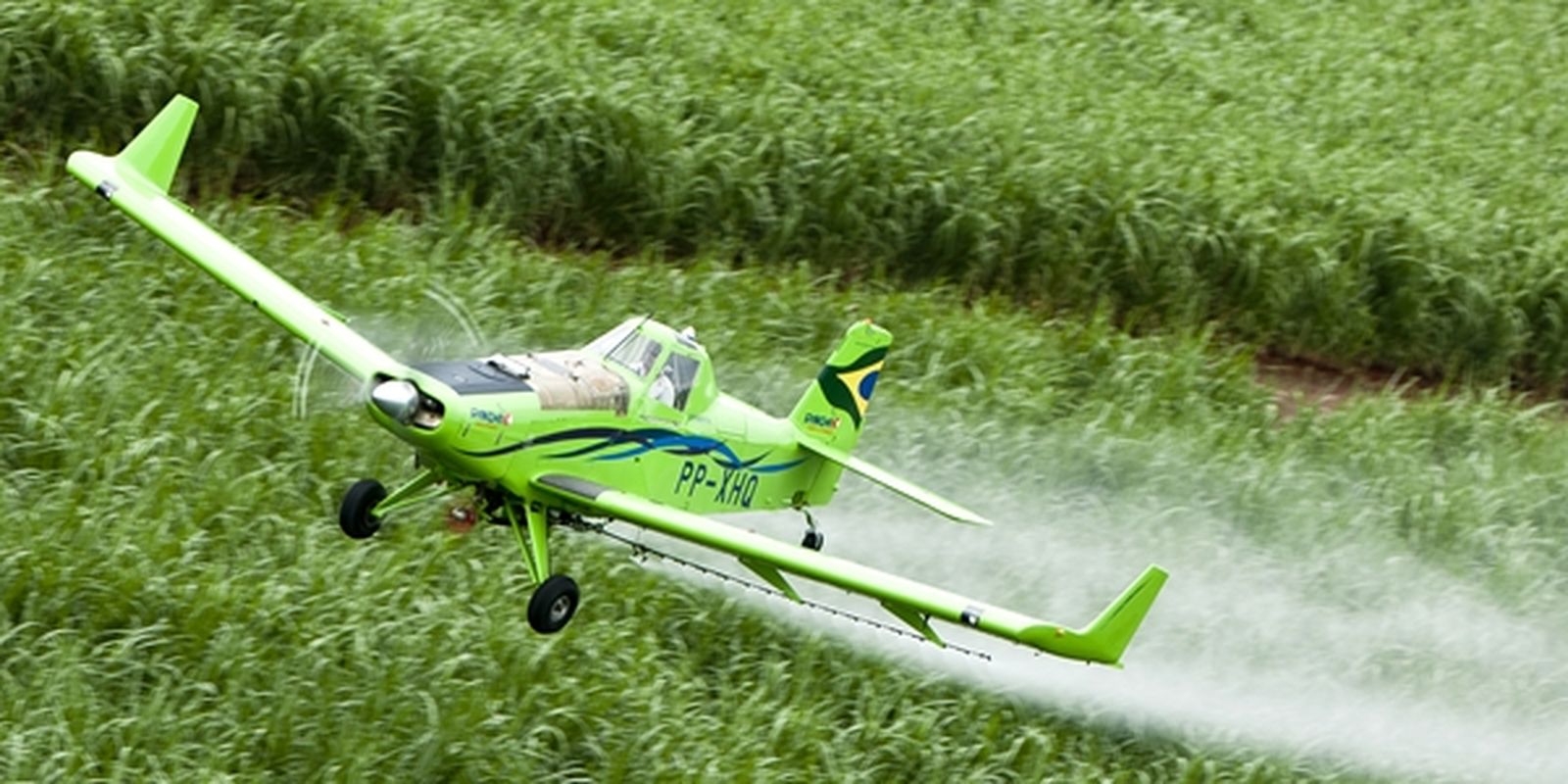
The degree of pesticide toxicity increased across the world from 2013 to 2019, with Brazil among the leading countries. The conclusion is in a study published this month in the journal Science and contradicts the goal of reducing pesticide risks by 2030, established at the 15th United Nations Conference on Biodiversity (COP15).
German researchers from the University of Kaiserslautern-Landau evaluated 625 pesticides in 201 countries. They used the Total Applied Toxicity (TAT) indicator, which considers the volume used and the degree of toxicity of each substance.
Six out of eight species groups are most vulnerable to increasing levels of toxicity. They are: terrestrial arthropods (such as insects, arachnids and centipedes), whose toxicity increased by 6.4% per year; soil organisms (4.6%), fish (4.4%); aquatic invertebrates (2.9%), pollinators (2.3%) and terrestrial plants (1.9%).
Global TAT decreased only for aquatic plants (−1.7%) and terrestrial vertebrates (−0.5% per year). Humans are part of this last group.
“The increase in global TAT trends represents a challenge to achieving the UN pesticide risk reduction target and demonstrates the presence of threats to biodiversity at a global level”, says one of the excerpts of the study.
Brazil in the spotlight
Brazil appears as one of the main protagonists in this scenario. The study identifies the country as having one of the highest intensities of toxicity per agricultural area on the entire planet, alongside China, Argentina, the United States and Ukraine.
Furthermore, Brazil, China, the United States and India together account for 53% to 68% of the total toxicity applied in the world.
Brazilian relevance is directly linked to the weight of agribusiness, especially extensive crops. Although traditional cereals and fruits occupy large areas, the toxicity associated with crops such as soybeans, cotton and corn has a significantly greater impact in relation to the area cultivated.
Types of pesticides
One of the most relevant findings of the study indicates that the problem is highly concentrated: on average, just 20 pesticides per country account for more than 90% of the total toxicity applied.
The survey shows that different chemical classes dominate the impacts. Classes of insecticides, such as pyrethroids and organophosphates, contributed more than 80% of the TAT of aquatic invertebrates, fish, and terrestrial arthropods. Neonicotinoids, organophosphates and lactones represented more than 80% of pollinator TAT.
Organophosphates, along with other classes of insecticides, contributed most to TATs in terrestrial vertebrates. Acetamide and bipyridyl herbicides contributed more than 80% to the TAT of aquatic plants, while a broader mixture of herbicides (including acetamide, sulfonylurea, and others) defined the TAT of terrestrial plants. High-volume herbicides such as acetochlor, paraquat, and glyphosate belong to these classes and have been associated with environmental and human health risks.
Conazole and benzimidazole fungicides, along with neonicotinoid insecticides, applied to the seed coat, mainly contributed to the TAT of soil organisms.
Distant global goal
The study also evaluated the trajectory of 65 countries. The diagnosis is that, without structural changes, only one country (Chile) will reach the UN target of a 50% reduction in pesticide toxicity by 2030.
According to researchers, China, Japan and Venezuela are on track to reach the target and show downward trends in all indicators. But they need to accelerate changes in the use of pesticides.
Thailand, Denmark, Ecuador and Guatemala are moving away from the target, with at least one indicator doubling in the last 15 years. They need to reverse the rapidly increasing trends to return to the previous trajectory.
All other countries in the study, which includes Brazil, need to return pesticide risks to the levels of more than 15 years ago. This means reversing patterns of use of substances that have been consolidated for decades, in terms of volume and toxicity of mixtures.
The researchers indicate three main fronts to contain the escalation of risks: replacing highly toxic pesticides, expanding organic agriculture and adopting non-chemical alternatives. Biological control technologies, agricultural diversification and more precise management are highlighted as strategies capable of reducing impacts without compromising productivity.