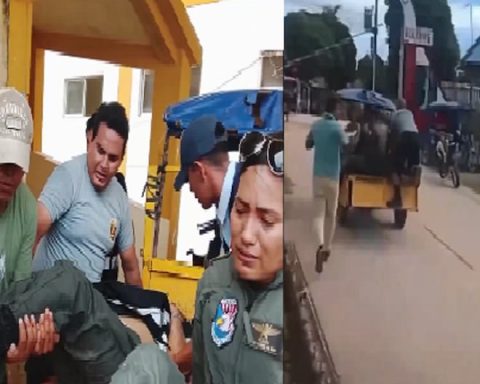
The General Corps of Volunteer Firefighters of Peru (CGBVP) and the Angels Initiative presented the first National Protocol for Prehospital Care for Cerebrovascular Accident (CVA)a tool that seeks to standardize the response to this medical emergency and reduce the time between the call and the referral to a specialized center.
According to data cited by both institutions, stroke is the second cause of death in Peru and in the worldand requires that the patient be treated within the first four and a half hours from the appearance of symptoms to reduce the risk of death or severe disability.
16 thousand firefighters will be trained nationwide
The CGBVP will train more than 16 thousand troops for the application of the protocol, which includes precise steps for the identification, stabilization and transfer of the patient.
The commander Saul Takudadirector of Health of the CGBVP, explained that currently the average transport time for a patient with stroke is 50 minutesfrom the call to the emergency system until arrival at the hospital.
“With the implementation of this National Protocol, we aim to reduce the period by 30%, which will significantly increase patients’ chances of recovery,” Takuda said.
Early detection and activation of the “Peru Stroke Code – CGBVP”
The protocol establishes the use of the FAST scale (face, arms, speech, time), which will allow rapid identification of symptoms by both call operators and field personnel.
It also incorporates the activation of a formal alert system called “Peru ACV Code – CGBVP”which prioritizes emergency care and improves communication with receiving hospitals.
Initial evaluation and selection of the appropriate hospital
The document guides prehospital teams in the structured evaluation of the patient: airway, breathing, circulation, disability and exposure, as well as glucose and temperature control.
Additionally, it provides guidance on referral to the most appropriate hospitaldepending on its ability to treat stroke and the time available within the therapeutic window.
Efficient transportation and continuous quality monitoring
The protocol incorporates the hospital pre-notificationwith the sending of critical data to expedite in-hospital care.
It also establishes a system of recording and monitoring of indicatorsincluding response times and proportion of adequate transfers, in order to continually improve care.
“Strengthening our processes and coordination with health centers are crucial. We hope that this protocol optimizes care and that knowledge spreads to the community for early recognition of symptoms,” added Takuda.
Angels Initiative: global support in stroke care
Dr. Edwin Buchelimedical director of Boehringer Ingelheim for Ecuador and Peru, highlighted the role of CGBVP in early detection and timely transfer.
“This new step expands our reach, promoting collaboration between institutions to optimize stroke management and reinforce knowledge of this medical emergency,” he stated.
The Angels Initiative is a global program that promotes the preparation of health centers and professionals for stroke care. It is part of a non-promotional project of Boehringer Ingelheim International GmbH and collaborates with the European Stroke Organization and the World Stroke Organization.
Questions and answers
What is the new prehospital protocol for stroke in Peru?
It is a national guide to standardize the detection, stabilization and transfer of patients with stroke.
Who will implement the protocol?
The CGBVP, with technical support from the Angels Initiative.
How much time are you looking to reduce in the transfer of patients?
Up to 30% of the current time, today estimated at 50 minutes.
What tool will be used to detect symptoms?
The FAST clinical scale.
Why is it urgent to treat a stroke?
Because patients must receive treatment within the first 4.5 hours to reduce the risk of death or disability.