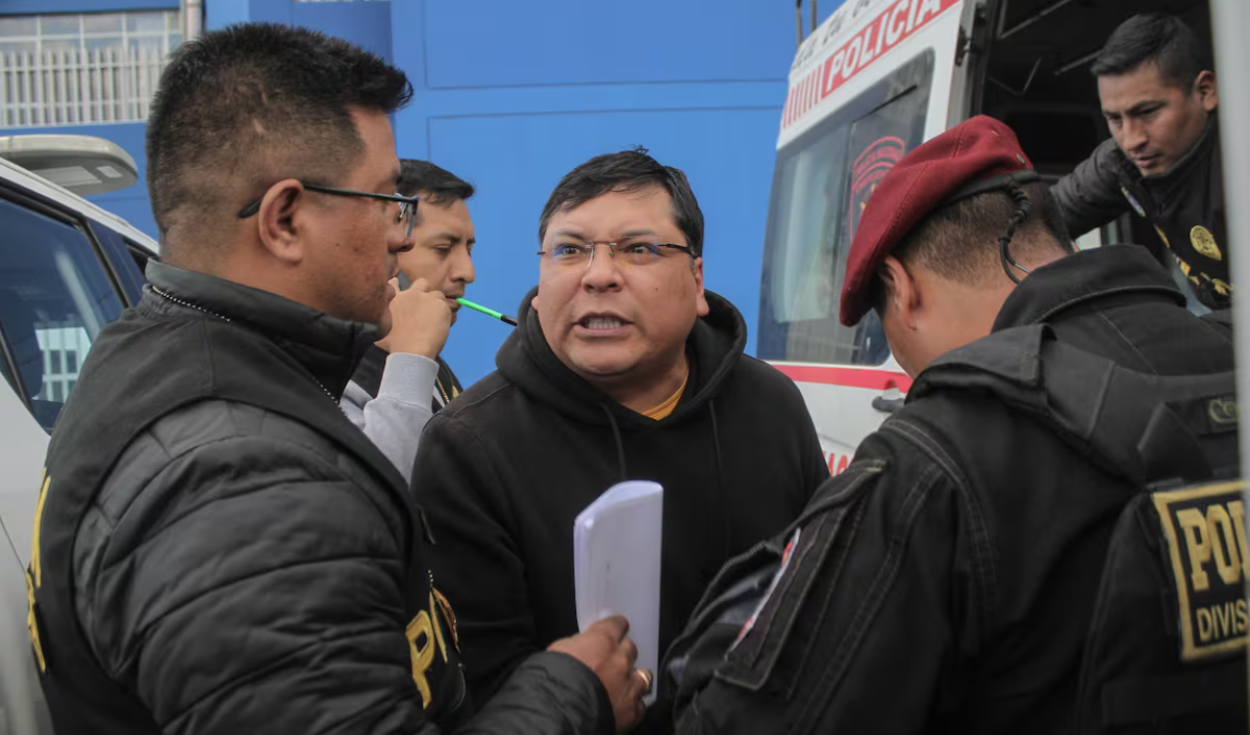
He Constitutional Court annulled the preventive detention issued against Jose Bendezuformer press secretary of Free Peruupon determining that their fundamental rights were violated. The decision annuls the cassation hearing that revoked the appearance with restrictions and allowed the imposition of 36 months of preventive detention in the context of the case. Dynamics of the Center.
In the ruling, the TC concludes that Bendezú was not notified of the order that granted the appeal presented by the Public Ministry. This omission prevented him from participating in the hearing held in the Supreme Court. According to the ruling, this generated a “serious material helplessness” that directly affected his individual freedom and his right to defense.
“The favored party was not notified of the order granting the appeal filed by the Public Ministry,” says the TC. The court adds that this lack of communication prevented the defendant from appearing before the cassation headquarters and requesting the use of the floor to support his position.
The resolution does not evaluate the merits of the criminal process or the motivation for preventive detention. The ruling focuses on the procedural irregularities committed during the processing of the appeal that ended with the imposition of the most burdensome measure.
YOU CAN SEE: Ciro Castillo: Judiciary annuls his preventive detention and would return as regional governor of Callao
Why did the TC consider José Bendezú’s rights violated?
He T.C. determined that the Second National Criminal Appeals Chamber did not comply with notifying Jose Bendezu the resolution that granted the exceptional appeal of the Public Ministry. This obligation fell directly on said judicial body, according to the ruling.
The court also questioned the actions of the Permanent Criminal Chamber of the Supreme Court. Although it did not have the duty to make the notification, it did have to verify that it had been made. The TC emphasizes that, in cases where the right of defense is at stake, there is a “special duty of protection” towards the defendants.
According to the ruling, the lack of notification explains why neither Bendezú nor his defense participated in the cassation hearing. As a result, the Supreme Court resolved the appeal without hearing one of the parties, which led to the revocation of the appearance with restrictions and the imposition of preventive detention.