It was a robbery clearly planned in full Lima Center. At dawn on October 25, a group of thugs raided a jewelry store, located near Government Palaceand took chains, bracelets, rings, bangles and also cash. That day, the owner, Meliza Valverdedemanded explanations from the authorities. “There is no protection since the state of emergency began,” he criticized.
listen to the newsText converted to audio
Artificial intelligence
As with inflation or the price of the dollar, there is an indicator that impacts daily life: in Peru, complaints for criminal offenses are already close to reaching the quarter of a million cases.
WE RECOMMEND YOU
RMP, JULIANA OXENFORD, MANUELA CAMACHO AND PEDRO SALINAS LIVE | JOIN THE REPUBLIC
According to him Home Officefrom January to October they added 222 thousand 730 cases of extortion, robberies, robberies, threats, injuries, murders and other crimes throughout the country.
The figure reveals that, every 24 hours, more than 732 complaints are filed at police stations. Or, seen from another perspective, citizens They report 30 crimes per hour.
It is a curve that has not stopped with changes in governments, impact measures, hyperactive or low-profile ministers. Since Pedro Castillo assumed the position of presidency of the Republic, in 2021, they passed 13 interior ministers.
However, nobody and nothing stops citizen insecurity or organized crime.
In this context, the authorities tried heavy-handed policies, procedural reformsmodifications to the Penal Code, created operational units of the PNP, but the crimes continue unstoppable in all regions.
crime map
According to the Ministry of the Interior, Metropolitan Lima leads the complaints with the most crimes: 65,577 casesfrom January to October. They follow him Lima province with 16,568Arequipa with 14,501, Cusco with 12,053, Lambayeque with 11,311, Piura with 10,078, Junín with 9,875, Freedom with 9,233Ica with 9,006, Áncash with 8,743, Callao with 8,198.
Also Cajamarca with 6,302, San Martín with 5,484, Huánuco 4,862, Puno 4,843, Ayacucho with 4,801, Apurímac with 3,869, Loreto with 3,431, Tacna 3,242, Amazonas with 2,397, Tumbes with 1,986, Ucayali 1,930, Madre de Dos 1,593, Moquegua with 1,699, Huancavelica 1,211 and Pasco with 1,148. All this sea of numbers is presented by the Mininter as Georeferenced Crime Map.
Security experts attribute this spike in crimes to a combination of factors: the proliferation of firearms in the streets; the reduced exposure of police personnel while off duty (they have not been required to carry weapons while off duty for years) and changes in criminal patterns.
Only from October 10 to December 3 did they increase to 295 homicides during the government of José Jerí. Of them, 216 were committed with firearms.
In Lima there were 74 homicides in 40 days of state of emergency. In the forty days prior to this measure, 72 were recorded. The trend is increasing and the daily average of homicides increases to 5.46, according to the Sinadef.
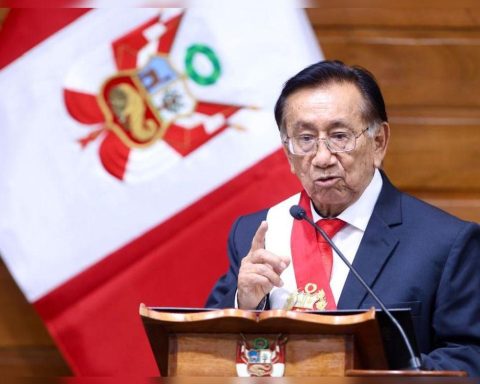
President José Jerí says that his government faces the problem of insecurity with a criterion of “urgency” and questioned the policy of other governments that They preferred to “hide things”, in the hope that the solution “falls by its own weight.”
“This transitional government, although it has an issue that is urgent, which is citizen insecurity, we are confronting it with the weapons that we have found, and with the forces that we have found, we are putting a lot of will and desire into it,” he indicated.
A dead end situation
The head of state has also stated that “the growth curve” of crime began to “stagnate” and that “the next step will be for it to begin to decrease.”
Regarding this, the former Minister of the Interior, Carlos Basombríoconsider “frivolous” that President José Jerí affirmed that citizen insecurity would be controlled after the declaration of the state of emergency.
“It is a hopeless situation; every time they go on strike, the transporters stop receiving income and do not calm down the extortionists. We must demand a little more responsibility. The state of emergency is more of the same“It is frivolous to sell people that insecurity is being controlled when it is not,” he said.
Basombrío indicated that there are no indications that crime figures are decreasing.
Some events that cause impact and put pressure on the “sense” of citizen insecurity maintain their rhythm. Extortion and hitmen continue to hit fully into the dynamics of society.
The former Minister of the Interior, Wilfredo Pedrazafor his part, questioned the state of emergency in Lima and Callao, considering it a political gesture without operational support and warned that these types of measures should be preceded by an intelligence evaluation that justifies its application, which has not happened in this case.
However, he acknowledged that this measure has incorporated novelties such as the creation of intelligence and monitoring commissionsin addition to measures such as the electrical blackout in prisons and the photographic record of prison workers. However, he described these actions as “insufficient” or “difficult to execute,” especially due to technical limitations in old prisons and the magnitude of the prison system’s workforce.
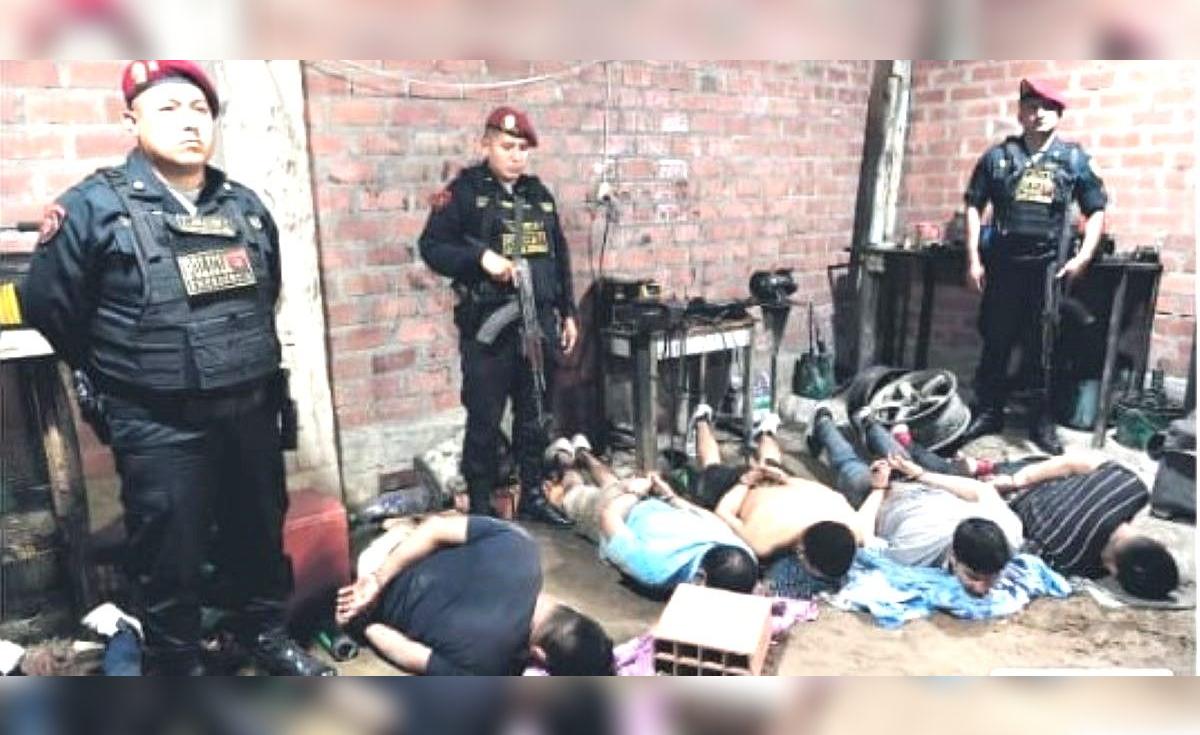
According to the Central Police Operations, from January to October of this year, 859,089 police operations.
In total there were 312,518 detainees (foreigners for various crimes 13,389 and Peruvians 234,012). 65,119 suspects were also arrested. Likewise, 74,609 kilos of cocaine hydrochloride, 109,257 kilos of marijuana and 153,319 kilos of PBC were seized. There were also 11,592 weapons seized: 5,181 white and 6,411 firearms.
APPROACH:
VERY DEEP CRISIS
By Ricardo Valdés, former vice minister of the Interior
Security in Peru is experiencing a deep crisis marked by the rise of hitmen, extortion and illegal economies that move more than 14 billion dollars a year.
In part, this deterioration is due to a serious institutional crisis: a saturated Judiciary, penitentiary centers without investment and overcrowding, a Public Ministry weakened and one police with corruption, without resources or clear leadership.
Criminal organizations operate quickly thanks to cash flow and a flexible structure, outpacing a slow and fragmented state. Added to this are external factors such as transnationalization of crime. We require a lot of investment in technology, management and intelligence, in addition to long-term reforms in justice, prosecution, police and prisons.
Meanwhile, we entered the elections with 39 candidates for the presidency and with very poor and uncreative offers to deal with citizen insecurity. Furthermore, several congressmen who are part of the problem are seeking re-election. Sad and worrying omen.