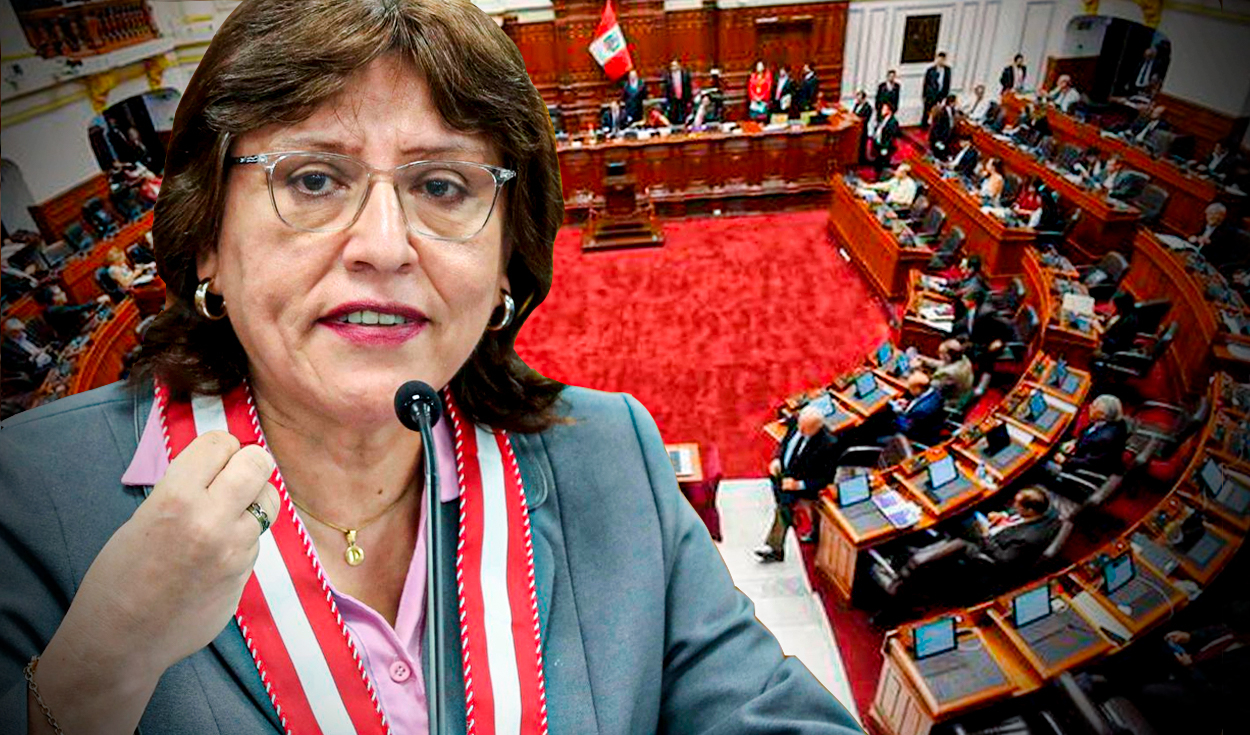
He Congressthrough the Permanent Commissionhas cited Delia Espinoza for this December 17 in order to evaluate a second opinion that recommends another disqualification for ten years. The call seeks to hear the former prosecutor’s defense before the complaint advances to the Plenary Session. This review occurs just days after the first sanction approved by the Legislature.
The new file attributes the alleged violation of parliamentary inviolability to Espinoza. The former prosecutor filed a criminal complaint against eleven legislators for approving a law that would allow them to accumulate pension benefits. This procedure was interpreted by Parliament as an infringement of the legislative jurisdiction and as an excess of functions.
The session of the Permanent Commission has been scheduled to define whether the final report is sent to the Plenary. Espinoza’s defense may intervene in person or virtually. The legal team maintains that the process has constitutional defects and that political persecution would be incurred due to decisions adopted during his management in the Public Ministry.
YOU CAN SEE: Delia Espinoza: 25 of the 71 congressmen who voted in favor of her disqualification are investigated
Ibero-American Group of Justice and Democracy rejects the disqualification of Delia Espinoza
The Ibero-American Group of Justice and Democracy (GIJD) expressed concern about the disqualification of Delia Espinozapointing out that the Congress Peru would be using its powers of political control to weaken the independence of the Public Ministry. The organization questioned the speed of the parliamentary process and warned that decisions of this type can affect democratic institutions.
The GIJD recalled that justice systems require protection against political pressures. Therefore, he urged the Peruvian authorities to guarantee due process and prevent disciplinary sanctions from becoming tools to interfere in investigations or tax decisions. He also stressed that the fight against corruption must occur within the constitutional framework and without violating the autonomy of the justice bodies.
The international organization called on Parliament to act with transparency and adherence to international standards. He stressed that any measure against a former tax authority must be based on technical criteria, not political motivations. Finally, he insisted that Espinoza’s case could open a dangerous precedent if it is consolidated as a mechanism to sanction prosecutors whose decisions bother political power.