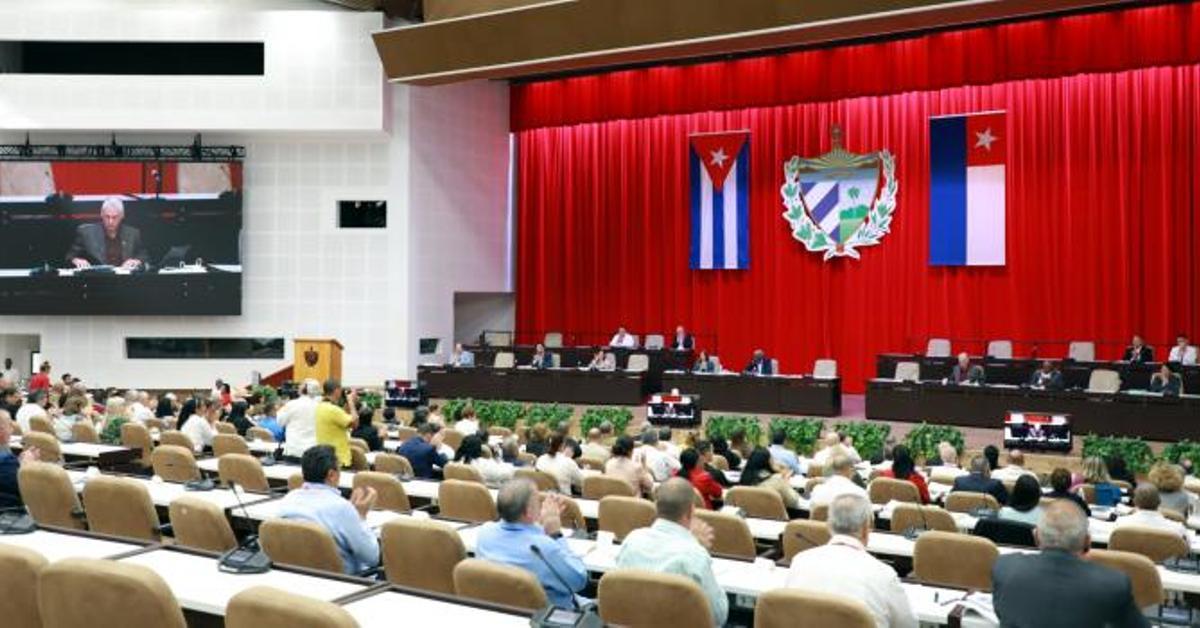
Havana/The main novelty of the session held this Thursday by the National Assembly of People’s Power is the appointment of Óscar Pérez-Oliva Fraga, grandnephew of Raúl and Fidel Castro, as a deputy, which qualifies him to run for the Presidency of the Republic. The decision was to be expected, after on October 18, the Government announced his appointment as deputy prime minister of the Republic.
The announcement was made by Esteban Lazo, president of Parliament, as part of the election of vacant seats. Likewise, he reported the request for Homero Acosta and Ulises Guilarte to resign as deputies. With the new deputies, there are 464 and there are 6 vacant places left to fill.
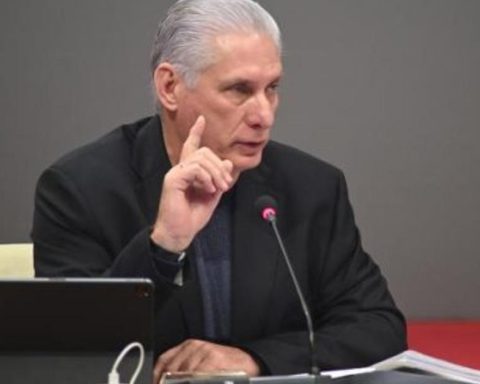
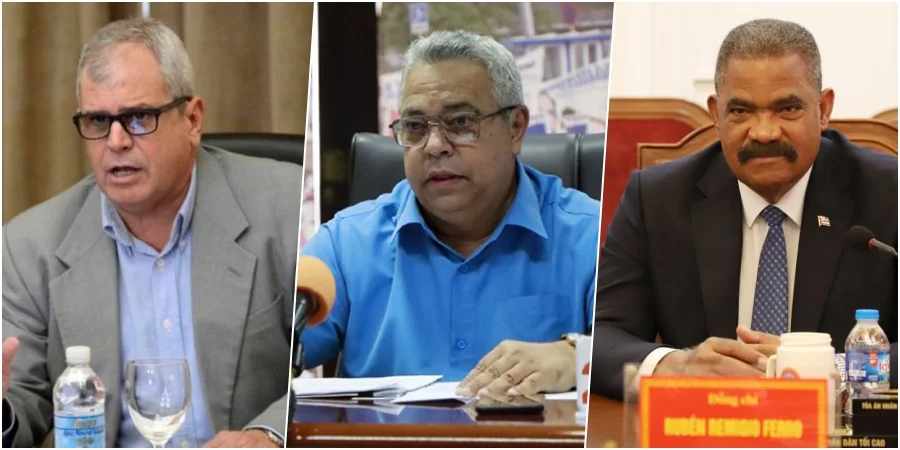
It was, on the other hand, President Miguel Díaz-Canel who announced the “release” of Rubén Remigio Ferro as president of the Supreme People’s Court, which recently judged former minister Alejandro Gil for espionage and corruption. He will be replaced by Oscar Manuel Silvera Martínez, Minister of Justice, who in turn is replaced by the first vice minister of that portfolio, Rosabel Gamón Verde.
For the rest, the day, which Raúl Castro attends by videoconference, focuses on the country’s serious systemic crisis, the plan to reverse it and the difficult prospects for next year.
In his long speech, the Prime Minister, Manuel Marrero, reviewed all the measures taken to right the situation and made the “challenges” clear. The main one, the raising of foreign currency. “The perspective of the economy is one of degrowth,” he acknowledged.
The ordinary session at the end of the year, which normally brings together deputies in Havana for two or three days, is held on this occasion in a reduced version and by videoconference due to the deep crisis in which the Island is mired.
The country is in a “critical” situation, Cuban President Miguel Díaz-Canel acknowledged this Saturday.
The country is in a “critical” situation, Cuban President Miguel Díaz-Canel acknowledged this Saturday in his speech before the plenary session of the Central Committee of the Communist Party of Cuba (PCC).
This meeting is where the proposals are debated and approved and then go to the Assembly, which usually unanimously ratifies what is presented to it. Although individuals without political acronyms appear in parliamentary elections, the vast majority of candidates are from the PCC.
The Parliament’s agenda includes, first of all, a review of the implementation of the Government Program to Correct Distortions and Reboost the Economy, the anti-crisis plan of the Cuban Executive, made up of budget cuts, reforms and measures to increase the state’s collection of foreign currency.
According to Díaz-Canel before the PCC Central Committee, this program combines “economic rigor” and “social justice.”
In addition, the macroeconomic evolution of the country will be reviewed, which between 2020 and 2024 lost 11% of its GDP and will also close this year negatively due to the collapse of agricultural and industrial production, the lack of inputs and the prolonged daily blackouts, of 20 or more hours in large areas of the country.
“Yes, there is an enormous material lack in Cuba,” Díaz-Canel acknowledged before the plenary session of the PCC Central Committee, where he acknowledged that despite the “tiredness”, “uncertainty” and “irritation in social sectors”, “there are no easy or quick solutions” for the multiple crises that the country is suffering.
The national budget for 2026 will also be analyzed, which should be accompanied by a forecast of gross domestic product (GDP) for the ending year and the next year.
It seems that the ANPP is not going to address the exchange rate unification, one of the multiple interconnected nodes of the economic crisis, despite the fact that the Central Bank of Cuba (BCC) announced by surprise the day before the establishment of a third exchange rate, which will be “floating” (with daily oscillation), although only for exporters and currency suppliers.
To all these difficulties we must add an energy crisis that is difficult to solve and a health crisis derived from an epidemic of chikungunya and dengue that has spread throughout the island in recent months, with more than 70,000 infected and 52 deaths, according to official records.