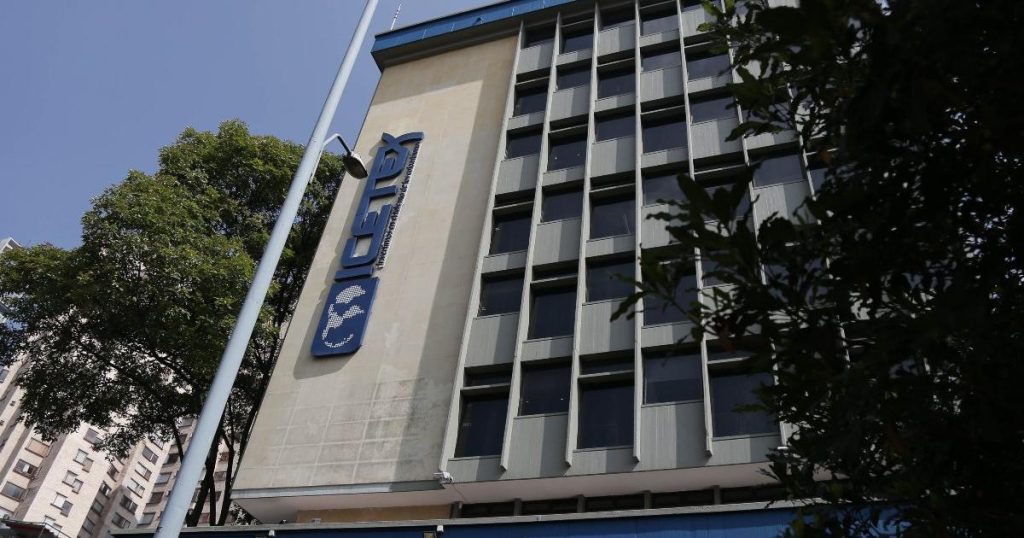
These are the parks and streets of… the city of parks!
HOLGUÍN, Cuba. – “The benches and garden fences of the parks are being stolen to melt them down and sell them. I heard that no one wants to work as a security guard because they pay very little and they are afraid of being attacked. At dawn, with the blackouts, they are also stealing the long power lines,” says Alejandro Rosales, a Holguín resident who has lived more than 50 years in the city.
Vandalism, a growing problem in Holguín, the so-called “city of parks”, affects both private and state infrastructure as well as emblematic spaces of the city.
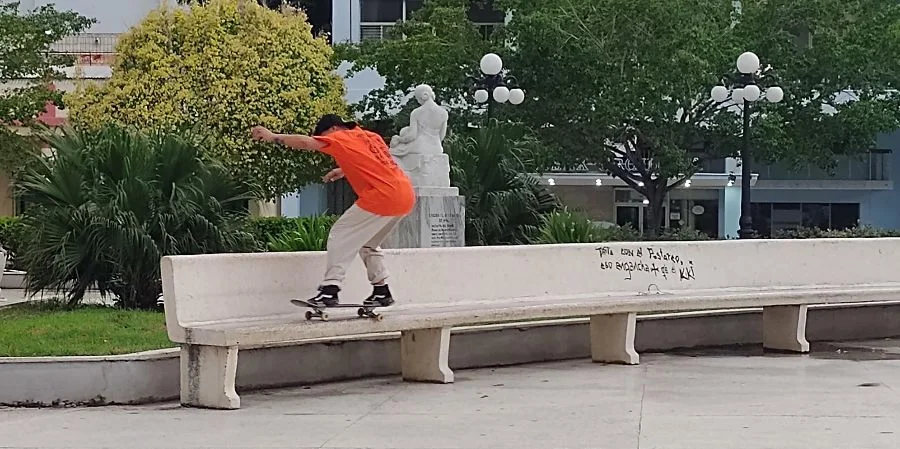
“I brought my son to the park and it is impossible to sit on a bench, much less for the child to play, because the skaters are all over the park. They propel themselves, make a jump, use the benches as a platform and damage them. If measures are not taken, soon we will not have benches in the Calixto García park,” says Joel Granados.
Raúl Domínguez, another Holguín resident, describes a similar situation: “You can’t be in the park, the skateboards have invaded it.”
However, behind every skateboard deck there is a story of shortcomings. Kevin, one of the young skaters, offers a perspective that shifts the focus from vandalism to necessity and shows the lack of alternatives for youth.
“We skate in the Calixto García park because it is the only place in all of Holguín with a smooth floor, with space. There is nothing else. We slide along the edge of the benches to do tricks: it is part of the sport. If we had another place, a space with ramps, with railings, with the conditions, do you think we would be here in the park? No, no one gives us a choice.”
The presence of the authorities in the area has been a constant request from the people of Holguín. Jorge Marrero complains about the lack of surveillance and proposes drastic measures in the face of inaction. “People destroy the fences and park benches in front of everyone and here no one does or says anything. Before there was a SEPRO (Security and Protection) or Communal guard who took care of the parks, but now, where is he?” he asks.

Two former park caretakers, who requested anonymity for fear of reprisals, confirmed to CubaNet that due to budgetary limitations in the Municipal Directorate of Communal Services, this figure was eliminated and the park was left without surveillance.
It is contradictory that the savings generated by the elimination of caregivers’ salaries, in the long run, could cause a greater expense for the public budget, destined for the repair, replacement and maintenance of the damage caused. Prevention, Lorenzo Rodríguez believes, is always more profitable than correction: “There are no park caretakers due to budget problems, but this supposed saving of money over time will be a greater expense that will have to be spent on repairing what was damaged.”

The people of Holguín try to look for answers, but they find an inaccessible system. Ricardo Valdés feels frustrated by the indolence of the Communal Company, in charge of caring for the parks.
“When some fences were stolen from a planter in the José Martí park, I called Comunales, but that’s talking to a wall. And do you know what they told me? ‘We’re aware, partner, we’ll take measures.’ Measures that never come. They never put the fence back up and a month later they stole the one in front. People don’t report it because of that, because it’s for pleasure.”
This indifference contrasts alarmingly with the severity of the legal framework. Vandalism, such as breaking and stealing park benches, fences, statues, monuments, and iron manhole covers, is considered a punishable offense. Depending on the impact, it may even be classified as “sabotage.”

Article 125 of Penal Code Cuban establishes sanctions of between seven and 15 years of deprivation of liberty for those who commit acts of sabotage against state property. For its part, article 126 foresees aggravated penalties of up to 30 years, life imprisonment or the death penalty if vandalism endangers people’s lives or collective security.
These articles, together with 148 of the Constitution, are the main legal instruments used to condemn vandalism of public property.

The problem is not limited to the parks in the center of the city of Holguín. Ramón Aguilera describes how the phenomenon has spread throughout the urban geography: “If you go to the Children’s Park, the little iron dolls that were there were all taken. In the streets the lids of the tragantes are also being stolen. That is a tremendous danger for anyone. Everything that is metal is stolen.”
In addition to crime, there is a crisis of values that worries many. “There is no respect for anything or anyone. This is a reflection of something much more serious that is happening in society. This creates a terrible environment in which no one messes with anyone even though they see that they are destroying the little we have,” says Ana María Patterson.
Along the same lines, Dayana Cruz directly links this behavior to economic asphyxiation and lack of horizons. “This is not new, but the crisis has made everything worse. Values have been lost. People do not have the head to worry about a public bank when they do not know what they are going to eat. It is not justifying it, but it is reality. There is a lack of options for young people, but there is a larger part of vandalism of ‘I don’t care about anything because nothing is mine.'”