During the first quarter of this year, debt bonds will be issued for 75.5 billion pesos, of which the largest amount will be the placement of several bonds from Petróleos Mexicanos (Pemex) for 31.5 billion pesos.
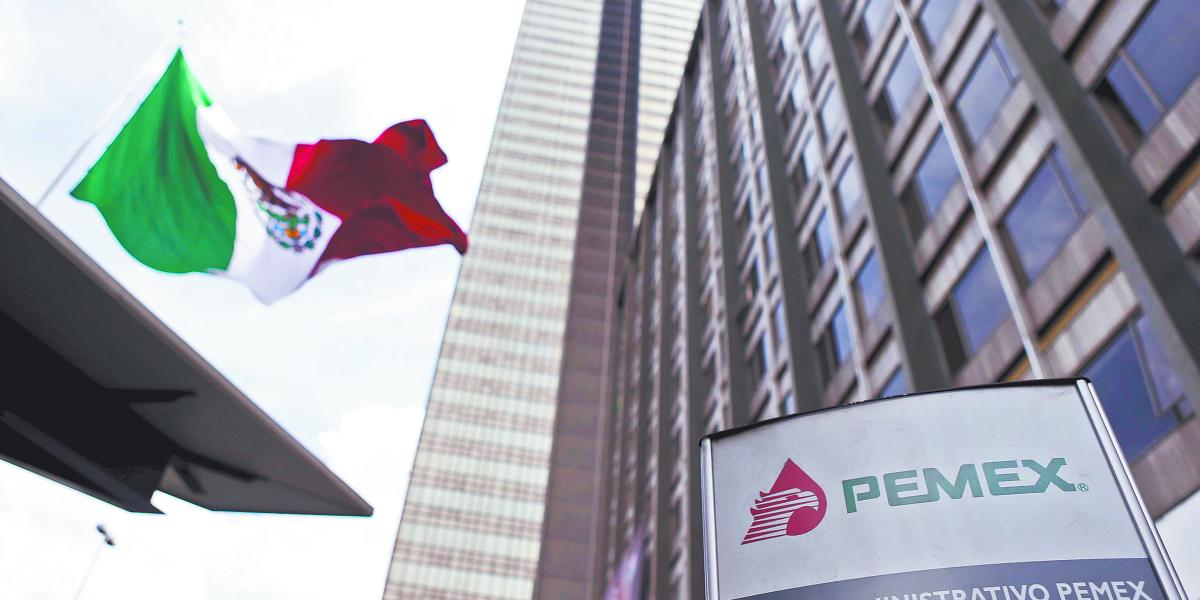
The State production company, which has returned to the Mexican Stock Exchange (BMV) since 2019, will place the Pemex 26, Pemex 26-2 and Pemex 26U bonds this Thursday.
The Pemex 26 instrument will be for 5.2 years and will pay a variable coupon rate monthly and will pay the principal at the maturity of the bond. The Pemex 26-2 bond, also in pesos, will pay a premium semiannually, will pay the principal at the end of the period and will have a duration of 8.5 years.
The Pemex 26U paper will be in Investment Units (Udis), it will have a duration of 10.5 years and will pay a real fixed coupon rate semiannually and the principal will be paid at the maturity of the paper.
The rating agency S&P Nacional Rating granted a rating, on the national scale of “mxAAA”, to the issues of unsecured stock certificates of the oil company.
It was reported that all of the resources will enter Pemex’s treasury and will be used to pay financial liabilities with amortization this year.
blank january
In January, no long-term paper placements were carried out in the Mexican stock market, just like the same period in 2025.
Gerardo Valle Trijillo, deputy director of Corporate Debt at Banorte, highlighted that “there will be greater dynamism in the first quarter and a placement of up to 75,500 million pesos is expected, of which 31,500 are those programmed by the oil producing company.
This “will represent an increase in placements of 129% year over year,” highlighted the Banorte expert in a report.
Data from the BMV indicate that, at the end of January 2026, the amount in circulation of the medium and long-term corporate debt market is 1 trillion 351,995 million pesos, among which are corporate, infrastructure, state and parastatal agency certificates.
Banorte highlighted that, of the long-term issues in the local market, 38.7% of them are from 10 issuers, of which the Federal Electricity Commission (CFE) has 10.25% of the total amount in circulation.
The electricity generating company owes investors 138,189 million pesos that it issued in bonds. The Trusts in Relation to Agriculture (FIRA) has 56,501 million pesos in certificates.
For its part, Grupo Bimbo, the world’s leading bakery company, has a debt in the local market for 48,000 million pesos.
Pemex, even before the bonds it will issue, requested 47,557 million pesos, Fovissste, the body in charge of housing workers at the service of the State, 45,232 million pesos.
Grupo Aeroportuario del Pacífico (GAP) has debt of 44,404 million pesos, América Móvil requested 37,217 million pesos from investors. In Fonadin, the fund in charge of roads and administered by Banobras, has 36,337 million pesos in circulation.
Fibra Uno, the largest investment trust in the country, has a debt of 36,276 million pesos and in Banobras’ infrastructure fund, CIENCB, 33,492 million pesos.
According to Banorte, investors ask for variable rates in the local market and represent 54.4% of the amount issued last year, followed by fixed rate issues with 37.7% and a part, 8% at a real fixed rate.
“With our expectation of a terminal rate of 6.5% to be reached in the first half of the year, we anticipate that this preference will be maintained in 2026,” the bank’s experts wrote.
In the long-term market, six sectors, Banorte highlighted, (infrastructure, state companies, federal agencies, food, telecommunications, and beverages) have 61.9% of the debt, where infrastructure issues represent 18.4% of the market. The rest, the remaining 38.1%, is dispersed in 18 sectors.