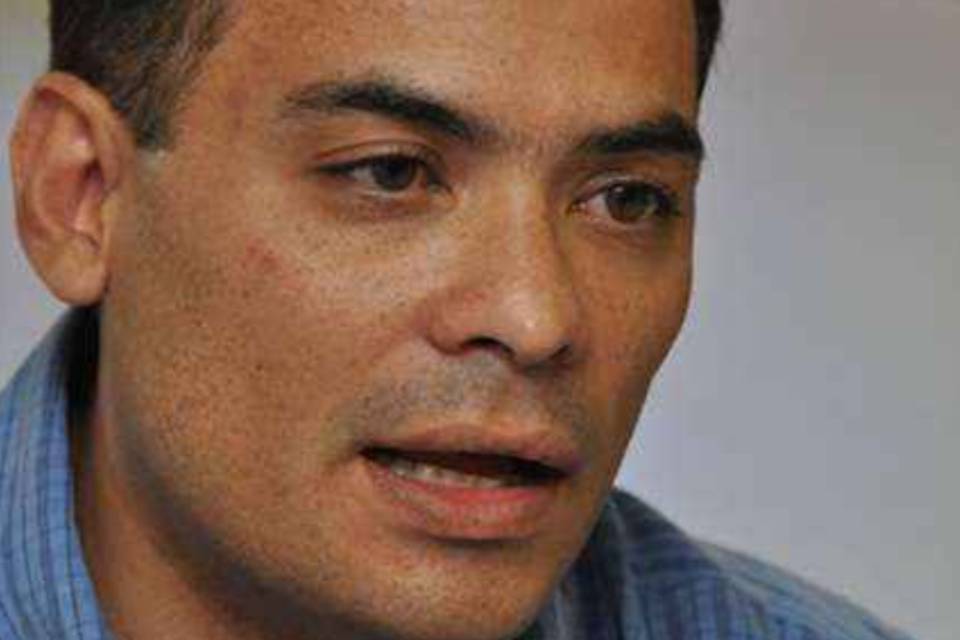
Historian Pedro Benítez believes that the country is going through an uncertain and guarded transition, which will be unable to achieve stability without free elections. He warned that the apparent calm is fragile and that social and political demands will re-emerge
The historian and university professor Pedro Benítez analyzed the Venezuelan political scene after the events of early January and was emphatic in pointing out that, without a legitimate electoral process, lasting stabilization of the country will not be possible.
Benítez stated that what has happened since January 3 surprised even the most attentive analysts. “A lot of situations have happened here in recent days that I think no one would have imagined,” he said, while explaining that The international vulnerability of Nicolás Maduro’s administration suggested a negotiated solution, although the outcome was different.. “That finally happened, but it did not happen as some of us imagined, but rather through a military operation,” he noted.
During the conversation with Víctor Amaya in the program Night Dthe historian maintained that the current picture is that of a political power that remains with repressive structures still active, but under unprecedented external tutelage. “To put it bluntly, Donald Trump and Marco Rubio, instead of sweeping away Chavismo, put it at their service”he noted, describing what he considers a government with illegitimate origins and limited room for maneuver.
Benítez insisted that stability cannot be sustained only by repression or a temporary economic improvement. “Venezuela will not be fully stabilized until a government is formed with the consent of the governed”he stated. In his opinion, the absence of visible mobilizations responds to the impact of prolonged repression: “We come from 18 months of brutal state terrorism, whose objective was to terrorize the population and kill any attempt at social mobilization.”
The historian recalled the post-election protests of July 2024 and described them as a turning point. “Those protests were the caracazo of Chavismo”he said, emphasizing that they were carried out by young people from popular sectors who had been the social base of the ruling party. For Benítez, that episode definitively broke the emotional bond between Chavismo and broad sectors of the population.
Asked about the possibility of a real democratic transition, Benítez warned that the apparent calm is deceptive. “This could turn into a crisis of authority at any moment”he stated, recalling that the military and police apparatus showed inability to defend the country against a foreign power and maintains internal repression as its main function.
In this context, he maintained that social and political demands are contained, but not disappeared. «When people see an opportunity for political opening, the demands do not calm down, on the contrary, they multiply»he explained, when comparing the Venezuelan moment with historical processes such as Spain after the death of Franco or Eastern Europe after 1989.
Regarding the role of the opposition and society, Benítez considered that the rearrangement will take time, but it is inevitable. “The most logical and rational solution is going to be an electoral process,” he stated. He added that, although today the de facto power seeks to buy time with an economic recovery, “I don’t see much room for this not to end in an election that legitimizes the public powers.”
The interview closed with a historic warning. Benítez recalled episodes of frustrated openings in Venezuela, as the beginning of the government of Juan Vicente Gómez in 1908to emphasize that transition processes are not linear.
He recalled that after removing Cipriano Castro from power, Gómez released all political prisoners, allowed the return of exiles and even included opponents in the Cabinet, in a climate of broad freedom of the press. A strategy that helped him stabilize the situation and then clench his fist to govern for almost two more decades.
However, he insisted that social pressure, the need for legitimacy and the international context push towards an electoral solution: “The most practical thing for all Venezuelan political actors is that this ends in a peaceful and agreed manner through free elections.”
*Journalism in Venezuela is carried out in a hostile environment for the press with dozens of legal instruments in place to punish the word, especially the laws “against hate”, “against fascism” and “against the blockade.” This content was written taking into consideration the threats and limits that, consequently, have been imposed on the dissemination of information from within the country.
Post Views: 172