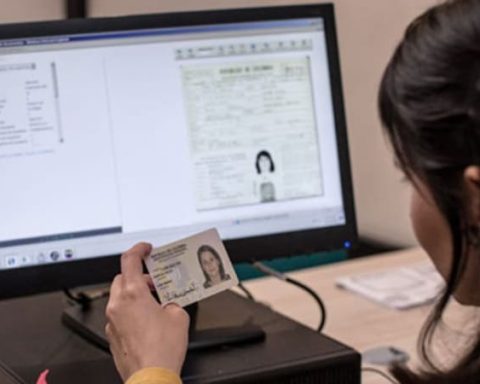
According to the organizations, there are delays in the provision of health services for patients.
Representatives of different patient organizations launched strong criticism of the recent changes of interveners in the EPS under state control.
They warned that these decisions increase the instability of the system and put the care of millions of users of the current health system in Colombia at risk.
The spokesperson for Patients Colombia, Denis Silva, pointed out that the constant relays generate iimmediate and negative effects in the operation of the entities.
More news: More than 140,000 women will obtain formal employment in 2025, reveals SENA report
“We reject disorder, improvisation and the threat of increasing barriers with changes in interveners. Every time an intervener arrives at an EPS, chaos is generated, an increase in barriers, distrust in the sector, loss of credibility among the different agents of the system and, most importantly, delays in the provision of health services to patients, who are the reason for the system,” he stated.
Silva warned that the situation has become a dangerous dynamic in which, he said, the authorities handle the intervention as a “chess game.”
“The interveners move as if they were pawns, while the minister and the superintendent believe they are kings, putting the health of Colombians in imminent danger. “Health is a fundamental right, not a favor,” he added.
Also read: Acueducto will have to return money for mandatory meter changes in Bucaramanga
These concerns were joined by Néstor Álvarez, representative of High Cost Patients, who pointed out that the permanent changes are a sign of institutional disorder and lack of respect for the rights of users.
“Once again, the indifference towards the health system and the violation of the right to health It is reflected in the permanent change of interveners. We see how the Government takes health as a sport, a fundamental right, which every day leads to more victims of the system,” he stated.
Álvarez made an urgent call for state responsibility in managing the interventions. “We ask the Government, as a Colombian State, to stop and take the intervention of the EPS seriously. It is necessary to act responsibly to protect the fundamental right to health.”
The patient organizations agreed that administrative instability not only affects the operation of the EPS, but also translates into delays, additional procedures and greater uncertainty for users who require timely access to services and treatments.
The National Health Superintendence reported that it appointed new agents in several EPS that are under intervention measures. The decision was made by the national superintendent of Health, Bernardo Camacho Rodríguez, in response to the “demands and concerns of users of the Social Health Security System.”
New intervening agents
- Coosahealth: Alexander Mesa Romero, surgeon with specializations in Public Health management and IPS management, as well as a master’s degree in Quality of Health Services. He has 6.9 years of experience in management or advisory positions in the sector.
- Capresoca: Bety Cecilia Anaya Nieto, business administrator with specialization in Health Auditing and master’s degree in Strategic Management. He has 24 years of management experience in the sector. Western Health Services (SOS): Carlos Alberto Betancur Castañeda, doctor with specializations in Social Security Management and Health Audit. He has 27 years of experience in similar functions.
- Famisanar: Germán Darío Gallo Rojas, industrial engineer with a master’s degree in Health Services Management and 6.3 years of experience in management-level work. Emssanar: Ilsen Inés Jaramillo Laserna, lawyer specializing in public law, with 28.8 years of experience in management or advisory positions in the health sector.
- Asmet Health: Laín Eduardo López Martínez, surgeon with two specializations in health management and auditing and 14.9 years of experience.
- Sap Health: William Humberto Salgado Gamboa, public accountant with specialization in Financial Management and 4.6 years of experience at the management level.
Source: Integrated Information System