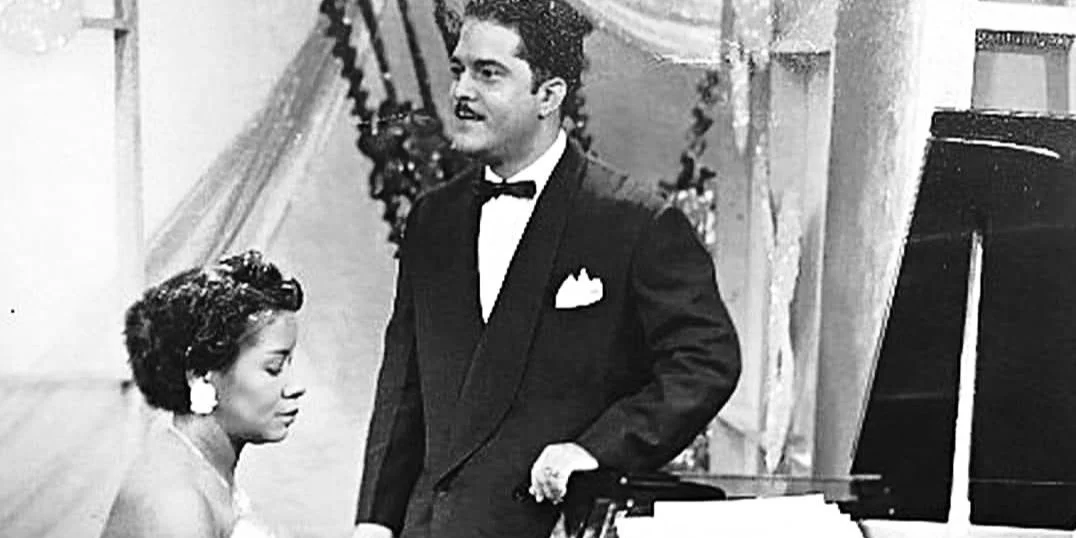
Isolina Carrillo’s life was marked by her indisputable talent and, at the same time, by the constant fight against the racial prejudices of her time.
SANTA CLARA, Cuba. – If a list of the great classics of Cuban music were made, the bolero two gardenias It would undoubtedly occupy a privileged place among the most representative and universal pieces of the genre. Its author, Havana native Isolina Carrillo, born on December 9, 1907 in the neighborhood of Vedado, would become one of the highest-paid artists of her time and the first to compose a radio advertising jingle in Cuba.
Isolina Carrillo’s life was marked by her indisputable talent and, at the same time, by the constant fight against the racial prejudices of her time. A long time before she stood out as the composer of one of the most emblematic songs of Latin American music, the precocious pianist had been a loving partner of the Remedian Alejandro García Caturla. According to her biographers, the relationship was cut short due to the opposition of her own mother, who reproached her that “a black woman could never be happy marrying a white man.” When that fruitless love affair came to an end, Caturla predicted to what would have been her mother-in-law that Isolina would end up marrying “with a white man,” an omen that actually came to pass due to the chances of life.
Towards the mid-1930s, Isolina also dedicated itself to teaching young musicians who later became great stars of the staff. Researcher Carmela León tells us in her book two gardenias who, as a joke, used to keep an unloaded 22 caliber pistol near the piano to “break the tension” when teaching his classes. When one of them did not assimilate the proper instructions, he took the revolver and snapped at them: “If you don’t sing the way I want, I will kill you right here.”
“The bold girl of the 600 pesos”
One of the most significant episodes in Isolina’s life is related precisely to the heyday of radio in Cuba, a time in which she worked as a pianist for the RHC Cadena Azul, owned by the cigarette magnate Amado Trinidad, the pioneer station in paying considerable sums to its artists to maintain the rating of audience against the rivals of the CMQ.
“The guajiro from Ranchuelo”, who was partly unaware of the internal issues of his business, was struck by the exorbitant sum of money consisting of 600 pesos per month that was paid to that pianist by payroll and he decided to suspend payment. Later regretting the disastrous decision, which provoked an avalanche of complaints from his listeners, Trinidad had to travel from Las Villas to Havana to personally beg Isolina to return to the RHC studios. In two gardenias It is specified that the composer was at that precise moment skating along the Malecón, right where the businessman had to go to stand in the middle of the avenue and propose an increase in his fees as compensation.
—So you are Isolina Carrillo! —Trinidad deduced surprised.
—Yes, the bold one with the 600 pesos! —she replied ironically.
After accepting the apology, Isolina resumed her position at the Trinidad network and became the highest-paid repertoire artist of her time. She was the official pianist of the live radio soap operas, the main director of the Giant Typical Orchestra of the RHC and the first composer of a Cuban jingle for the soap Camay, from the Sabatés company. Its prestige and recognition put an end to the subsequent official discourse that absolutizes the fact that black artists had zero opportunities to achieve success and fame before 1959.
two gardeniasrevenge
In Isolina Carrillo’s work, the following stand out: topics as afraid of you, kissing shadow, I will live to love you and many others that demonstrated his talent and absolute ear for uniting the intimate with the collective and the commercial with the artistic, but without a doubt it was two gardenias his greatest international success. On very few occasions the composer revealed to the press the real reason that inspired her to compose the famous bolero loaded with symbols and metaphors that allude to loyalty or betrayed love, but her biographers assure that it was the consequence of a bitter disappointment suffered with one of her students.
It turns out that the aforementioned disciple, of Colombian nationality, had requested Isolina’s help to shape a song that used gardenias as the main symbolic figure, to which she gladly agreed. However, later the young man organized a party at his residence to celebrate his birthday and denied the composer entry for racial reasons, even turning off the lights while she was at the door of the apartment. Carrillo responded to the grievance by composing his great masterpiece.
Some time later, when two gardenias was already established as one of the most emblematic songs of its genre, the former pupil brazenly approached him to ask for a job, as he was in a rather precarious economic situation. It is said that Isolina put a bill in his hands and blurted out: “I have something for you, it is a bolero titled two gardenias and that it has become so popular that it will follow you all over the world, because wherever you go you will hear it, even if you don’t want to. Listen to it, and then you will always remember me.”














