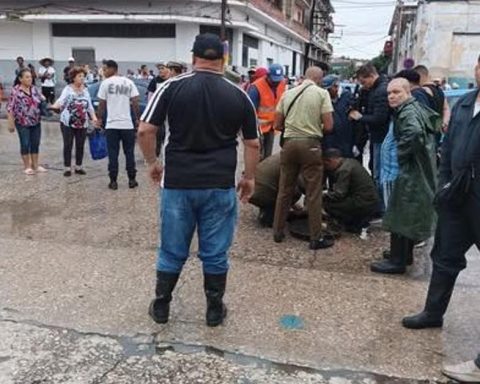
Havana/The scene seemed like something out of a war movie, one of those that happens on weekends, but it happened in the streets of Havana, in one of its busiest arteries. “Cars of Special Troops, with soldiers standing, with their bulletproof vests,” a Havana resident who witnessed the caravan while traveling along the Vía Blanca, this Saturday, a little before 10 pm, tells this newspaper.
“Van trucks full of soldiers, patrol cars and state cars guarded a caravan of trailers with their contents covered,” he adds. The column then turned towards the Central Highway. “I was struck by the time and that, despite being large, they were stealthy, as if trying to go unnoticed.” According to his assessment, they could be moving heavy weapons to other provinces, although he cannot be sure. Opacity is part of the landscape.
It wasn’t the only sign. Shortly after dawn this Sunday, explosions were heard from the Playa area. “Today we have already felt some,” says a resident of El Vedado. In a city that has been losing the noise of the almond trees and where blackouts silence even the murmur of the fans, the dry explosion of a military exercise erupts as a reminder that the country lives in a permanent state of alert.
Each statement is amplified by the Cuban propaganda apparatus as proof of an imminent threat.
The last few months have been an almanac of shocks. The capture of Nicolás Maduro in Caracas during the US operation that left a minimum of 32 Cubans dead –as the Government itself recognized– shook the official narrative. Havana presented the deceased as heroes and strongly reactivated the doctrine of the “war of all the people.” Since then, military exercises have taken place with greater frequency and visibility.
On February 18, another event raised internal tension: a riot in the Canaletas prisonin Ciego de Ávila, left several dead and numerous injured, according to relatives of the inmates. The regime confirmed “the incident,” but avoided specifying the number of victims. The official silence once again opened space for rumors.
On February 25, a new episode tightened the rope with the United States. A speedboat coming from Florida was intercepted near Falcones Key, in Villa Clara. The official version He maintains that the occupiers fired first and that the response of the border guards left four dead and six wounded among the expedition members. The authorities spoke of weapons, explosives and infiltration plans. Partial confirmations and nuances came from Washington, but the truth is that four compatriots died in national waters at the hands of other Cubans, a fact that revives historical wounds.
In this context, Donald Trump’s speech has added pressure to the scenario. The US president has hardened his tone towards Havana and has even spoken of an eventual “friendly takeover” of the Island. Each statement is amplified by the Cuban propaganda apparatus as proof of an imminent threat.
Will enemy bombs kill us or will scarcity, disease, landslides and lack of medicine continue to hit us?
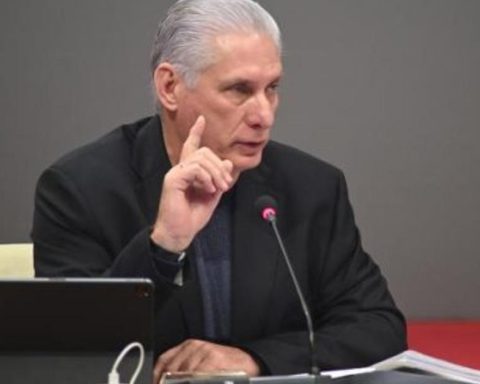
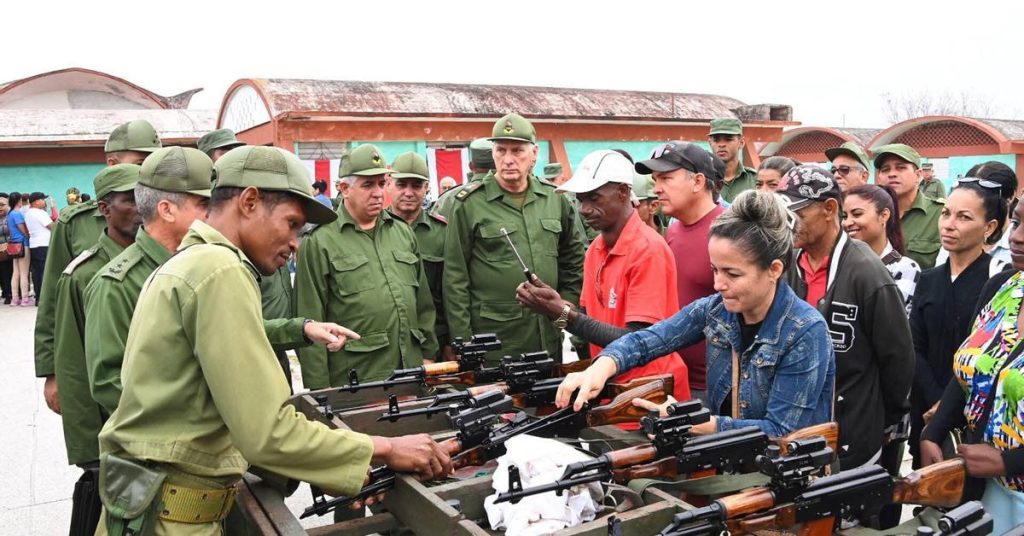
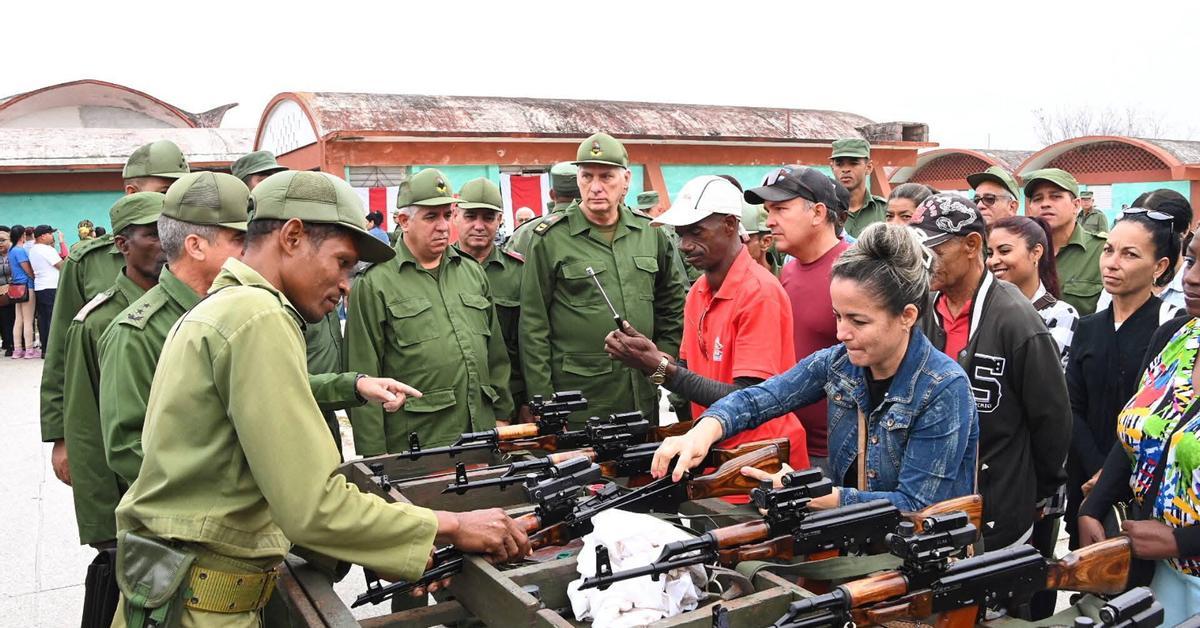
On Friday, February 27, the country celebrated National Defense Day. In several municipalities, combat preparation exercises, militia mobilizations and practices of the Production and Defense Brigades were carried out. Miguel Díaz-Canel supervised maneuvers in the west of the country, surrounded by olive green uniforms and civilians training in shooting practice. The rhetoric insisted on the need to be ready to “confront and defeat” any aggression.
The images showed men and women learning to assemble and disassemble weapons, reviewing plans against a hypothetical external enemy. But outside the cameras, in the bread lines and at the bus stops, the conversation was different: are we really on the verge of an invasion or are we witnessing a new chapter in the pedagogy of fear? Will enemy bombs kill us or will scarcity, disease, landslides and lack of medicine continue to hit us?
Thousands of kilometers away, the bombings in Iran, the death of Ayatollah Ali Khamenei and the escalation in the Middle East complete the landscape of global uncertainty. Each external conflict is presented in Cuba as one more piece of the board that threatens the Island. The harrows that advance at night with their covered cargo become the metaphor of a country where the essential remains hidden. The detonations that echo from the west remind us that the State is always ready for war, although the most urgent battle remains against scarcity and disenchantment.