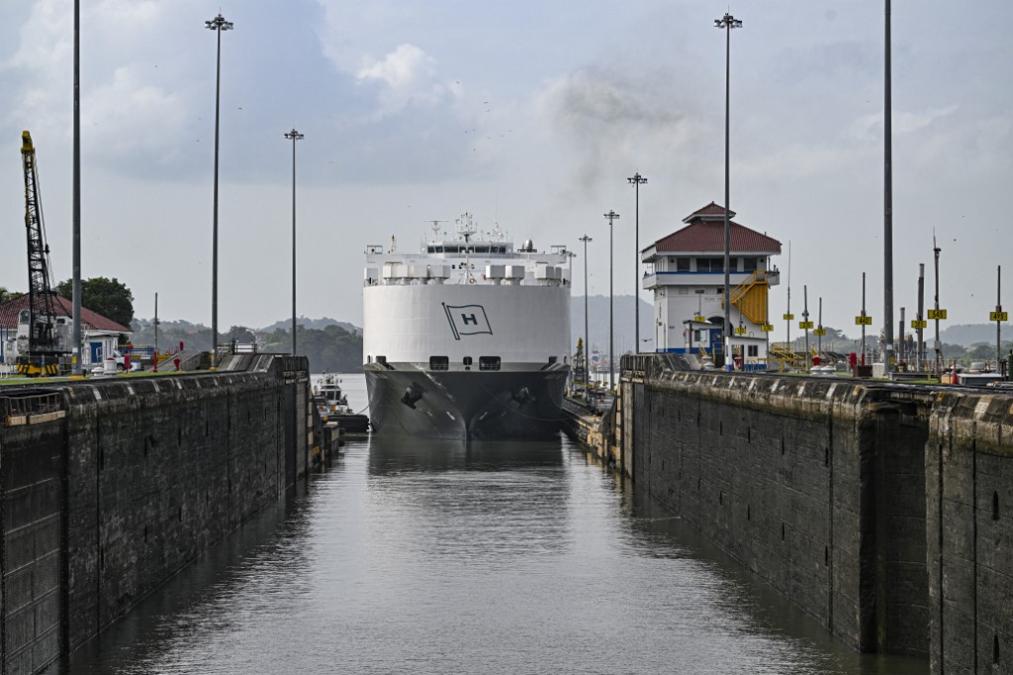
He Panama Canal Some 400 million dollars will enter next year for the fall of the transit of ships as a result of the “uncertainty” of the world economic, the channel authority warned on Tuesday.
The Panamanian route plans to enter during the next fiscal year, which begins on October 1, 5,207 million dollars for the transit of ships and other services, announced the Minister for Channel Affairs, José Ramón Icaza.
That figure represents a decrease of 411 million dollars (-7.4%) compared to the expected revenues for the current year, which concludes on September 30.
According to the projections, it will have between 1,100 and 1,200 transits less than this year, when about 13,900 ships with about 520 million tons of load will cross the route.
“We are in a few moments of extreme volatility, of high levels of uncertainty that point to a possible situation of decrease in the volume of traffic through the Panama Canal,” said the administrator of the sea road, Ricaurte Vásquez.
This decrease obeys, according to Vásquez, to a reduction in growth rates projected by the different economic organizations, which have gone from 3.3% to the beginning of the year to 2.5% today.
“To the extent that the economy is slower, the volume of trade decreases,” he added.
Vásquez had pointed out last Thursday to the AFP that it was “very likely” that over time there would be no “volume” of loading for the tariffs imposed by the president of the United States, Donald Trump.
Dozens of economies around the world face higher US customs rates since August 7, when the “reciprocal” tariffs came into force with which Trump threatened for a long time due to commercial practices that he considers unfair.
However, neither Vásquez nor Icaza, who appeared before the press after presenting the projections to the Panamanian government in the Cabinet Council, referred to Trump’s tariff policy.
The 80 -kilometer Panama channel communicates the Pacific and Atlantic oceans. In addition, it links more than 1,900 ports in 170 countries.
In this way it is estimated that 5% of the world maritime trade passes. Its main route links the ports of China, Japan and South Korea with terminals on the east coast of the United States.
Despite the fall in global income, the channel plans to deliver to the National Treasury next year 3,194 million dollars, about 400 million more than today.
Recommended video