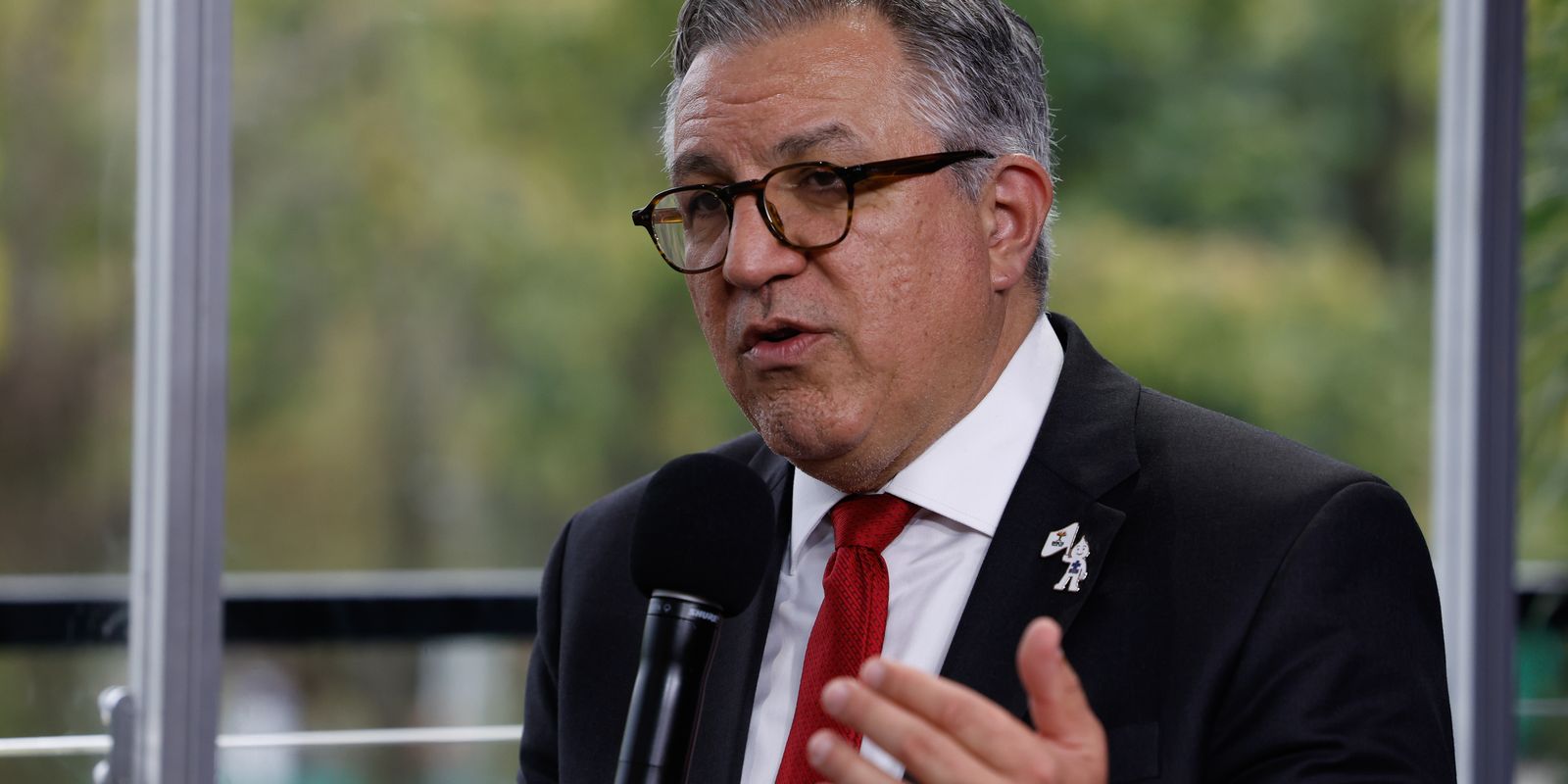
The Minister of Health, Alexandre Padilha, reaffirmed on Friday (25), in an event at the Federation of Industries of the State of São Paulo (FIESP), that the tariff announced by the United States against Brazil will not cause the ministry against intellectual property as a form of retaliation. Padilha said the country should bet on negotiation and do not move by “irrational announcements” by President Donald Trump.
“Our stance is this, let’s not move for irrational ads because they have already been made to the mountains and have not necessarily come true. We will not change any tradition of the Ministry of Health, to bet on the public-private partnership, to bet on attracting international investments, respect for intellectual property, we are signatories to the WHO agreements of the WHO agreements [Organização Mundial da Saúde]”, he said.
In the event of a possible retaliation of Brazil against the US, the Brazilian Reciprocity Law, already in force, establishes criteria for the suspension of commercial concessions, investments and obligations related to intellectual property rights in response to unilateral measures adopted by a country or economic bloc that negatively impact Brazilian international competitiveness.
Impact
Alexandre Padilha acknowledged that, if the tariff, in fact, takes effect on the first day of August, the health area of Brazil should be negatively affected. Padilha said, however, that the country is currently less dependent on the input trade with the outside than it was a few years ago.
“If this irrationality [as tarifas anunciadas pelos EUA] Being a reality, it is logical that it will affect the health area. Anything that goes against free trade, against the production environment, the cooperation environment, affects health, ”he said.
“But Brazil is also less dependent today from the United States than it has been in previous years, in relation to products that can be purchased here in our country, incorporated in our country,” he added.
The minister stressed that the Brazilian path will be to continue to strengthen national production to reduce external dependence. He cited recent agreements made with China and India in the context of BRICS for national insulin production.
“Brazil’s decision is increasingly strengthening the production capacity of medicines, health technologies, health service not to depend on anyone. We will continue our trail to strengthen our production capacity here in Brazil, attracting investments,” he said.
Public call
According to Padilha, among the national strengthening actions, is the launch, held this Friday, at FIESP, of the public call to accredit the first center of competence in RNA technologies in the country. Focusing on messenger RNA (MRNA), the initiative – which has one of the most advanced and safe technologies for vaccines and therapies in the world – integrates a package of actions aimed at Brazil’s scientific sovereignty, for which R $ 450 million from the federal government were allocated.
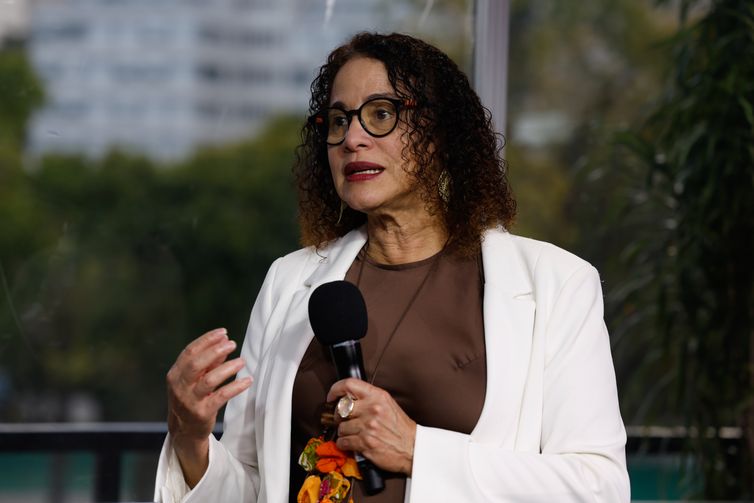
Rio de Janeiro (RJ), 07/06/2025 – The Minister of Science, Technology and Innovation, Luciana Santos Photo: Archive/Tânia Rêgo/Agência Brasil
The announcement was made by the Minister of Health and the Minister of Science, Technology and Innovations (MCTI), Luciana Santos, during the Event Strategic Health Brazil – Americas, organized by the Pan American Health Organization (PAHO), at the headquarters of the Union of Industries.
“We feel good on the skin what the dependence means. We feel it acutely during the COVID-19 period. Although we had in Brazil experiments and vaccine production, such as Butantan and Fiocruz, we had dependence, although we also produced, it was not enough,” said Luciana Santos.
The Public Selection Regulation will encourage the execution of projects in the North, Northeast and Midwest, as well as partnerships with Scientific and Technological Institutions (ICTs) and the participation of masters and doctors.
Among the expected results are the increase in national production of health technologies, the expansion of the offer of advanced therapies and products to the Unified Health System (SUS), as well as strengthening the national clinical research capacity.
“With this, we hope to increase the national production of inputs, goods and technologies in health, expand the offer of advanced therapies in the country and products for the SUS, as well as strengthen Brazilian clinical research structures,” said Minister Luciana Santos.