In front of a city that generates 12,454 tons of waste per day, of which more than half ends up in landfills and 13% in clandestine dumps, a new effort seeks to demonstrate that climate action can also be built from the streets, neighborhoods and neighborhood networks.
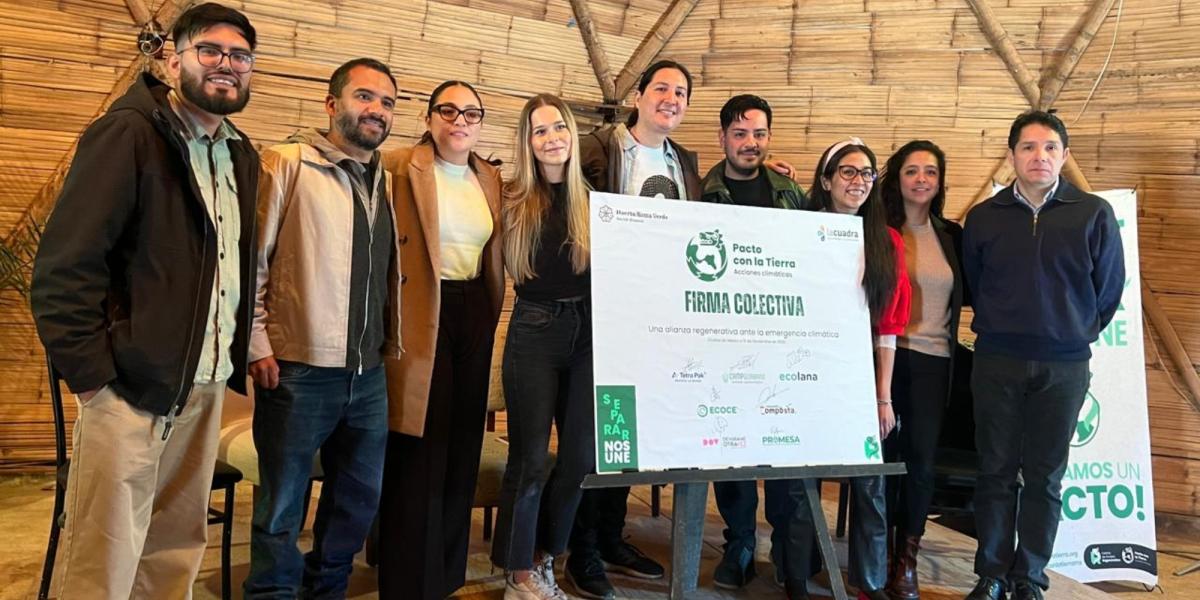
It is about “Pact with the Earth”a comprehensive waste management program promoted by Roma Verde Garden, La Cuadra AC and a group of organizations that are committed to the circular economy from the community level.
The project consolidates a strategic alliance between citizens, organizations and companies, including ECOCE, Tetra Pak México, Ecolana, Let’s Make Composta, PROMESA and SUEMA, to address more than 30 types of waste, including those that today have practically no value or collection infrastructure.
The objective is to convert what is normally discarded into materials that allow soil to be regenerated, produce compost, recover packaging and generate resources for the community.
A model of climate action from the neighborhood
“Pact with the Earth” seeks to address more than 95% of household waste, integrating both the organic fraction (which represents 50% of the total) and a wide spectrum of recyclable materials. AND
The approach combines responsible collection, environmental education, social innovation and traceability, with the idea of demonstrating that climate action can begin at the closest scale: the neighborhood.
In this vision, collaboration with ECOCE and Tetra Pak México plays a central role. Your participation will allow you to strengthen collection centers specialized in complex materials such as flexible plastic packaging and cardboard beverage containers, which make up a significant percentage of waste in Mexico and which usually end up in landfills or landfills due to lack of adequate processes.
“This agreement represents a decisive step towards the circularity of flexible plastics. We want to demonstrate that it is possible to close the cycle of these materials from citizen spaces,” said Adrián Velasco, director of Flexible Plastics Packaging at ECOCE.
For his part, Jorge Terrazas Ornelas, general director of ECOCE, highlighted that sustainability must be built “with transparency and citizen participation” and that waste can become environmental and social opportunities.
Upcycling and urban regeneration
In addition to traditional recycling, the initiative is committed to moving towards upcycling, a process that transforms materials into higher value products, such as street furniture, environmental equipment, school supplies or household items. The purpose is to demonstrate that garbage can become community infrastructure and promote a circular economy with social impact.
To achieve this, the project will also strengthen the capacities of the Huerto Roma Verde, improving composting facilities, reception of materials and nurseries; expanding its collection capacity together with Ecolana, Hagamos Composta and PROMESA; and deploying an Ecological Education and Action Program for residents to get involved in the separation and delivery of waste.
“We want to inspire more urban spaces to join this regenerative community and this network of environmental co-responsibility,” said Francisco Ayala, founder of Huerto Roma Verde.
Traceability and citizen rewards
One of the most innovative elements of the model is that, for the first time, citizens will be able to know the carbon footprint avoided by each material delivered to the collection center. In addition, a rewards system will be implemented that will allow people to exchange waste for vegetables, plants, compost, workshops and products from the Roma Verde Garden.
The program will begin piloting this month and in January 2026 the registration and traceability system will formally start.
A local response to a global problem
Data from the sector show that in Mexico more than 7 million tons of plastic waste are generated per year, and that 40% corresponds to flexible packaging, one of the most difficult materials to recover. For Alfredo Román, Sustainability Manager at Tetra Pak México, the key is to build inclusive and collaborative value chains: “We have adopted an open approach to association and work with a wide range of allies to expand infrastructure and improve the value of recycled materials.”
Together, the initiative aspires to become a replicable model that links climate action, circular economy, urban regeneration and social participation. As Piero Barandiarán, project director of Huerto Roma Verde, pointed out, the program seeks to “address waste pollution from the neighborhood scale, while promoting social cohesion and the greening of environments.”