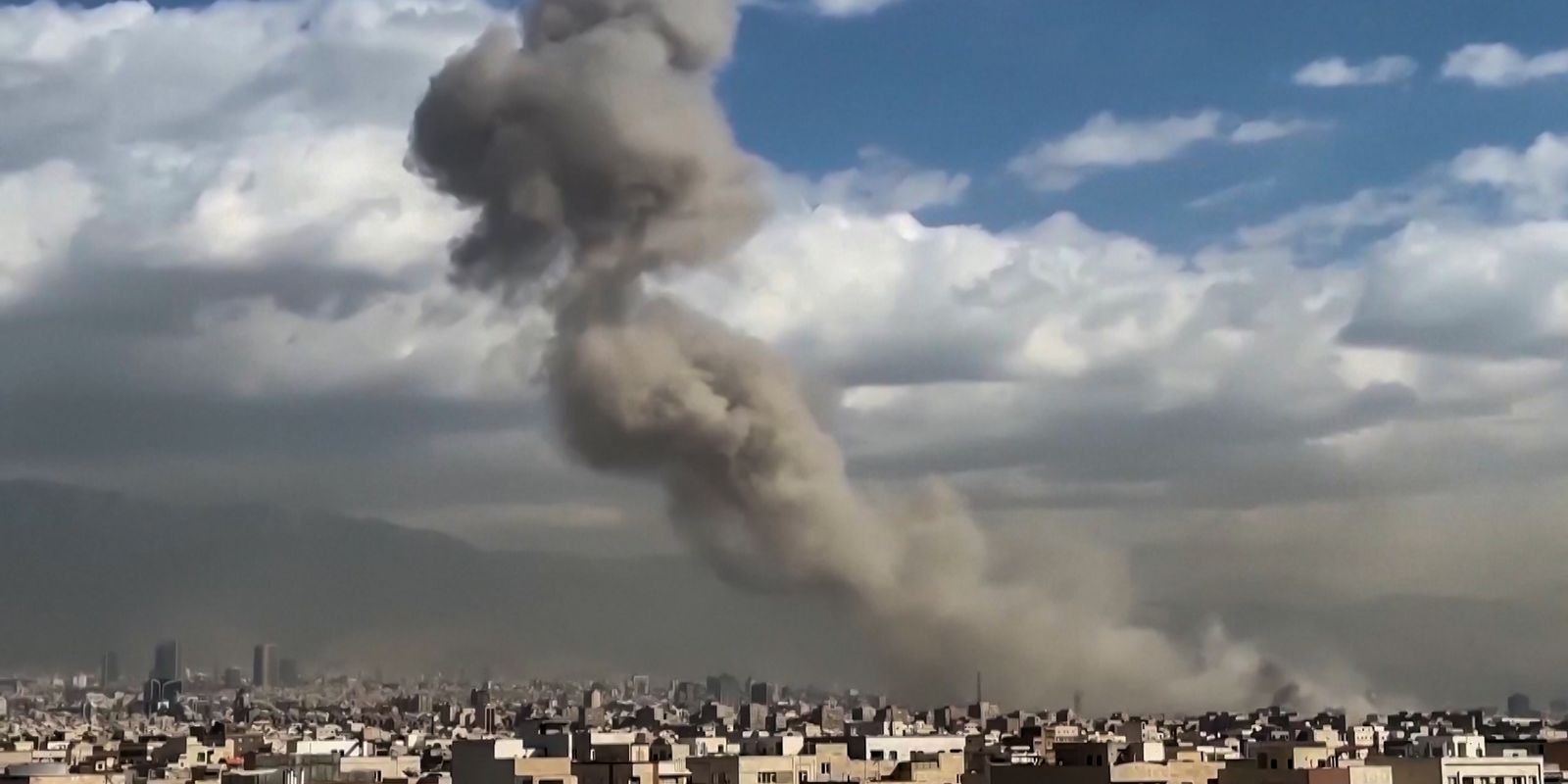
The second aggression by the United States (USA) and Israel against Iran, within an interval of eight months, seeks a “regime change” in Tehran, with the aim of stopping China’s economic expansion, seen as a threat by Washington, in addition to consolidating Israel’s political and military hegemony in the Middle East.
This assessment is from experts in geopolitics and international relations consulted by Brazil Agency this Sunday (1st). Analysts question the official US and Israeli discourse that the attack is “preventive”, against Iran’s supposed ambitions to build an atomic bomb that would threaten the White House and its allies.
Rashmi Singh, postgraduate professor of international relations at the Pontifical Catholic University (PUC) of Minas Gerais, highlighted that Trump’s envoys to the Middle East, Steve Witkoff and Jared Kushner, were denied by Oman’s Minister of Foreign Affairs, Badr bin Hamad Albusaidi.
While Trump’s envoys claimed that the talks were not progressing, the Omani diplomat, responsible for mediating the negotiations, went public to state that the agreement to limit Tehran’s nuclear program was close.
Albusaidi revealed, a day before the attacks, that Iran agreed not to keep in stock any quantity of enriched uranium, which is the material needed to manufacture nuclear devices.
“The US and Israel went to war when a diplomatic breakthrough and peace were within reach. So why now? Both the US and Israel believe that Iran is weak and see this as a strategic opportunity to install a more moderate government in the country,” said Rashmi Singh.

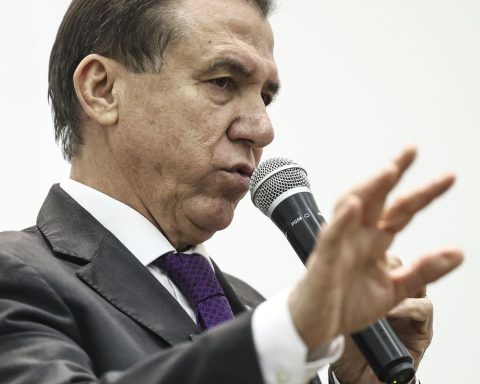
Rashmi Singh, professor of international relations at PUC Minas, during an interview with TV Assembleia MG. Photo: Frame/TV Assembly MG
For the professor at PUC Minas, The aim of the war is to install a Washington “puppet” government in Iran and eliminate the main obstacle to Tel Aviv’s hegemony throughout the Middle East.
“We must also remember that Netanyahu faces general elections later this year and will try to use Iran to strengthen his political position. We have already seen in the last two years of Israeli action in Gaza, against Hamas, how Netanyahu is skilled in using war, and even genocide, not only to stay in power, but also to escape justice”, added Professor Singh.
Contain China
International relations professor Robson Valdez, from the Brazilian Institute of Education, Development and Research (IDP), considered the Brazil Agency that the attacks against Iran can “hardly” be explained by the “nuclear containment” version.
For the analyst, The fundamental point involves the dispute over the balance of power in the Middle East, with Israel and the US attempting to contain Tehran’s regional influence.
“[A guerra] It could especially affect China, a major importer of Iranian oil, which passes through the Strait of Hormuz. The conflict combines this strategic containment in relation to Iran, and also the eternal and traditional regional rivalry involving Israel, Turkey, Iran and Saudi Arabia, and, more recently, also the United Arab Emirates”, pondered Professor Valdez.
PhD in International Strategic Studies from the Federal University of Rio Grande do Sul (UFRGS) Robson Valdez. Photo: Personal Archive
In the assessment of political scientist and geopolitics expert Ali Ramos, how Israel failed to overthrow Iran’s government in the 12-day war of 2025this new attack against Tehran was necessary.
“As long as there are Iranian ballistic missiles and drones, Israel will not have regional strategic supremacy and could be hit. Furthermore, Iran is the heart of the world in the Chinese geoeconomic project,” he said.
Ramos adds that, if Iran falls, weapons will again arrive in the hands of the East Turkestan Islamic Party, via Kyrgyzstan. According to him, the group is historically arming the Uyghurs, who are fighting against Beijing in the autonomous region of Xinjiang, in northwest China.
“Iran aligned with the western axis would also provide a perfect bridgehead for the suffocation and sabotage of China’s infrastructure projects in Central Asia,” added Ali Ramos.
For the historian of armed conflicts and geopolitics Rodolfo Queiroz Laterza, the US tries to remove Iran from the economic and commercial route built by China and Russia in Eurasiawhich is the territory that unites Europe and Asia.
According to this thesis, the war against Iran must be analyzed in the broader context of the so-called “trade war” between Washington and Beijing, for the supremacy of the global economy.
Iran is the fifth largest oil producer on the planet, and competes for third place among the countries with the largest proven hydrocarbon reserves in the world.
Design Israel
Middle East expert Mohammed Nadir, professor of international relations at the Federal University of ABC Paulista (UFABC), dismisses the official justification of a “nuclear threat” from Iran, or even the neutralization of the ballistic missile program and the containment of the Axis of Resistance, supported by Iran.
“The real reason is to end any possibility of a strong power in the Middle East and maintain Israel’s hegemony. This war is not an American war, but it is a war of Benjamin Netanyahu and, by extension, of Israel, which wants to become the undisputed hegemon in the Middle East. And the US wants to guarantee this primacy to Israel”, he said.
Nadir also remembers the justification for the existence of “weapons of mass destruction” used by the United States for the invasion of Iraq in 2003, which later turned out to be false.

Protest in Iraq in favor of the former supreme leader of Iran, Ayatollah Ali Khamenei, killed in the bombings of Tehran on Saturday. REUTERS/Thaier Al-Sudani – Reproduction prohibited
Imperialist policy
For professor of international relations at the University of Brasília (UnB) Roberto Goulart Menezes, the US has always used Iran’s nuclear program as a pretext against Tehran, in more than half a century of hostile relations between the two countries.
“Iran is part of the Nuclear Non-Proliferation Treaty (NPT), so Iran can be inspected at any time, without prior notice, by the International Atomic Energy Agency (Aeia), and Iran has always contributed”, pondered Menezes.
On the other hand, the expert assesses that the invasion of Ukraine and other recent events encourage Iran to increasingly develop its nuclear program. In any case, the UnB professor believes that the US wants to redraw the geopolitical map of the Middle East.
“Trump openly says that no government hostile to the USA, that threatens them in any way, will remain in power, and he is applying this policy that we are seeing, imperialist, an aggressive policy”, stated Roberto Goulart Menezes.
Imperialism is the concept used when “a central country uses its greater economic, political and military power to subordinate peripheral countries according to its own interests”, explained sociologist Raphael Seabra, professor at the University of Brasília (UnB).

Dozens killed in Israeli attack on school in Iran, according to state media reports. Photo: Frame/Reuters – Reproduction prohibited
Understand
For the second time in eight months, Israel and the US have launched aggression against Iran, amid negotiations over the Persian country’s nuclear and ballistic program.
Still during the first Trump administration, the US abandoned the agreement signed in 2015, under the Barack Obama government, for international inspection of the Iranian nuclear program. Israel and the US accuse Tehran of seeking to develop nuclear weapons.
The Iranians, in turn, argue that the program is for peaceful purposes and made themselves available for international inspections. On the other hand, Israel, even accused of having atomic bombs, never allowed any international inspection of its nuclear program.
Upon assuming his second term, in 2025, Trump began a new offensive against Tehran, demanding, in addition to the dismantling of the nuclear program, the end of the long-range ballistic missile program and the end of support for groups resisting Israel, such as Hamas, in Palestine, and Hezbollah, in Lebanon.
One day before the aggression against Iran, Oman’s Foreign Minister, Badr bin Hamad Albusaidi, mediator in the negotiations, reported that they were very close to an agreement, and that Iran had agreed not to keep enriched uranium, an unprecedented decision until then.
“This is, without a doubt, a great achievement. It is something that was not present in the old agreement negotiated during President Obama’s administration. Therefore, there will be zero accumulation, zero stockpiling and complete verification”, informed the Omani Foreign Minister, in an interview with the CBS TV network.
Current hostilities between Israel, the US and Iran originate in 1979, when the Islamic Revolution triumphed in Iran, overthrowing Washington’s allied government at the time. Since then, the Persian country is the target of economic sanctions that seek to weaken its economy.